
Theory & Practice Tracks

BUILDING
COMMUNITY
When the relationships that sustain our communities break down, we struggle to address our grand challenges. Without connection, our lives become shorter and less meaningful. In this track, you will come to understand why both personal and societal change can only occur on the backbone of human connection.
HNUH269P: Building Community: How to Make Friends
Instructor: Marisa Franco
In 2017, U.S. Surgeon General Vivek Murthy deemed loneliness an “epidemic.” Despite the rise of social media that is meant to foster connection, over 23% of adults report being lonely and social networks have been shrinking for decades. Despite increasing rates of loneliness, it is still possible to overcome these trends and find connection. We tend to assume that we should know how to connect with others intuitively, but, as rising rates of loneliness indicate, this is not the case; connection is something we must learn and practice. In this applied course, students will learn the science of connection and engage in practical activities designed to help them make and keep friends. They will leave the course better able to foster meaningful connections. This course is self-contained but paired with HNUH269T in the Building Community track, where you will learn the social value of showing up, for the world and for yourself.
Offered: Fall
HNUH269T: Building Community: Showing Up for Social Change
Instructor: James Stillwell
A neighbor in an area without a supermarket plants a public vegetable garden at their curb. A group of activists comes together to support each other’s mental health. What do these initiatives have in common? They are instances of showing up for change and helping yourself in the process. In this course, you will delve into a social issue you care about and be empowered to make change. We will take up thorny questions – When individuals work to restore social ties, how do we know our efforts are welcome? How does helping ourselves actually help others, and vice versa? – to understand why individuals must forge community to catalyze real change. Through discussions and hands-on activities, you will learn the social value of showing up, for the world and for yourself. This course is self-contained but paired with HNUH269P in the Building Community track, where you will learn the science of connection and apply these skills to build more meaningful relationships in your life.
Offered: Spring

CLIMATE
IN CRISIS
Tempests, wildfires, melting glaciers, and rising oceans speak to the increasing vulnerability of our planet and its systems due to climate change. The United Nations calls this predicament a race we must win. But what kind of race is climate change and what form should our political and social responses take? In this track, students will acquire the knowledge they need to evaluate crisis response and the advocacy skills they need to be part of the solution.
HNUH 229T: Climate in Crisis: Socio-Environmental Sustainability
Instructor: TBA
With a focus on why a socio-environmental systems approach can help illuminate the intersectional dimensions of sustainability, this course will explore what different disciplines bring to this complex topic and use qualitative and quantitative approaches to grapple with problems of sustainability.
Offered: Fall
HNUH 229P: Climate in Crisis: Strategy and Advocacy
Instructor: Tyson Slocum
This theory and practice track examines theoretical frameworks for understanding climate change and concrete cases that shed light on the complexity of managing it. In this, the practical component of the Climate in Crisis track, we explore several domestic energy and climate policy case studies, examining the competing roles played by various interest groups that influence legislative and regulatory outcomes, with a focus on differing organizational advocacy strategies. Once we have mastered organizational advocacy strategies, students bring those tools to bear on the most recent US Federal policy mandates and legislation. In 229T, students will complement this work with a deep dive into the nature of public goods and climate change policy, among other crucial considerations.
Offered: Spring

DRAWN
TO D.C.
Cities are living monuments. They express the past, localize the present, and herald the future. Yet, often we move through them without paying attention to their material reality or how that materiality and our identities interconnect. Join this track to explore the built environments we inhabit and how they inhabit us.
HNUH 259P: Drawn to D.C.: Mapping the City
Instructor: Hooman Koliji
Spaces, materials, objects, structures – the building-blocks of cities – index the values of the societies that produce them. By their very nature cities are memory devices. Yet, in an increasingly transient and virtual world, with access to a seemingly infinite amount of memory, what is the status of the spaces we inhabit? This course will explore the relationship among memory, the body, and the built environment. Beginning with the role cities play in our individual lives and the construction of personal memories, we will take account of what we forget by remembering and what experiences are missing. Through lectures, seminars and discussions, students will produce short experimental books and pamphlets remapping Washington D.C. and the many invisible – personal – cities it contains. No previous art or design experience required. This course is self-contained but paired with HNUH 259T in the Drawn to D.C. track, which explores the created spaces we inhabit, and how they inhabit us.
Offered: Fall
HNUH 259T: Drawn to D.C.: Reading the City
Instructor: Ingrid Satelmajer
A movement known as the Metropolitan Revolution has recognized cities as sites of concentrated economic growth and political power. What does that movement have to do with you? Not only does the city change who you are, but the ambitions and fears that you bring to it also alter what is already there. With Washington, D.C. as a case study, this course considers cities in the context of the ambitious plans that developed them and the unbuilt spaces that open us to imagining them anew. From the ideological tensions and competing policies that politicize urban space, to the construction challenges and social implications of choices made, why we build is as important as what we build. We will experience Washington through its history of spaces, stories, music, art; and learn to see ourselves as co-designers of its present. This course is self-contained but paired with HNUH259P in the Drawn to D.C.
Offered: Spring

STRATEGIC CROSS-CULTURAL CHANGE
Global financial crises, social divides worldwide, and mistrust between business and government require a holistic multi-stakeholder approach that builds bridges among various research fields. What are the social, political, cultural, & economic impacts of globalization? Where are the fault lines that could precipitate crisis and realignment in the global order?
HNUH 239T: Globalization & Innovation: Culture, Creativity, and Competitiveness
Instructor: Gerald Suarez
In this course, we explore the recent confluence of new technological, environmental, and geopolitical developments that has fundamentally altered the global operating environment. Students will learn the major pressures facing the global economy: rising nationalism and protectionism, diverging growth paths of emerging markets, and accelerated digital integration. They will meet advocates of globalization who applaud the increased flow of goods, services, and capital across borders, and critics heralding threats to trade, migration, job security, etc. Students take on this thorny debate to prepare for leadership roles in a century brought about by current trends in the global economy. This course is self-contained but paired with HNUH239P in the Geopolitics of Finance Theory & Practice Track, which explores how globalization has brought about fundamental changes to our daily lives by making the world more interdependent.
Offered: Fall
HNUH 239I: Globalization & Sustainability: How Does the Transformation of Global Value Chains Drive Equity & Sustainability?
Instructor: Jon Crocker
We live in an increasingly interconnected world. This course explores the fundamentals of international trade that form the basis for the complex modern network of global value chains and how these relationships can be adapted to address their vulnerability while also transformed to build a more equitable and sustainable future. This course is self-contained but paired with HNUH239T in the Geopolitics of Finance track, which explores how globalization has brought about fundamental changes to our daily lives by making the world more interdependent.
Offered: Spring

NATIONAL
SECURITY
This track invites students to imagine themselves as decision-makers, seeking to protect the nation while grappling with the consequences of their choices. How has protecting the nation succeeded and failed? Has the U.S. government overstepped its limits in doing so? To what lengths are we willing to go to secure democracy—and who decides?
HNUH249T: National Security: Domestic Dilemmas
Instructor: Daniel Rosenthal
The police detain a man thought to be plotting a terrorist attack the next day in a U.S. city that would kill or injure thousands. They want to subject him to “enhanced interrogation,” which some consider to be torture. Should the police be permitted to use enhanced interrogation techniques? Who decides? This course will ask key questions raised during the efforts of our national security apparatus to protect the nation. Given the tension between the powers of the government to protect citizens, and the necessary limits on that power, what are the fundamental principles that should govern our efforts to protect the nation while preserving our values? Students will try their hand at finding the delicate balance of these principles in difficult national security dilemmas. This course is self-contained but paired with HNUH249P in the National Security track, which explores post-9/11 policy decisions around the U.S. effort to create a sustainable democracy in Afghanistan.
Offered: Fall
HNUH249P: National Security: US Foreign Policy
Instructor: Temim Nusraty
Following the terrorist attacks of September 11, 2001, the U.S. launched a major effort to dismantle the Taliban and create a sustainable democracy in Afghanistan. In 2021, the Taliban took control of the country. Was the U.S. effort doomed to fail? To answer this question, UH students will partner with peers at the American University of Afghanistan through a virtual global classroom to examine the lessons learned from the U.S. and international presence in Afghanistan over the past 20 years. Through reading assignments and virtual meetings with former senior U.S. and Afghan officials, students will examine the reasons behind the downfall of the country and analyze whether the outcome could have been changed. Students are not expected to have any prior knowledge about the conflict in Afghanistan. This course is self-contained but paired with HNUH249T in the National Security track, which explores debates around efforts to protect the nation from terrorism while preserving our values.
Offered: Spring
Theory & Practice Tracks- Campus Partners
HONORS
IN OXFORD
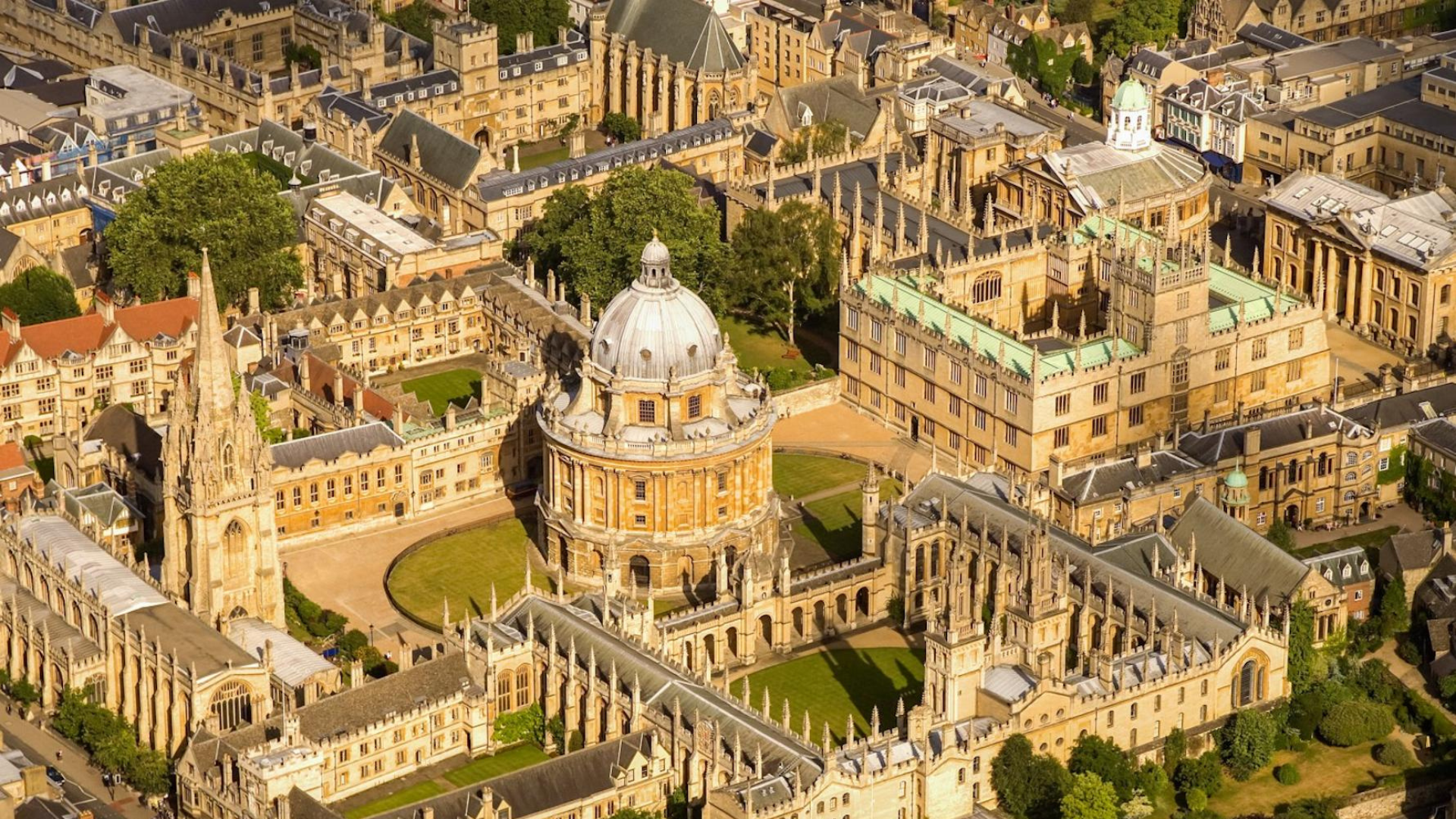
This six-week, summer study-abroad experience at Exeter College promises to challenge and inspire second-year UH students, who will participate in Oxford’s distinctive model of undergraduate education with a talented and diverse cohort of students from around the world. Participating students will transfer 6 credits of elective UMD coursework, and these credits will satisfy the Maryland Honors in Oxford Theory & Practice Track and count toward the UH citation.
Eligibility & Application Process
Current UH sophomores are eligible to apply. Students from all academic degree programs are welcome. Must be in good academic standing. Minimum GPA: 3.5.
Students interested in applying for the Maryland Honors in Oxford program should complete the application on the Education Abroad website here. The application window opens on November 1, 2024 and closes on December 1, 2024. Applicants will be invited for a brief Zoom interview with members of the UH review team in January 2025. All applicants will be notified of their application status by February 1, 2025.
Course Options
Once Summer 2026 information becomes available, further details about both the courses from which students may select and the independent research tutorial option may be found here.
Financial
For all students but particularly for those with unmet financial need, University Honors strives to close the gap between the cost of participation in this program and the cost of attending UMD for an equivalent number of summer credit hours. Need- and merit-based support is available. Please visit the Education Abroad office’s scholarships webpage and/or contact Mr. Middleton (University Honors, dario@umd.edu) for further information.
Exeter College, Oxford
Oxford is the oldest university in the English-speaking world. Today, the city is bursting with beautiful architecture and buzzing with lively cafés, restaurants, and bars, and Exeter College is right at the heart of it.
Exeter has two campuses: the ancient Turl Street site, home since 1315 with buildings ranging in age from the 15th- to the 20th-centuries, beautiful gardens, a historic chapel, a Jacobean dining hall, and an extensive library; and the Cohen Quadrangle, completed in 2016 with its inspired architecture, en suite accommodation, state-of-the-art teaching rooms, and social-study spaces designed to encourage social and intellectual engagement. Turl Street and Cohen Quadrangle offer ancient and modern interpretations of the collegiate model of communal living and cross-disciplinary learning.
Students will be welcomed onto both campuses to enjoy the best of both worlds and an immersive experience of Oxford’s academic and cultural life.
Further Information
Additional information is available through Exeter College, Oxford. Advising inquiries should be directed to Mr. Dario Middleton (University Honors, dario@umd.edu) and/or Ms. Julia Xia (Education Abroad, jxia123@umd.edu), as appropriate.
UMD
FELLOWS
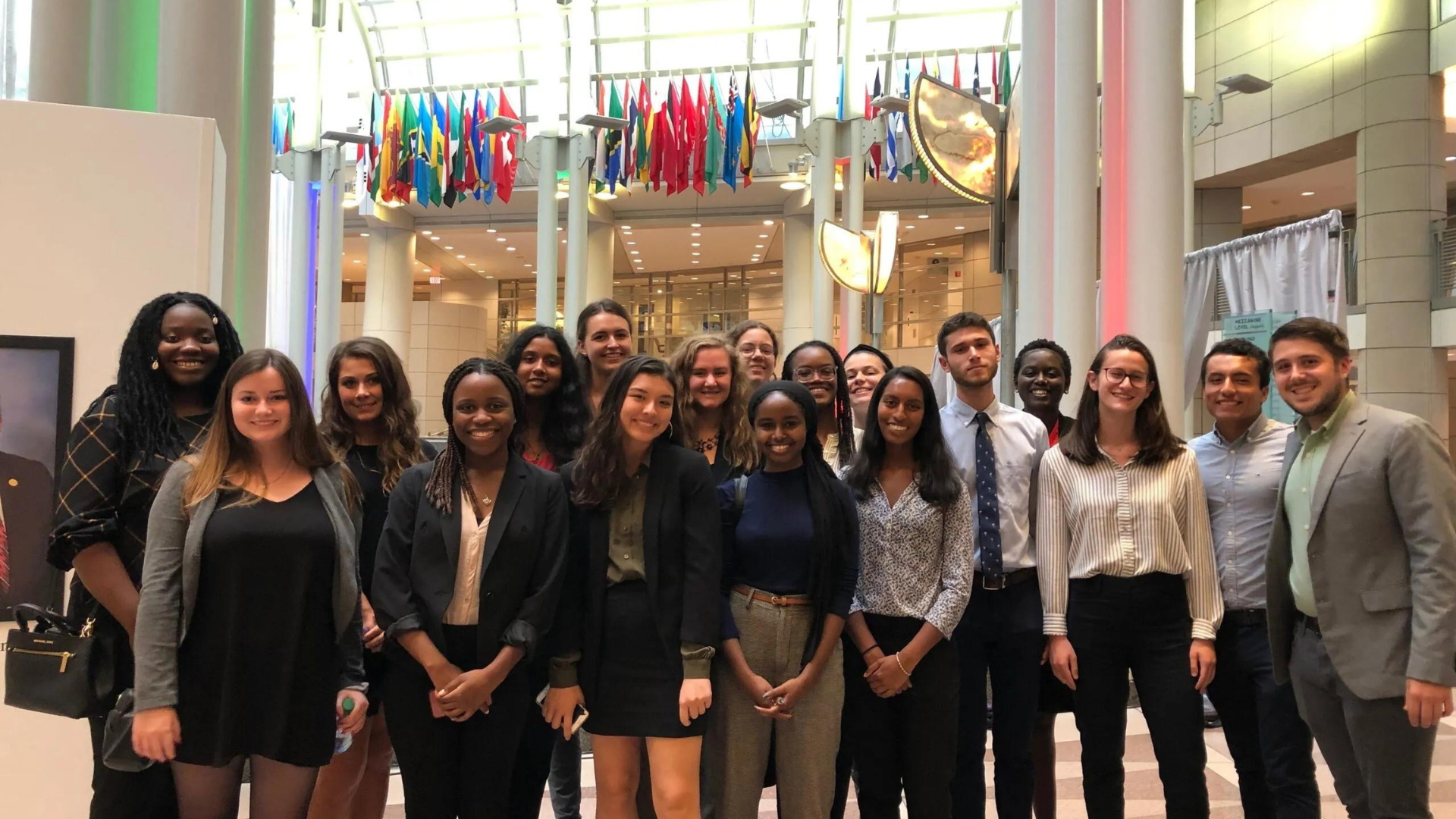
University Honors partners with the UMD Fellows Program to offer a theory and practice track. This track combines a theory course, taken in Fall semester, taught by expert practitioners and leaders in their field with a DC-area internship, in Spring semester.
Program Description
University Honors partners with the UMD Fellows Program to offer a range of sequential theory and practice track opportunities. These tracks pair a fall-semester theory course, taught by expert practitioners and leaders in their field, with a spring-semester internship in the DC-area. Students benefit from professional development workshops and one-on-one advising throughout the year.
Through the Fellows program, University Honors students have engaged in internships in the White House, Federal agencies, congressional offices, the Maryland General Assembly, non-governmental organizations, non-profits, foreign embassies, think tanks, and more.
For more information, including course descriptions and professor bios, see UMD Fellows Program. For in-person consultations and fellowship, please drop by the Fellows Office, Marie Mount Hall 2407, 10 a.m. and 4 p.m.
Course Options
UH Students should make sure to register for the HNUH section of their chosen UMD Fellows courses.
Fall Seminars (choose one)
- HNUH318T: Political Engagement and Advocacy
- HNUH319T: Civic Leadership and Human Services
- HNUH328T: Public Health Policy
- HNUH329T: Crisis Leadership and Emergency Management
- HNUH338T: Homeland and National Security Policy
- HNUH348T: Energy and Environmental Policy
- HNUH358T: Critical Regions and International Relations
- HNUH359T: International Security and Intelligence
- HNUH368T: U.S. Diplomacy and Policymaking
- HNUH369T: Economic Diplomacy
- HNUH378T: Science Diplomacy: Foreign Policy & Science, Tech, and Innovation
- HNUH379T: Responses to Global Challenges (Not offered in Fall 2026)
- HNUH388T: Responses to Global Challenges (Not offered in Fall 2026)
- HNUH398T: Water Security and Global Health Challenges
Spring Internship
- HNUH398P (3-9 credits)
Eligibility & Application Process
- GPA of 3.0
- Open to Sophomores & Juniors for UH credit
Please Note: Students who wish to count this theory and practice track toward their citation requirements in their junior year must request an extension of the citation timeline from the Assistant Director for Academic Life, Dario Middleton.