Fall 2026 – Spring 2028 Thematic Clusters
JUSTICE
& TROUBLE
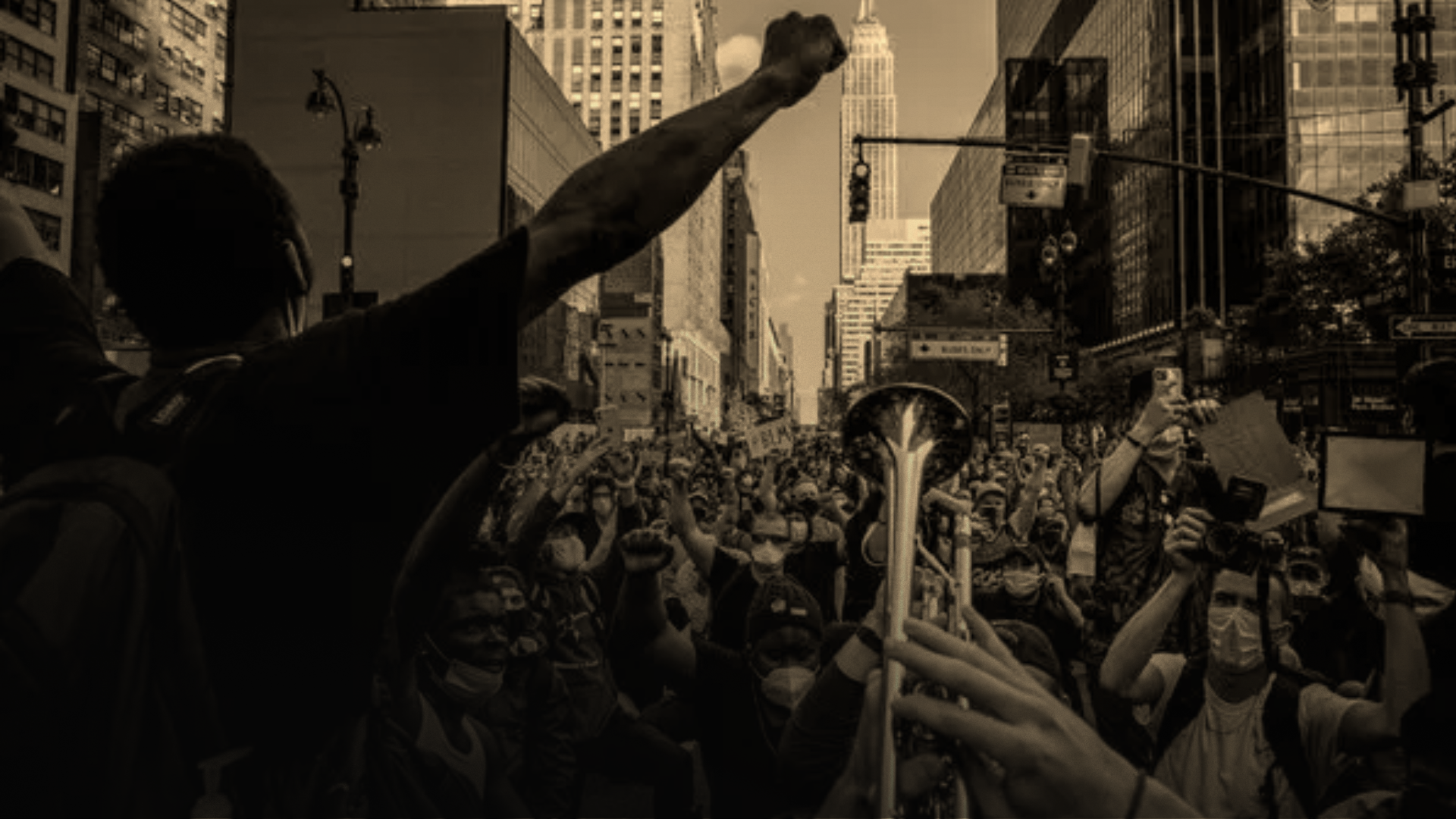
The courses in this cluster examine cultural, social, and political institutions to understand how people challenge power and create new futures. From Caribbean carnivals and the U.S. Constitution to courtrooms and community organizations, students explore the promises and limits of democracy and how law, social movements, public policy, and the nonprofit sector shape everyday life. We consider how communities pursue and social impact, and advocate for social change within competing systems of power. Join this cluster to ask: What does freedom look like? What does meaningful democracy require? And how do we create possibilities for social change?
Required for the Cluster
HNUH218D: Equal Access to Justice in the 21st Century
Instructor: Brian Gilmore
Why is equal access to justice in the American legal system so difficult to achieve in a country and society like the United States? There is a justice gap in America. Most legal matters involve ordinary, everyday Americans who work, earn an income, and try to pay their bills and pursue happiness. Many such Americans are one lawsuit or personal calamity away from serious financial difficulties. While lawyers, judges, politicians, and advocates claim they want to close the gap, nothing has changed in the history of the country. This course seeks to explore why there is this access to justice gap. It also invites students to debate what it would take for America collectively to truly take another direction on this issue and address it positively.
Offered in: Fall 2026, Spring 2027, Fall 2027, Spring 2028
Choose One to Complete the Cluster
HNUH218L: Revelry and Resistance: The Politics of Carnival in the Caribbean
Instructor: Shauna Rigaud
What happens when celebration itself becomes an act of resistance? Emerging from the entangled histories of slavery, colonization, and migration, carnival in the Caribbean has become a contested arena for identity, critique, and survival. This course explores carnival and carnivalesque celebrations in the region as a space where joy, masquerade, and performance both disrupt and reimagine social order. Tracing the development of several “carnivals” in the Caribbean, we will investigate how these celebrations are spaces for social commentary, reflect local politics and become sites of freedom.
Offered in: Fall 2026, Spring 2027, Fall 2027, Spring 2028
HNUH218M: Doing Good: The Intersection of Social Impact and Social Policy
Instructor: Ebonie Johnson Cooper
Imagine a nonprofit tackling food insecurity in your community. The organization works tirelessly, yet systemic barriers—like zoning laws, funding inequities, and historical policies—often limit its impact. This course uncovers those hidden forces, examining how social policies shape nonprofit work and determine who benefits from their programs. Students will explore how systems of race, class, and governance connect to nonprofit challenges such as equity in funding, diversity and inclusion, and board leadership. Through case studies, critical discussions, and applied exercises, you’ll gain tools to address social problems while challenging the systems that create them. By the end of the course, you’ll be able to analyze policy through a social impact lens, design actionable strategies for nonprofits, and think critically about your role as a changemaker in a complex system.
Offered in: Spring 2027, Spring 2028
HNUH218N: Justifying Democracy: What Is It and Is It Worth Defending?
Instructor: Sujith Kumar
In 2016, the United States was downgraded from “full democracy” to “flawed democracy” in an annual ranking of global democracies because of practices like, restrictions to ballot access and gerrymandering. Of course, the people making those changes claimed that they were preserving democracy, which raises the question, “what is democracy?” This class will work towards a model of what democracy is, or what it should be. The merits of democracy have been debated since classical times, and today is under unprecedented stress. We will assess historical and contemporary arguments for and against democracy, ultimately asking, “is it worth preserving?” Through this examination, students will learn the basics of democratic theory and will critically assess the current changes to democracy at home and abroad.
Offered in: Spring 2027, Spring 2028
CRAFT +
TECHNOLOGY
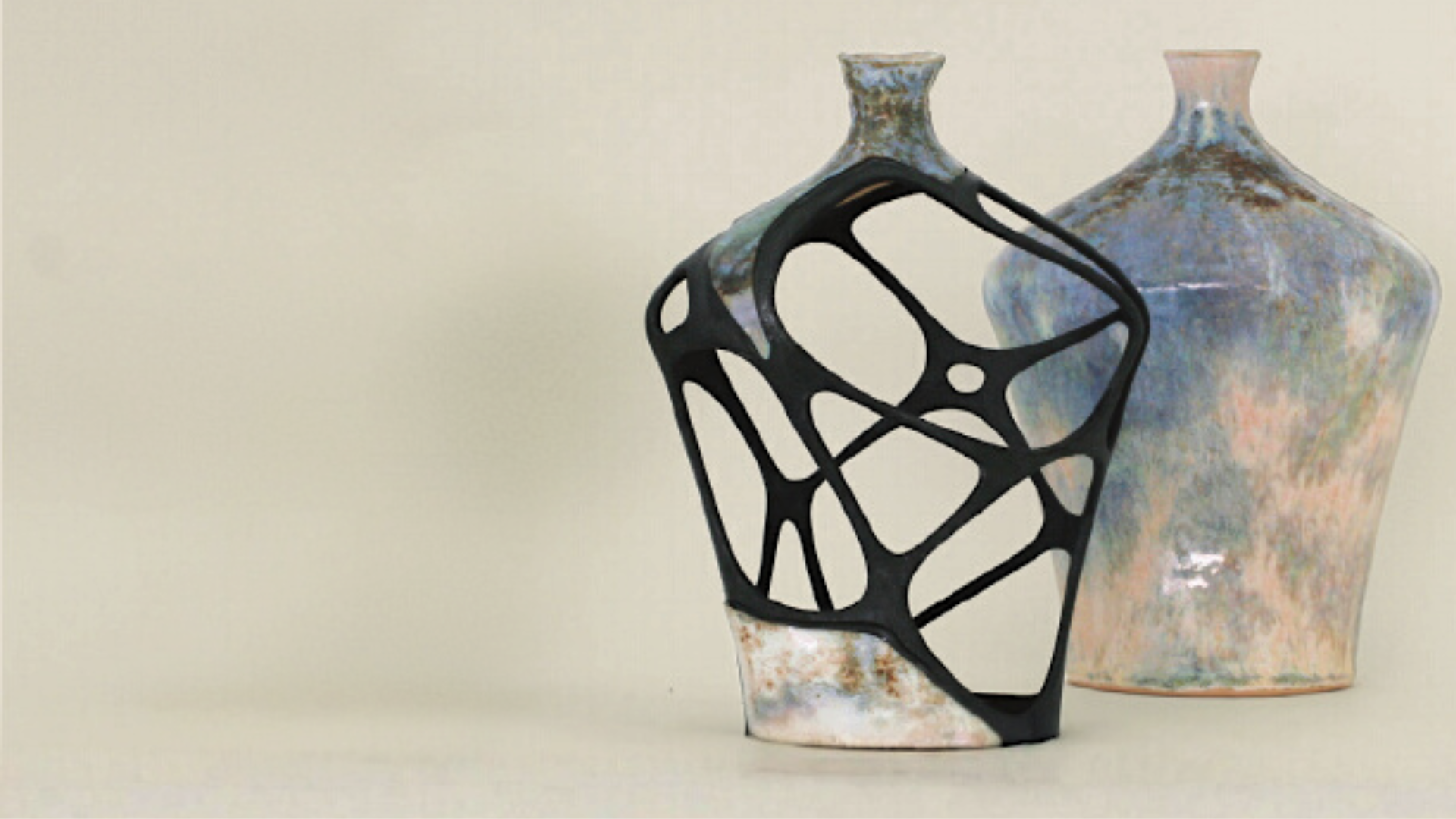
From the printing press to the computer, history has shown how technology reshapes society in far-reaching and unpredictable ways. Artificial Intelligence places us on the brink of a new era of growth and change. What will this mean for what we make? This cluster will put the past in conversation with the present to examine how changing technology shapes the human relationship with craft, literature, design, and history. What does it mean to create alongside technology, and how can we account for the unintended consequences of this partnership? In hands-on courses, students will navigate the relationship between technology and artifacts of human culture as researchers and as makers.
Required for the Cluster
HNUH228D: Crafting Value
Instructor: Matthew McLaughlin
Is there value in handmade goods today? This course invites participants to investigate the enduring significance of handmade goods as one of the humanities oldest forms of expression. Humans have been hand making goods for self-expression and for one another as gifts for thousands of years yet the ease of mass production and rise of digital technology have impacted how humans relate to handmade goods in everyday life. Through readings, discussions, visiting artists and class projects, students will debate the significance of the handmade as a form of expression in contemporary society.
Offered in: Fall 2026, Spring 2027, Fall 2027, Spring 2028
Choose One to Complete the Cluster
HNUH228L: Ancient Romans: Telling Stories with Data
Instructor: Alena Wigodner
When you think of ancient Romans, whom do you picture? The emperors whose deeds are preserved in monuments? The politicians whose writings we still study today? While wealth and power have traditionally shaped whose stories are remembered, technological advances are providing unprecedented access to the lives of Romans lost to history. When AI can decipher the letters of ordinary soldiers and open-access databases let us into the homes of Pompeii’s poorest residents, our methods and questions are limited only by our own creativity. But how might these innovative approaches perpetuate old biases, or introduce new ones? In this class, we’ll both interrogate and contribute to the ongoing project of populating ancient Rome with diverse, complex individuals, centering the politics of data by examining how the tools we use shape the stories we tell.
Offered in: Fall 2026, Spring 2027, Fall 2027, Spring 2028
HNUH228M: Modern Making Methods
Instructors: Josh Cocker & Ted Baker
Iconic products- the Owala FreeSip, Eames Lounger, iPhone- marry beautiful design with practicality and manufacturability. In this course, students will learn to use modern manufacturing technologies such as 3D printing, laser cutting, and manual machining to design and fabricate objects with utilitarian and artistic value. By applying principles of design in their creations, students will learn how their designs could scale from prototypes to mass-manufacturing. By working with and through these computer-controlled tools, students will explore how these modern methods fit culturally and economically along the spectrum between mass-manufacturing and traditional crafting. Do the artifacts you make in this course still count as hand-made?
Offered in: Spring 2027, Spring 2028
HNUH228N: The Book is Better? Literary Craft in an AI World
Instructor: Peter Grybauskas
What role can human art and creativity play in a world dominated by technological advances? How does literature respond to, harness, survive, or transform such breakthroughs? This study of literary craftmanship centers J.R.R. Tolkien’s The Lord of the Rings: From the story’s development in the mid-20th century in response to rapid industrialization and global, mechanized warfare, to its position today as a multimedia and multi-billion-dollar cultural phenomenon. In exploring the past and present interface between literary art and technology, students will discover if the book can adapt to an AI future.
Offered in: Fall 2026, Fall 2027

SEEN
& UNSEEN
Invisibility may cloak heroes in fantasy, but in the real world, it often hides injustice. There is much that the powerful want us to ignore and societies prefer not to see: Authoritarians silence those calling for independent news. Nations obscure uncomfortable facts by rewriting history. This cluster investigates what happens when journalists, writers, historians, and social scientists expose what others conceal. Photographers bear witness to hard truths. Authors of young adult fiction tell stories of oppression—and the diversity of those who resist. Economists reveal how hidden financial data and political behaviors perpetuate inequality. Together, these courses challenge participants to question whose truths are represented, whose are silenced, and how uncovering the unseen can inspire accountability, empathy, and social change.
Required for the Cluster
HNUH238D: What Do We See Of Our World? What Don’t We See?
Instructor: Susan Moeller & Jodi McFarland Friedman
How do images shape our understanding of the world? Influencers and journalists know the power of visuals: Sharing compelling videos and arresting photographs means the difference between grabbing or losing an audience’s attention. Neuroscience explains “why”: our brains process and assign meaning to visual input in as little as 13 milliseconds. Images therefore often bypass our logical thought and, unbeknownst to us, alter our perceptions and influence our emotions. In this course, students will fact-check and interpret visual messages in the news and on social media, consider how visuals shape their personal identities, and explore how images can threaten our democracy but also help safeguard our civil rights. Students will learn how photojournalists play a responsible and essential “watchdog” role in their communities and in so doing learn how those journalists direct their audiences to see what has been previously unseen.
Offered in: Fall 2026, Spring 2027, Fall 2027, Spring 2028
Choose One to Complete the Cluster
HNUH238L: From Page to Protest: Youth, Power, and the Politics of Storytelling
Instructor: Kim Johnson
How do we make the unseen visible when history and marginalized experiences are contested or erased? Amid book bans, curriculum censorship, and political efforts to rewrite the past, storytelling becomes a powerful battleground for truth and resistance. This seminar explores how young adult literature—such as novels addressing police violence, immigration, or dystopian futures—can expose injustice, challenge oppression, and preserve memory. By connecting historical resistance movements to present-day debates over censorship and curriculum, students will analyze how narratives shape public consciousness, reckon with systemic inequality, and inspire social change.
Offered in: Fall 2026, Spring 2027, Fall 2027, Spring 2028
HNUH238M: Tax Evasion: The Social Science of Concealed Human Behavior
Instructor: Daniel Reck
How can we scientifically analyze behaviors we cannot see? Tax evaders usually hide their actions from outside observers, like researchers and governments. We review the creative strategies scholars and policymakers use to overcome this difficulty. How and why do people evade? How does the information tax enforcers observe shape how they combat evasion? How does tax evasion contribute to economic inequality? To answer these questions, students will develop and apply core skills in social science: understanding economic and legal institutions, interpreting evidence from statistical analyses and case studies, and integrating evidence with abstract theoretical ideas to craft and criticize arguments.
Offered in: Spring 2027, Spring 2028
HNUH238N: Courage, Collaboration, Coverup: The (re)Imagined French History of World War II
Instructor: Hannah Wegmann
How do you write history after finding yourself on the wrong side? This course explores French representation of WWII Nazi Occupation. We will trace the evolution of the unseen “army of shadows” into the seen symbol of French patriotism and analyze the tension between the hidden shame of collaboration and the atoning power of myth. The dual realities of collaboration and resistance force us to confront not only what was visible and obscured, but also what was projected and ignored. While rooted in a French context, this course will also consider our own nation’s history of memorializing and myth-making.
Offered in: Fall 2026, Fall 2027
ENCODING
& DECODING
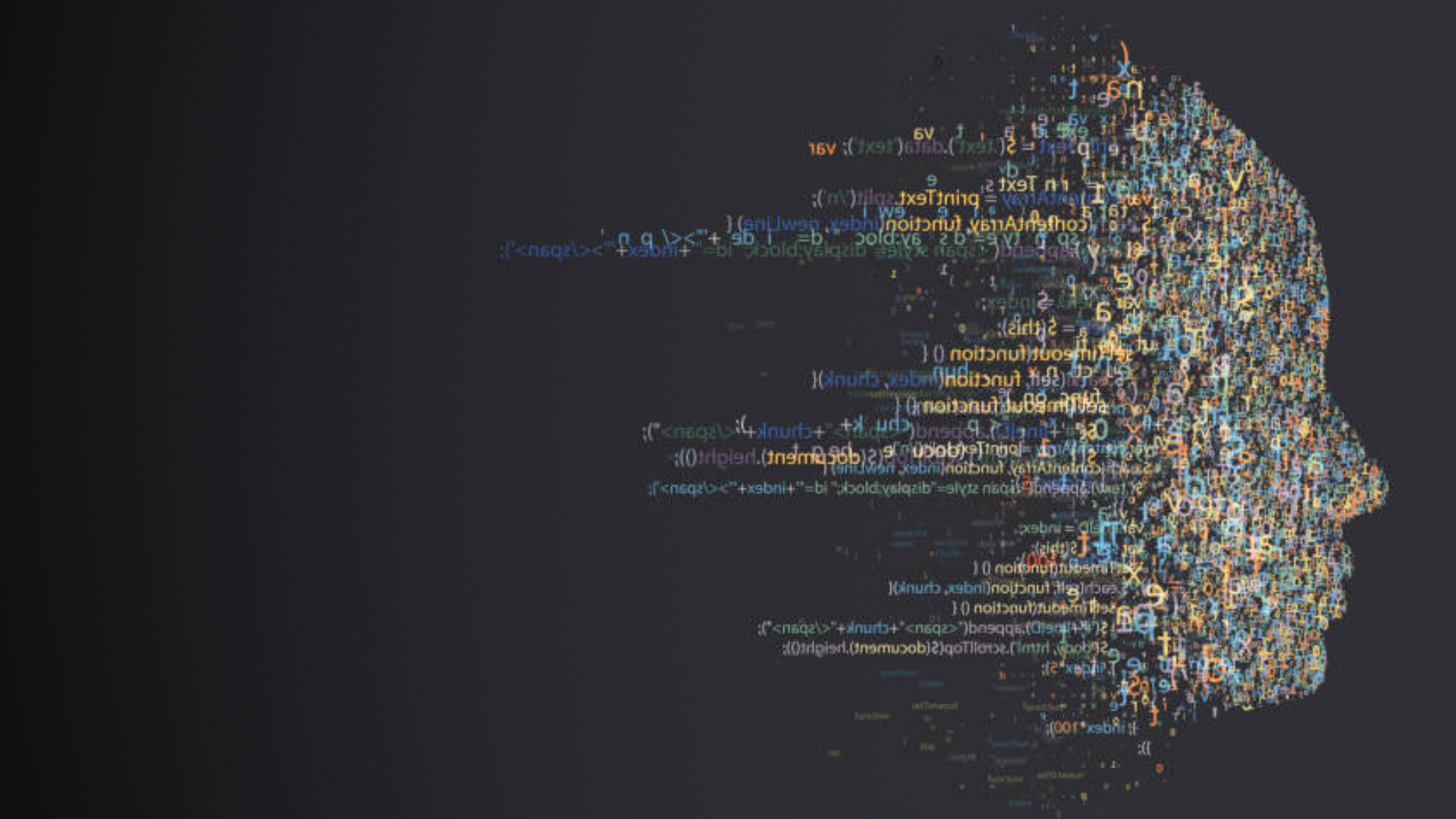
How do we share and receive information? This cluster explores how messages are encoded and decoded through language, music, historical narratives, and the digital processes that shape our health and society. Courses will equip students with tools to investigate what lies beneath deceptively straightforward acts of transmission and analyze how they shape the world, often in ways that are overlooked. By examining the underlying messages all around them, students will learn to recognize their roles in creating knowledge that binds or breaks societies, moves individuals to action, and charts possible futures.
Required for the Cluster
HNUH248D: Biophysics of Language
Instructor: Juan Uriagereka
Can my dog ask questions – and how would my cat answer? A traditional debate concerns whether language is a unique human faculty. While communication systems are common –cetaceans whistle and sing, songbirds and parrots are vocal learners, bees convey information about energy sources – the specific properties of human language, involving finite mental means to socially yield unbounded messages, have not been easy to find in other species. This course delves into the question of whether this quality is unique to humans. The only precondition to take it is the willingness to approach the matter scientifically, starting with notions from a Computational Theory of Mind. Students may bring to bear upon these questions insights from linguistics, psychology, neuroscience, molecular biology, etc., to debate how an abstract systematic behavior can arise within an animal brain, and what that says about evolution.
Offered in: Fall 2026, Spring 2027, Fall 2027, Spring 2028
Choose One to Complete the Cluster
HNUH248L: Who Are We at 250?: Buried Histories and the Battle for America’s Story
Instructor: Zev Cossin
The Semi-Quincentennial (250th anniversary) of the United States has been a flashpoint for the narrative around who we are and where we are going as a nation. Our collective past has emerged as a battleground for the fight about who we truly are. In this seminar, students will assess how the “story of us” is constantly coded and decoded in museums, historic sites, memorials, and cultural heritage media. Students will explore key examples of silenced and buried histories in the U.S., visit local heritage sites and contribute to the ongoing project of encoding honest and difficult stories of our complicated nation.
Offered in: Fall 2026, Spring 2027, Fall 2027, Spring 2028
HNUH248M: Digital Silver Bullet or Digital Mirage: Can Technology Solve Global Health Inequities?
Instructor: Hassanatu Blake & Jordan Pyda
An immediate malaria diagnosis via smartphone in rural Kenya. A misdiagnosis of a US patient by an AI system due to race. Denial of care due to lack of insurance approval. Technology can encode values and biases. It can also be decoded across communities based on structures of culture and power. This course examines how technological innovations are critical to advancing global health but may at times potentiate inequities. We will examine when technology transforms medicine and public health and when it distracts from addressing the root causes of disease. We will consider the promise of digital health innovations, the voices that shape their design, who benefits from their implementation, and who gets left behind. Through debates, case studies, and hands-on technology immersion, we will evaluate if technology and health innovations are the key to solving the paramount global health challenges of our era.
Offered in: Fall 2026, Fall 2027
HNUH248N: Sing, Speak, Sign: How We Use Music and Language to Communicate
Instructor: Siv Lie
People often say that “music is a universal language.” But is music a language? And is it really universal? This course explores how people actually communicate – or think they communicate – using music and language. We look at how different cultural contexts shape the ways in which people talk about music, make meaning out of music, and decide who (or what) has a “voice.” You will learn how to analyze scholarship in ethnomusicology and linguistic anthropology, understand how people interact through music and language, and think critically about why music moves you.
Offered in: Fall 2026, Fall 2027
Fall 2025 – Spring 2027 Thematic Clusters

CONSERVING
BIODIVERSITY
Why is biodiversity essential? And why should we care that it is increasingly under threat locally and globally? This cluster explores these questions and more, examining how diverse ways of knowing— including Western scientific frameworks and others including Indigenous Ecological Knowledges—shape our understanding of biodiversity and interconnected life.
Required for the Cluster
HNUH258C: Nature at Risk: Extinction, Consequences, and Strategies
Instructor: Bill Fagan
How should we prioritize among all the species at risk of extinction? This course will grapple with the complex and consequential process of extinction from biological, geographical, and mathematical perspectives. Core themes will include the 1) nature(s) of extinction risks, 2) potential consequences of different kinds of extinction, and 3) considerations involved in setting priorities. Students will explore, handle, and analyze relevant data (e.g., evolutionary trees, species occurrence records, population censuses) to better understand extinction processes. With the aid of AI-generated hypothetical species, we will investigate hidden biases, debate the consequences of our choices, and explore possible prioritization strategies.
Offered in: Fall 2025, Spring 2026, Fall 2026, Spring 2027
Choose One to Complete the Cluster
HNUH258R: Cultivating Conservation: Exploring Connections Between Biodiversity and Livelihoods
Instructor: Jim LaChance
There are a lot of ways food is harvested from land and sea before it reaches your dinner plate – not all of them are savory. In this course, we’ll explore how the many livelihoods that provide us with food can also work to incorporate and rely on biodiversity conservation. What does biodiversity conservation look like in a working landscape or seascape? How do social movements align or contrast with different food production and conservation practices? And finally, how are these environments – and the people and cultures embedded in them – increasingly under threat? Through complementary aspects of social science and conservation practice, this course emphasizes not only the threats posed to unique localities and livelihoods, but also the hope of a just and sustainable dinner table. Students will leave with knowledge of the practices and skills needed to participate in transforming our food system for improved environmental and community outcomes.
Offered in: Fall 2025, Spring 2026, Fall 2026, Spring 2027
HNUH258O: Supporting Our Watershed: Indigenous Perspectives on Biodiversity and Conservation in the Chesapeake Region
Instructor: Amy Green
Eastern Oysters, Yellow Eels, and Diamondback Terrapins…these are a few species native to the Chesapeake Region at risk due to the impacts of climate change. In this project-based course, students will explore the Chesapeake Region’s biodiversity while identifying threats and conservation solutions to vulnerable and endangered species. Readings and place-based learning experiences will provide a deeper understanding of how Indigenous Knowledges support a more inclusive and accurate understanding of ecological science. By the end of the course, students will be equipped to apply these insights in educational and environmental contexts, promoting a more holistic and socially just approach to science and conservation efforts.
Offered in: Spring 2026, Spring 2027
HNUH258Q: Where the Waters Blend: Contemporary Indigenous Perspectives on History, Traditions, and Modern Issues
Instructor: Tiara Thomas
In this unique semester-long learning experience, students will explore the history, culture, traditions, and contemporary issues faced by the Piscataway from the perspective of Piscataway course instructors. The experiential work of the course asks students to consider how the past matters, particularly when it is embodied in the land they live on, and their present obligations to it. On-campus and place-based learning, focused on Piscataway precolonial and colonial histories, and contemporary Piscataway issues create opportunities for students to reflect upon and interrogate their understanding of Maryland’s past, present, and future. Students will emerge from this course with a greater understanding of the Piscataway and an increased capacity to challenge colonial and postcolonial paradigms that marginalize the Piscataway as well as other Indigenous people in our region, nation, and across the globe
Offered in: Fall 2025

HOMELAND
INSECURITY
What happens to your identity when you are displaced? How do migrants use literature, film, art, and culture to gain insights into their lives and create themselves anew? This cluster invites students to understand immigration through larger processes that structure people’s lives: state-making, the economy, politics, memory, and climate change.
Required for the Cluster
HNUH268C: Inclusion and Exclusion: Deportation in American Life
Instructor: Perla Guerrero
What is the “American Dream” under threat of deportation? The United States proclaims to be welcoming but ideas about sovereignty, the nation, the border, good and bad immigrants, and crime in the United States coalesce to support the retention of some people and the displacement of others from its territory. Who the US deports is related to why it deports and on whose behalf such policies are made. This course acquaints students with current theories, methodologies, and debates in the field of the Humanities to grapple with the most pressing domestic questions about immigration and deportation. A variety of frameworks and approaches including critical ethnic studies, history, social movements, and geography, will challenge students to take a position on immigration law and deportation, and their effects on different communities – on all of us.
Offered in: Fall 2025, Spring 2026, Fall 2026, Spring 2027
Choose One to Complete the Cluster
HNUH268R: What Makes Land a Homeland?
Instructor: Vasfiye Betül Toprak
We live in a world of contested lands. The University of Maryland itself stands on the ancestral land of the Piscataway People. Around the globe, we witness conflicts over land, such as the ongoing war in the Middle East over Israel-Palestine. We hear daily about the refugee crises in Syria and the complex debates surrounding the U.S.-Mexico border. These situations raise important questions: What does it mean to truly belong to a place? How does a migrant come to see their new country as home? This course explores the histories, cultures, memories, and stories of lands left behind to understand how places become homelands. Students will examine the politics behind the making of territories and the deep connections people form with land. Through this exploration, we will center the experiences of migration and displacement, questioning how these journeys reshape our understanding of belonging and the places we call home.
Offered in: Fall 2025, Spring 2026, Fall 2026, Spring 2027
HNUH268Q: Displaced Lives and Stolen Identities in Asian American Literature and Culture
Instructor: Binod Paudyal
Refugee, undocumented, alien, enemy, criminal… These words have been used in American political and popular discourses to conjure images of difference, foreignness, and danger for those who identify as citizens. Using the Asian American context as a case study, this course examines narratives of displacement, forced migration, cultural erasure, and the struggles for visibility and belonging. We will explore how political conflicts, globalization, imperialism, and war have shaped Asian American experiences and identities, considering how traumatic dispersal, interconnectedness, and diasporic citizenship have transformed in fundamental ways our national identity. Students will analyze how immigrants are transformed from ordinary human beings to trespassers and how, through literatures of resistance, they reclaim humanity and agency. Students will also consider their own roles and responsibilities in current debates on immigration, citizenship, and belonging in the U.S.
Offered in: Spring 2026, Spring 2027
CHANGE THE
NARRATIVE
How do the arts and media reflect, reproduce, and challenge the ways we see the world? How do they unite and embolden communities facing grand challenges? In this cluster, we will explore the power of art and media to communicate unique perspectives that enrich, enlighten, and engage our communities.
Required for the Cluster
HNUH278C: Riding the Korean Wave: Kdrama, Race, and Global Culture
Instructor: Chinyere Osuji
How does culture construct our knowledge of the world and ourselves? Using Korean dramas, aka Kdramas, as a case study, this course will explore how various media negotiate blackness for global audiences. As a viral, billion-dollar art form, Kdramas provide an ideal window through which to explore recent trends in our global culture, including colorism, “Black as cool,” travel as consumption, and immigration. They illuminate the politics of culture. We will examine how moral panics and social dilemmas are presented in the fictitious world of “Kdramaland,” and how they inform our understandings of South Korean society, our own societies, and the world. Drawing on social science research by Koreans and non-Koreans alike, students will debate the ways the culture of the Korean wave reflects, reproduces, and challenges social inequities of marginalized and minoritized groups, as well as how those groups respond, to illuminate the larger global forces at work in intercultural exchange.
Offered in: Fall 2025, Spring 2026, Fall 2026, Spring 2027
Choose One to Complete the Cluster
HNUH278R: Getting Graphic: Comics as Resistance
Instructor: Max Barnewitz
In 2023, Maia Kobabe’s graphic memoir, Gender Queer, was the most challenged book in the U.S. Often restricted due to spurious claims about corrupting children, comics have a long history of upsetting the status quo with their unique use of words and pictures. Artists from historically marginalized communities continue to shape this medium. This class examines comics, from glossy horror comics to grungy punk zines, that reject the conventional and subvert suppression. Learning experientially through DMV resources like the D.C. Punk and Indie Fanzine Archive and local comics fests, students will generate their own comics and investigate censorship and resistance.
Offered in: Fall 2025, Spring 2026, Fall 2026, Spring 2027
HNUH 278O: Covering Social Justice Issues as a Student Journalist
Instructor: DeNeen Brown
Social justice journalists are “watchdogs” of strong democracies that work in pursuit of truth by holding the powerful accountable. These news stories often impact local, national and international communities that are crying out for justice. This class, which is taught by an award-winning journalist who has covered social justice issues for more than 35 years, will introduce students to how journalists work to uncover issues of injustice, including systemic racism, discrimination, gender bias, environmental racism, war and regional conflict that impacts African and indigenous people in the Diaspora. Students will study how reporters cover injustice and protest movements, and the ethical practices used to cover race and social justice issues. Through research and readings, students will gain deeper analytical skills, collaboration skills and critical-thinking skills by researching, reporting, and creating written, audio and visual story-telling projects covering social justice issues.
Offered in: Fall 2026, Spring 2027
HNUH 278Q: What’s Art Got To Do With It?: How Community Art Projects Change the World
Instructor: Katie Coogan / Margaret Walker
Climate change, poverty, natural disasters, racism… Luckily for humanity, no topic is too intense for the artworld to tackle. When artists direct their energies not simply at rendering problems but also toward working with communities, the arts have the power to heal, unite, and transform. This class invites students to think about how art, particularly public visual arts like murals and street art, can help us collectively discuss and even solve our most pressing issues. Students will collaborate with local artists, contemporary and diverse art collections at UMD, other local galleries, and recent community-based art projects to understand the real-world impact the arts can have on social transformation. The main engagement of this course will be to co-design and implement a community-based art project together with the community it will impact. Students will emerge from this collaborative practice empowered to use the arts to connect communities and make lasting social change.
Offered in: Spring 2026, Spring 2027
HEALTH
CHECK
How do concepts and structures of race, womanhood, and economics influence the public’s well-being and our health practices? What if we need social change as much as medicine to feel better? This cluster examines how socio-political forces shape the way we talk about health and the policies that govern it.
Required for the Cluster
HNUH288C: Abortion in U.S. Society
Instructor: Julia Steinberg
How do and can we talk about abortion in contemporary society? Civil discussion around the topic of abortion is almost non-existent between people with extremely different views in the U.S. It is such a taboo topic that an exchange of ideas can even be difficult for those with slightly different views—i.e., those who believe abortion should not be regulated by the government (more than any other health care is) and those who believe abortion should be legal and regulated by governments. Although it is an issue about which Americans care deeply, the very people who need most to talk about it seem unable to find any common ground upon which to begin. This course provides students with a solid base of knowledge needed to form opinions and engage in civil debate. Through an exploration of the different ways we talk about abortion in the U.S. and the sources of those strategies, students will learn to find their voice in the controversial topic.
Offered in: Fall 2025, Spring 2026, Fall 2026, Spring 2027
Choose One to Complete the Cluster
HNUH288R: Is Black Bad for Your Health? Examining Race as a Risk Factor in Public Health
Instructor: Nicole McConico
Cancer, heart disease, stroke, diabetes, asthma… Not only are Black Americans at higher risk for developing these life-threatening conditions, but they are also at higher risk of dying from them. In fact, Black race, unlike other racial identities, has been so consistently associated with poor health outcomes that “Black” is considered a risk factor—a characteristic that increases the likelihood of developing a disease—for many diseases. Can one’s race alone determine their health trajectory? If race is socially constructed, how can race be a risk factor for health outcomes? This class will take up the tensions, contradictions, and seemingly illogical public health practices related to health outcomes for Black Americans and the impact of these practices on the broader community. Students will make sense of our present by examining our past—race science, eugenics, medical apartheid—and learn to disrupt the social reproduction of inequities to create a healthier society for the future.
Offered in: Fall 2025, Spring 2026, Fall 2026, Spring 2027
HNUH288O: “Normal Led to This”: Health, Global Crisis, and Social Transformation
Instructor: Ariana Nash
From the Spanish flu pandemic of 1918–1920 to the Covid-19 pandemic, and from the appearance of HIV/AIDS in queer communities to its spread in Africa, the world’s disease crises have been inflamed by colonialism, imperialism, and other structural forms of exploitation and dispossession. This course asks: What is the connection between seemingly interruptive global health crises and our everyday normal? By engaging with novels, long-form journalism, and other stories of global crises, we will grapple with the possibility that, far from averting disaster, capitalism and the legal structures that support it create the conditions for crises to thrive. We will investigate the failures of public response but also the heroic actions of individuals fighting for life. Students will learn to connect individual experience to broad structural explanations and to analyze historical moments to better understand our present and the shared forces that shape our lives.
Offered in: Spring 2026, Fall 2026, Spring 2027
HNUH278I: Bonded: Loneliness, Health, and Quality of Life
Instructor: Marisa Franco
Society has become more and more disconnected, with 61% of Americans reporting being lonely. The U.S. Surgeon General’s Advisory on the Healing Effects of Social Connection and Community reports that “The mortality impact of being socially disconnected is similar to that caused by smoking up to 15 cigarettes a day, and even greater than that associated with obesity and physical inactivity.” Disconnection is devastating for health and for society. Particularly in a democracy predicated on the health of civic life, which requires interpersonal and community relationships, where does this predicament leave us as a society? This course illuminates the potential root causes of disconnection: early familial relationships, attachment styles, and broader technological trends. Students will leave the course with a toolkit of evidence-based strategies they can use – and share – to help heal these divides and repair our core social connections.
Offered in: Fall 2025 ONLY
Fall 2024 – Spring 2026 Thematic Clusters
ARTIFICIAL?
INTELLIGENCE?
How will we survive and thrive in an AI-dominated world? This cluster turns to science fiction’s intuitions for advance warning about the implications of AI, explores the way politics will manage deep fakes and algorithmic bias, and invites students to question whether intelligence needs to be biological to support human life.
Complete One Required for the Cluster
HNUH 248I: Critical Imagination and the Potential for Ethical AI
Instructor: Alex Harlig
Could AI be part of a sustainable, safe, and just world? The consumer AI boom has raised critiques about energy, land, and water use; reshaping education and the workforce; reinforcing bias and misinformation; and mental health safety for users, among others. But the ability to recognize patterns, analyze large data sets, and synthesize input has allowed for early detection of cancer, provided support for critical journalism, and aided research. This class will use ethical paradigms, economic theories, and systems and design thinking to examine how we got to the present moment, what could have happened differently, and what could yet change. We will reframe the technological future not as inevitable but as a product of human action, and grapple with how to shape that action going forward.
Offered in: Spring 2026
HNUH 248C: The Societal Impact of Artificial Intelligence
Instructor: Roland Rust
How will AI change society? AI is changing not only business, but the nature of society itself. This course investigates the nature of those changes and forecasts their future development. Through the exploration of the unprecedented pitfalls and opportunities that AI represents, students will learn how best to cope with a world that is dependent on AI.
Offered in: Fall 2024, Spring 2025, Fall 2025
Choose One to Complete the Cluster
HNUH 248R: Artificial Intelligence: Critical Examinations through Science Fiction and Technology
Instructor: Rebecca Jones
AI permeates our world, but science fiction (SF) told stories about it for centuries before AI became a reality in the 1950s, shaping our understanding and expectations through words and images. In this course, students will critically examine how SF has shaped how we think about intelligence, and what the evolution of fictional and real AI means for technology and humanity.
Offered in: Fall 2024, Spring 2025, Fall 2025, Spring 2026
HNUH 248O: We the Artificial People: How AI has Reshaped Politics
Instructor: Cody Buntain
Artificial intelligence (AI) has had profound impacts on the modern political landscape, in the US and abroad. This course encourages the critical evaluation of how AI has impacted political behavior and opened new threats like foreign electoral inference, disinformation, and manipulation through deep-fakes and generative language models. Students will debate ethical, fair, transparent, and accountable AI.
Offered in: Fall 2024, Fall 2025
HNUH 248Q: Frankenscience: The “Natural” and “Artificial” in Society and Science Fiction
Instructor: Kenneth Frauwirth
How do we define the boundaries between “natural” and “artificial”? Modern biology has blurred this distinction, yet humans have grappled with fears and innovation through speculative fiction for far longer than they have had practical applications. Through an exploration of biomedical research and its treatment in science fiction, students will develop tools for grappling with Frankenscience.
Offered in: Fall 2024, Fall 2025
BUTTERFLY
EFFECTS
How do our actions reverberate in an unpredictable world? The insight at the heart of the so-called ‘butterfly effect’ is that decisions made in one place can produce unintended consequences felt far away. This cluster invites students to explore how small actions can have large impacts in our ever more inter-connected world.
Required for the Cluster
HNUH 218C: Globalizing the American Revolution
Instructor: Richard Bell
How is the American Revolution a creation story of our multi-cultural and interconnected world? Consider the diverse people mobilized by the Declaration of Independence: Creek farmers, Spanish soldiers, Canadian fugitives, and African statesmen. In this globe-trotting class, students will debate the familiar story of the American Revolution in transnational context.
Offered in: Fall 2024, Spring 2025, Fall 2025, Spring 2026
Choose One to Complete the Cluster
HNUH 218R: Stealing from the Poor, Giving to the Rich: The Political Economy of Global Capitalism
Instructor: Daniel Yoder Zipp , Robert Graham
Street names and museum exhibits are being renamed in Europe to erase the ghosts of their colonial history. Yet, this speaks of the colonial “era” as the past when it is very much our present. This course surveys colonial capitalism and its global legacies to explore how history informs the present, as well as pathways towards resistance and reconciliation.
Offered in: Fall 2024, Spring 2025, Fall 2025, Spring 2026
HNUH 278I: Bonded: Loneliness, Health, and Quality of Life
Instructor: Marisa Franco
Society has become more and more disconnected, with 61% of American reporting being lonely. The U.S. Surgeon General’s Advisory on the Healing Effects of Social Connection and Community reports that “The mortality impact of being socially disconnected is similar to that caused by smoking up to 15 cigarettes a day, and even greater than that associated with obesity and physical inactivity.” Disconnection is devastating for health and for society. Particularly in a democracy predicated on the health of civic life, which requires interpersonal and community relationships, where does this predicament leave us as a society? This course illuminates the potential root causes of disconnection: early familial relationships, attachment styles, and broader technological trends. Students will leave the course with a toolkit of evidence-based strategies they can use – and share – to help heal these divides and repair our core social connections.
Offered in: Spring 2026 ONLY
HNUH 218O: The Butterfly Effect in Writing
Instructor: DeNeen Brown
How does investigative journalism impact change among individuals, local communities and global events? Stories have the power to change the world. In this course, we will examine how writing and multi-media storytelling in journalism have the power to impact change at local, regional and international levels. This course will introduce students to journalism that has had a mighty ripple effect, often around the world. Students will examine investigative and breaking-news journalism that has impacted individuals and global institutions alike. Once they have studied the work of writers who have effected change, particularly those of the African Diaspora, students in this course will have an opportunity to research their own investigative features and seek out ways to share them to make change in their own communities.
Offered in: Spring 2025 ONLY
HNUH 218Q: Plants and Empires: Historical Issues and Contemporary Consequences
Instructor: Todd Cooke
Although seldom mentioned in the grand narratives of war, culture, and technology, plants have profoundly influenced the course of human history. Plant domestication and human civilization have been co-evolving ever since the origins of agriculture. This perspective leads to a number of provocative multidisciplinary questions: How did certain cereal grasses and legumes civilize a nomadic hunting-and-gathering primate at a few advantageous locations? How did the cultivation of sugar, tobacco, and cotton affect the colonization and exploitation of the world? What roles did tea, coffee, opium, rubber, and quinine play in the spread, economics, and military actions of the British Empire? Students will apply their appreciation of historical human-plant dynamics to address such contemporary challenges as global climate change, genetic engineering, biodiversity, industrial agriculture vs. sustainable stewardship, and the use of indigenous medicinals in modern cultures.
Offered in: Spring 2025 ONLY
SCIENCE
& FICTION
If what we know grounds our perception of the natural world, how do we think our way to the world we hope to live in? This cluster interrogates how science both expands and limits what we can imagine, and how imagining has long fed the scientific pursuits that show us the futures we want.
Required for the Cluster
HNUH 228C: The Fiction of Fact: Race, Science, and Storytelling
Instructor: Kimberly Coles
What is a fact? Science is often viewed as an unbiased, fact-based, analytical discipline, but has sometimes been a potent weapon for creating and supporting political fictions and social hierarchies. Through a range of materials—from fiction and film to scientific and political theses—this course will explore one of the most potent cases of “scientific” storytelling: the case of race.
Offered in: Fall 2024, Spring 2025, Fall 2025, Spring 2026
Choose One to Complete the Cluster
HNUH 228R: The Picture of Health and Illness: Modern Medicine in Illustration
Instructor: Brynne McBryde
From prehistoric carvings to the Lincoln Memorial, images have long been used to communicate what people can and should be. Do pictures reveal the truth about our bodies? In this class, students will develop their own theory of how science continues to shape who we think we can be, and how we might resist those limitations.
Offered in: Fall 2024, Spring 2025, Fall 2025, Spring 2026
HNUH 228O: Liquid Crystals: the Secret of Life
Instructor: Luz Martínez-Miranda
From Superman’s Kryptonite to the Star Trek crew traversing the universe, space travel has occupied science fiction for ages. To understand how real life can catch up with fiction, we look at liquid crystals: the secret of life itself. Students will learn to address such pressing concerns as why extremes of temperature and pressure affect life, and what we can do about it.
Offered in: Fall 2024, Fall 2025
HNUH 228Q: Science, Fiction, and our Environmental Future
Instructor: Mitchell Pavao-Zuckerman
What will the world look like in 2070? This course explores how science fiction can inform future visioning by expressing and challenging ideas about nature, culture, society, and politics. It challenges students to think about how ‘smart’, ‘just’, ‘green’ and ‘resilient’ visions can be integrated into sustainability transitions informed by collaborations between science and fiction.
Offered in: Spring 2025, Spring 2026
SURVEILLANCE
Populations, organizations, and the environment are all under surveillance. Surveillance, in turn, shapes identities, social categories, and environmental policy. This cluster take up the potential costs of surveillance in terms of the individual, social inequalities, and ethical dilemmas within systems of surveillance themselves.
Required for the Cluster
HNUH 238C: Surveillant Society, Surveillant Selves
Instructor: Brian Connor
Do the social and individual benefits of surveillance outweigh its risks? Surveillance is a ubiquitous practice in contemporary society. Governments surveil populations; corporations surveil customers and users; individuals surveil themselves and others. Students will debate the role of surveillance in society today, and what, if anything, should be done to change it.
Offered in: Fall 2024, Spring 2025, Fall 2025, Spring 2026
Choose One to Complete the Cluster
HNUH 238O: Surveillance, Technology, and the “Death” of Privacy
Instructor: Jessica Vitak
In 1949, when George Orwell published “1984,” few imagined how much the future would resemble the fictional surveillance state he depicted in his novel. Yet, 75 years later, surveillance technologies have not ceased to expand thanks to advances in computing and big data. We are at a point where many decry the “end of privacy,” a world sketched with frightening detail in the popular Netflix series “Black Mirror.” Are we destined to live in a dystopia like those described in popular science fiction books and films, or can we take steps now to ensure that privacy does not fall into oblivion? This course traces the rise of surveillance technologies used in homes, schools, workplaces, and everywhere in between to understand how we got here and where we are headed. Students will explore various framings of surveillance in Western culture, critically assess the challenges surveillance technology raises for vulnerable populations, and explore ways to stop the seemingly inevitable push toward a society without privacy.
Offered in: Spring 2025, Spring 2026
HNUH 238Q: Surveilled Bodies: Eugenics, Genetics, and Disability in Science Fiction and Society
Instructor: Leigha McReynolds
Body-based technologies of surveillance — from fingerprinting to genetic testing to facial recognition to biometric scans — are rooted in the “science” of eugenics. In the early twentieth century, eugenicists identified certain bodies as inherently suspect: they were deemed deviants, that is, they were said to deviate from desired physical, social, and political norms. One legacy of this movement is the surveillance and control of disabled bodies, which have been confined, cured, and erased, often in the name of technological and social progress. And we see the influence of eugenic surveillance in concerns over who is and who isn’t, or shouldn’t be, reproducing.
Offered in: Spring 2026
HNUH 238R: Invasive: Feminist Perspectives on Power, Politics, and Ecosurveillance
Instructor: Jordan Johnson
Invasive species play a key role in 60% of plant and animal extinctions, constituting a serious threat to global biodiversity and costing over $423 billion annually. But what is at stake in the impulse to frame a species as “invasive”? What modes of watching, tracking, and surveilling emerge in the context of invasive species management? What are the material and ethical implications of these practices? As the cost of invasive species management has quadrupled every decade since 1970 and is likely to continue to increase, what alternatives exist? Reading through the lens of feminist science studies, this course asks what species movement might teach us about the possibilities and challenges of multispecies environmental ethics. Students will examine theoretical, historical, cultural, and practice-based accounts to better understand how our collective and individual actions continue to unevenly shape the biodiversity of our changing planet.
Offered in: Fall 2024, Spring 2025