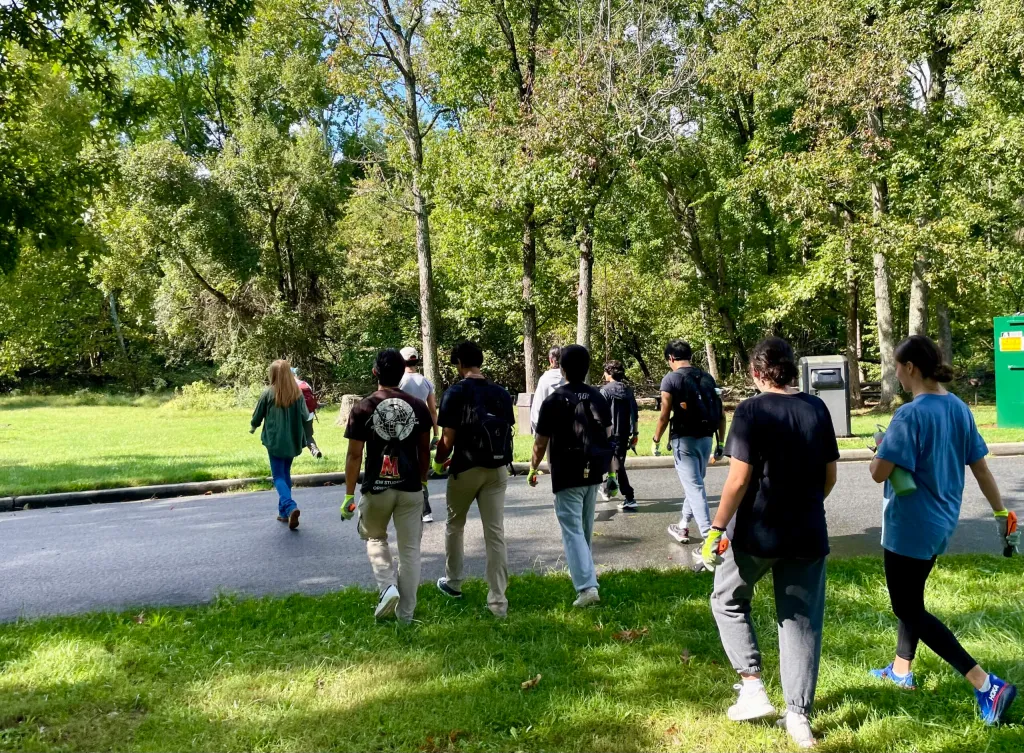
Previous UH Faculty member, Dr. Jordan Johnson, recently published a new article in Edge Effects online magazine focused entirely on her innovative approach to teaching in University Honors. Her course, HNUH238R: Invasive: Feminist Perspectives on Power, Politics, and Ecosurveillance, was a hit among UH students and included a trip to Greenbelt to help remove invasive species of plants from local parks.
Author: UNIVERSITY-HONORS
-
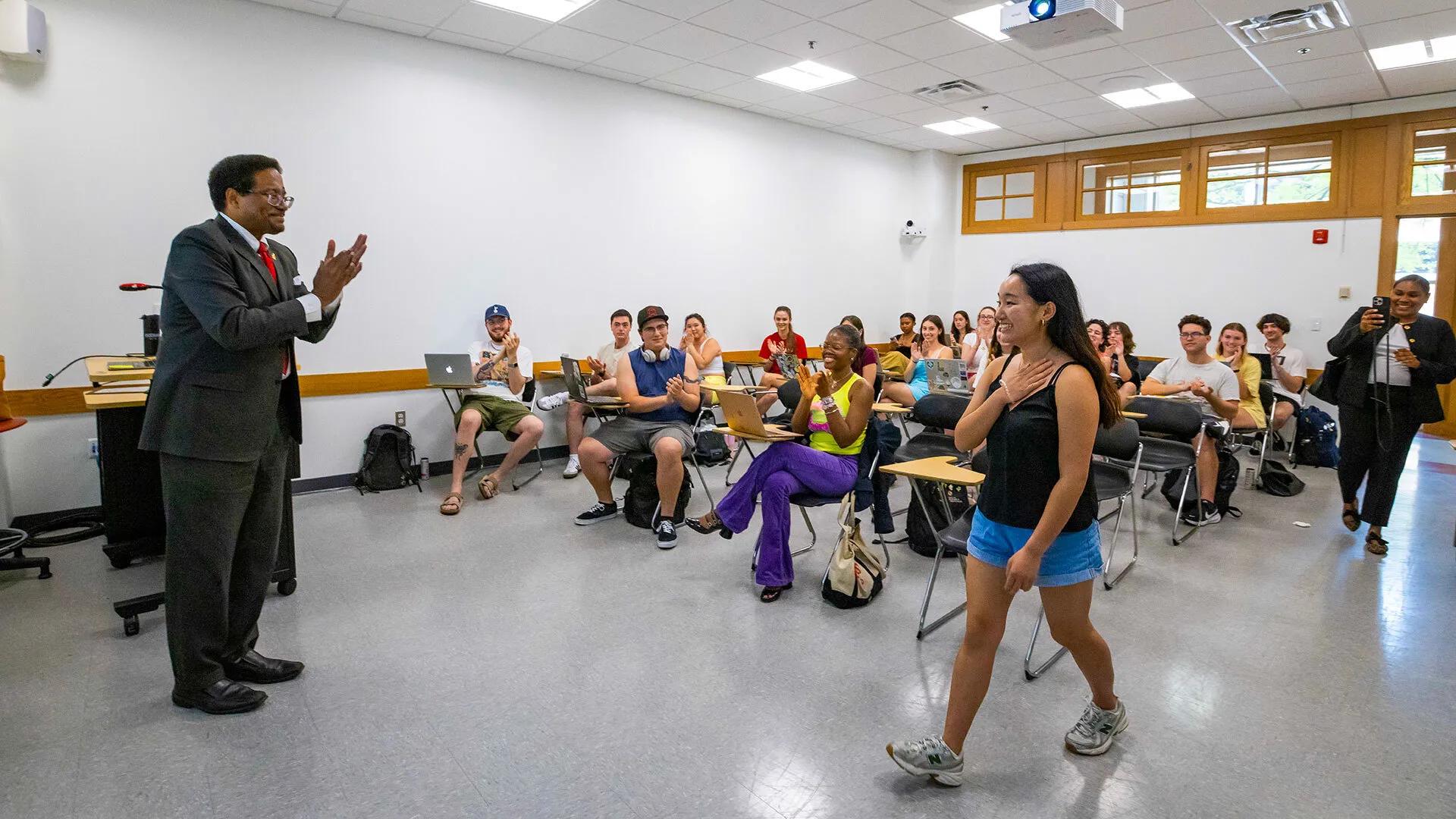
Student Spotlight: Michelle Wang named Truman Scholar
A University of Maryland junior with a passion for environmental justice has been awarded a Truman Scholarship, the nation’s most selective award for underclassmen with exceptional leadership potential, a commitment to a career in government or in the nonprofit sector, and demonstrated academic excellence.
Michelle Wang ’27, a double major in environmental science and policy along with social data science, is the 12th UMD student to earn the honor established by Congress in 1975 to memorialize President Harry S. Truman. It provides up to $30,000 for graduate studies, leadership training, career counseling, and special internship and fellowship opportunities within the federal government.
-
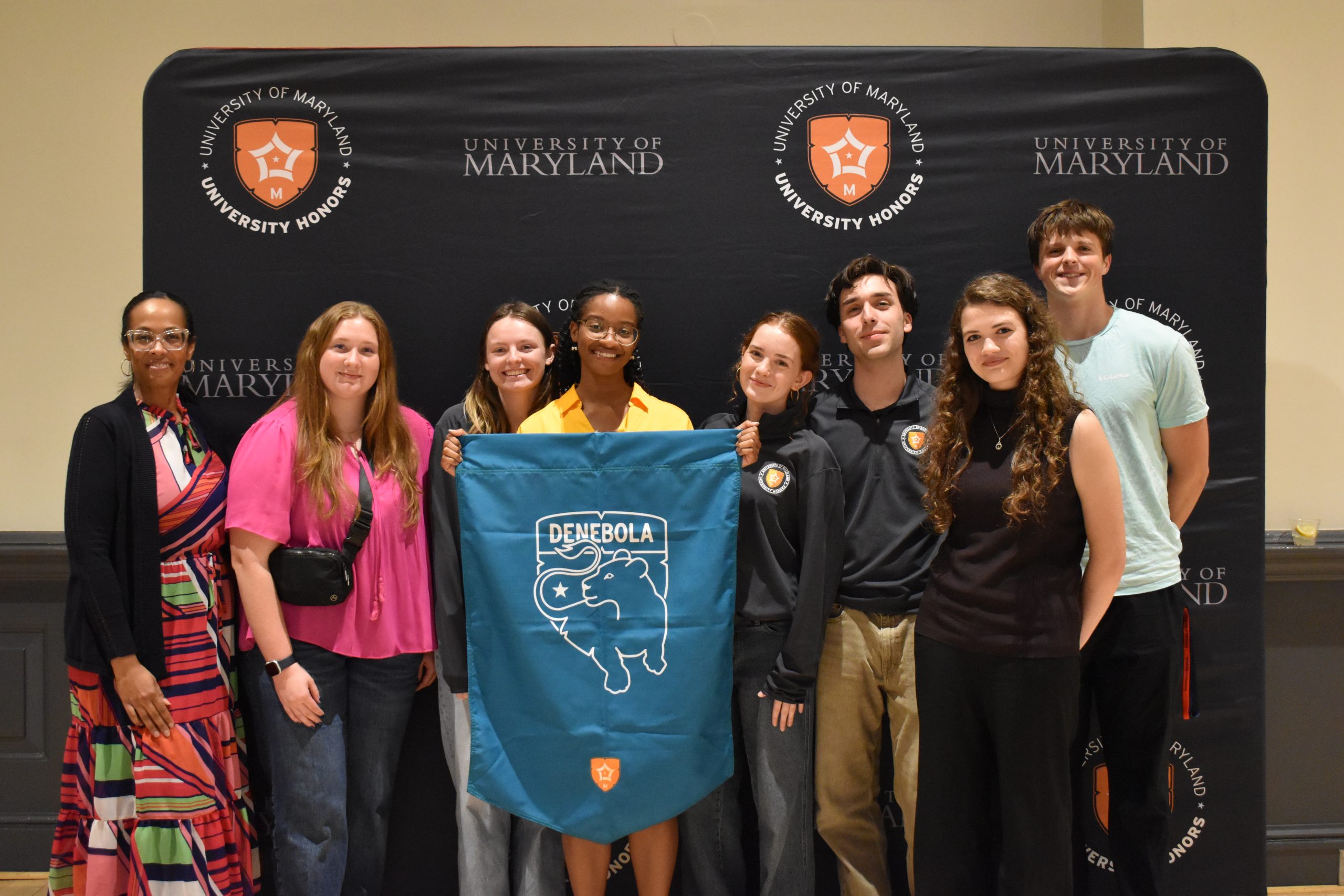
SendOff 2026 Program & Photos
It’s always an honor to celebrate the remarkable members of our UH community each spring and this year was no different. Find the full program and some photos from our most recent UH SendOff event below!
Opening Remarks
Hosted by Alisha Mansoor & Sara Shibu
Sponsored by the UH Student Board
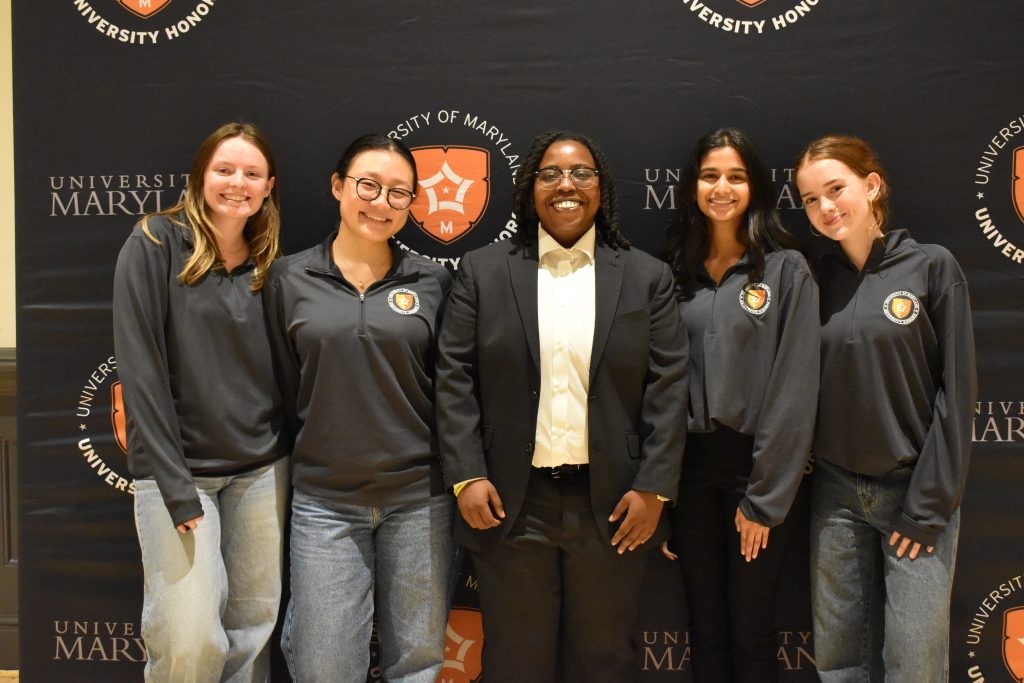
Directors Welcome
Dr. Christine Jones
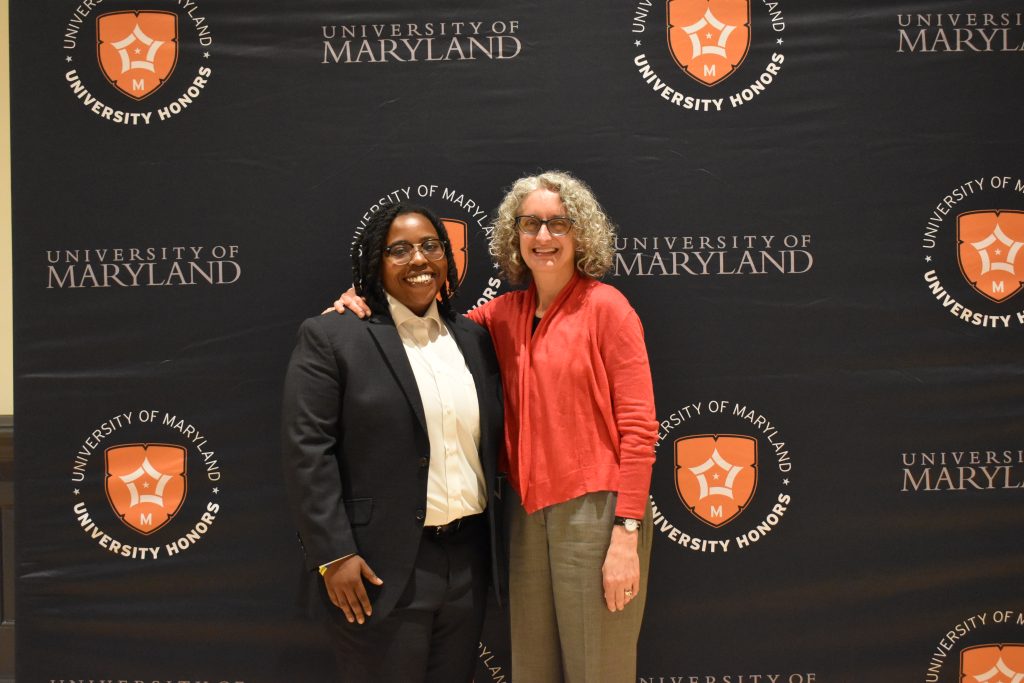
Alumni Keynote
Jasmine Crooks ’16
Student Leadership Recognition
Undergraduate Assistants, Advising Mentors, Student Life Council, Peer Academic Leaders, & UH Student Board
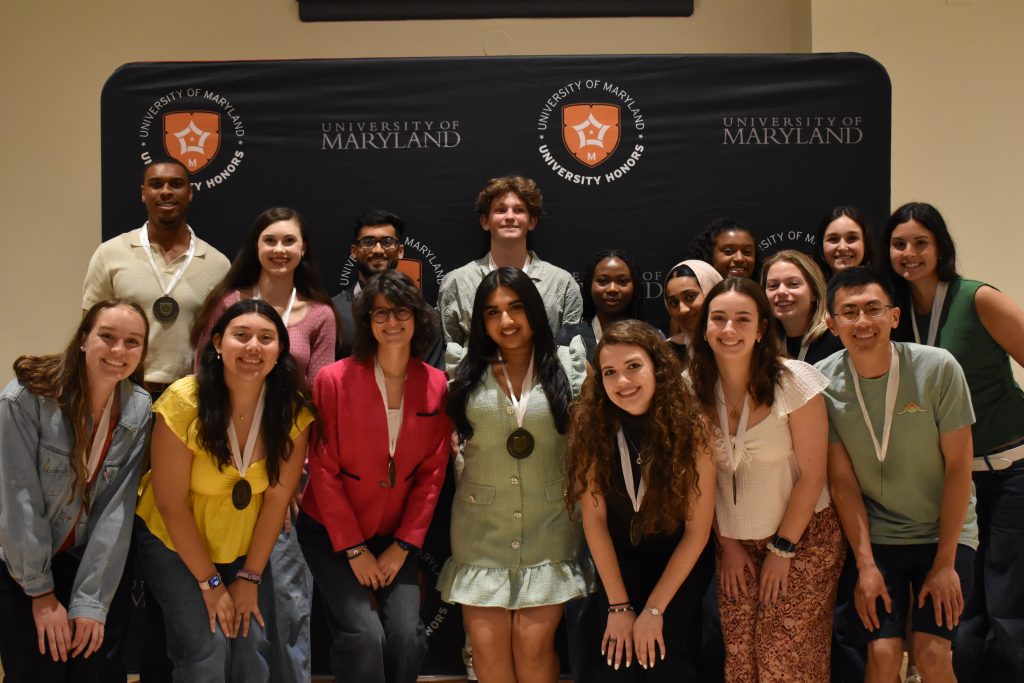
Leadership Medallion Recipients
Jeremiah Carr, Alessandra Crippa, Alyssa Davies, Sarah Davis, Gabrielle Dorsey, Patrick Gee, Julianna Gray, Anika Hukmani, Naasera Husain, Tanvi Kotta, Diana Lyons, Vivian Maneval, Ryan Mathew, Benjamin Mielcarek, Kate Oyedele, Ashley Patterson, Hannah Smith, & Cricia Villanueva
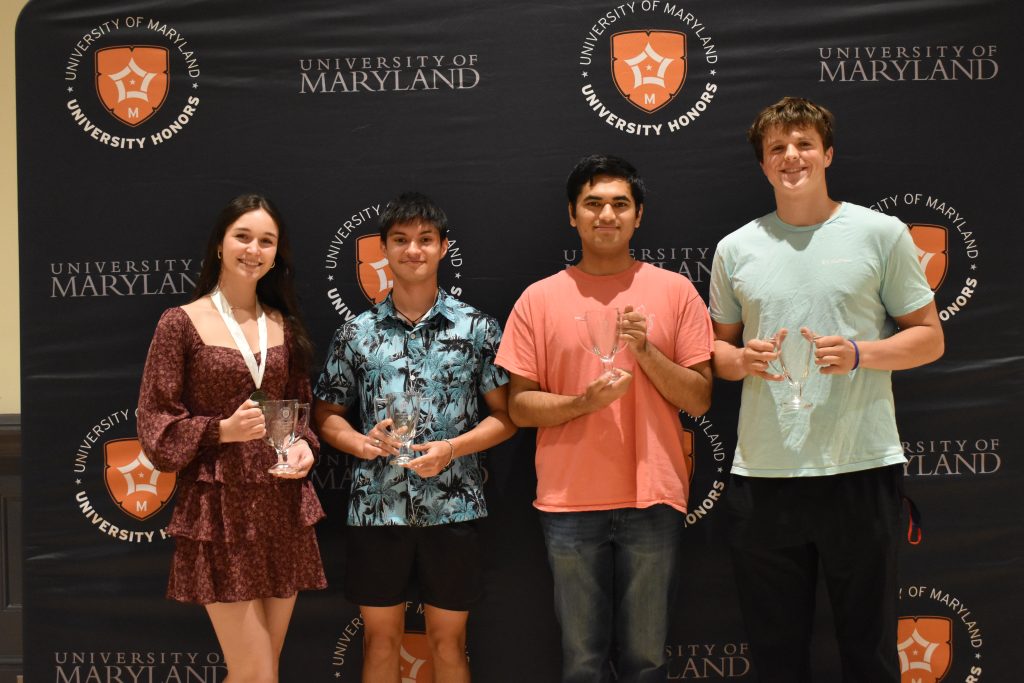
House Spirit Award Winners
House Altair: Noah Oppelt (1,067 pts)
House Shaula: Sanaya Moore (1,129 pts)
House Eltanin: Ishan Joshi (1,186 pts)
House Denebola: Chase Baldwin (1,668 pts)
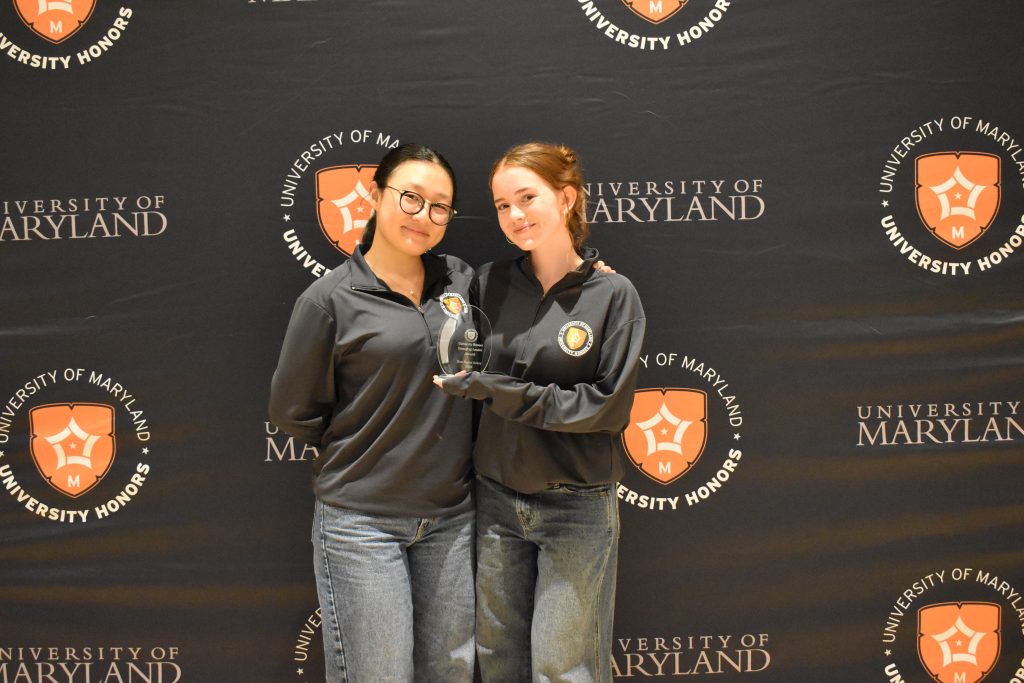
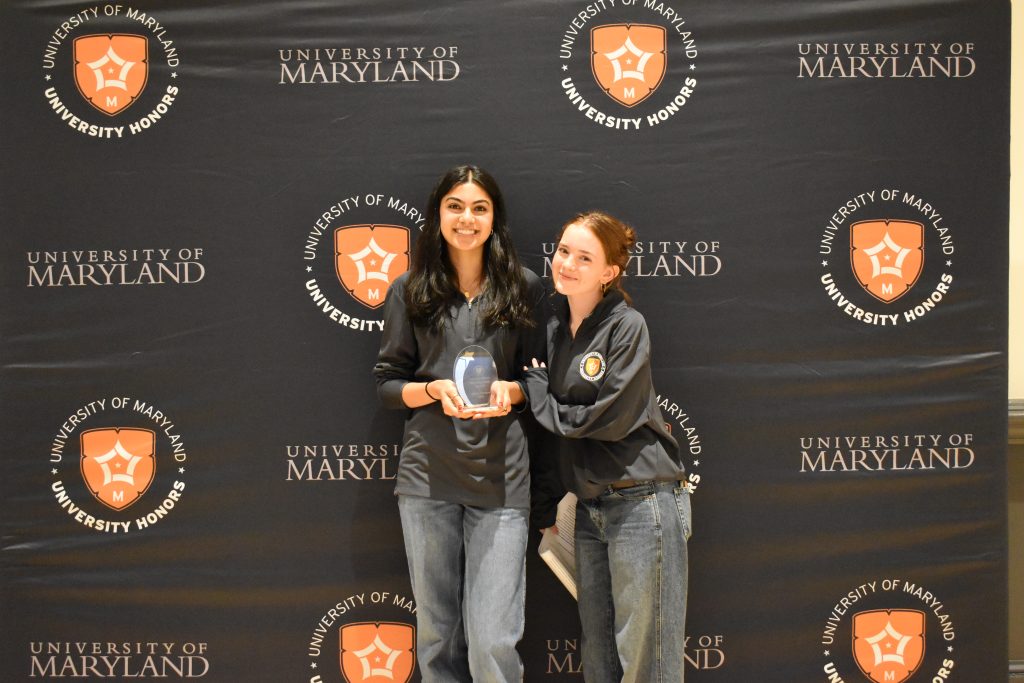
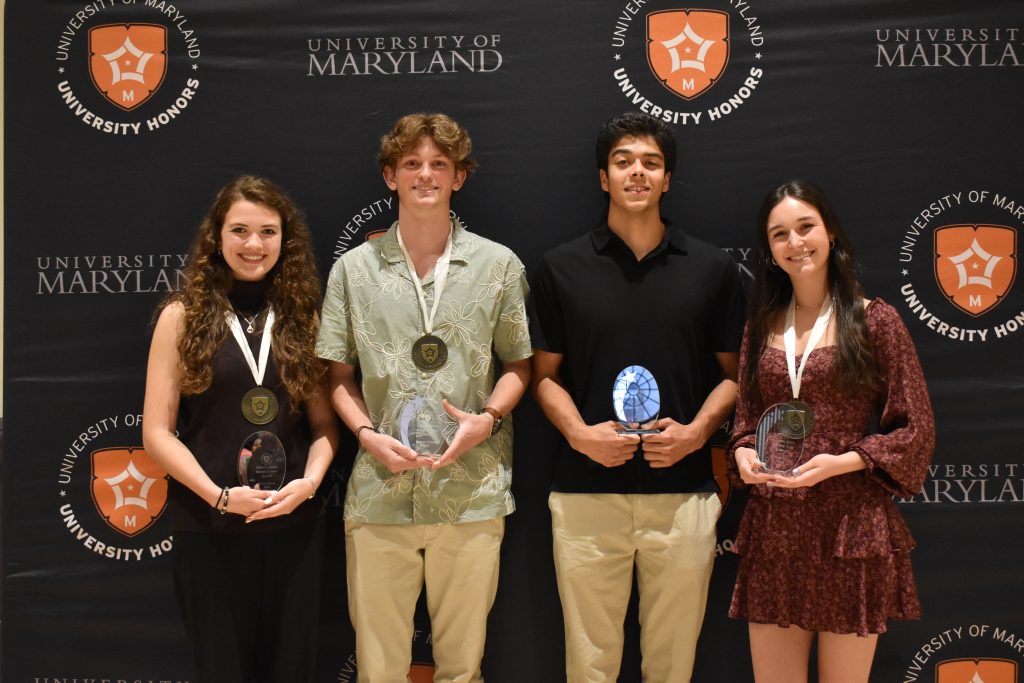
Emerging Leader Award Winners
David Akamine, Sarah Davis, Rose Deguet Delury, Diana Lyons, Alisha Mansoor, & Benjamin Mielcarek
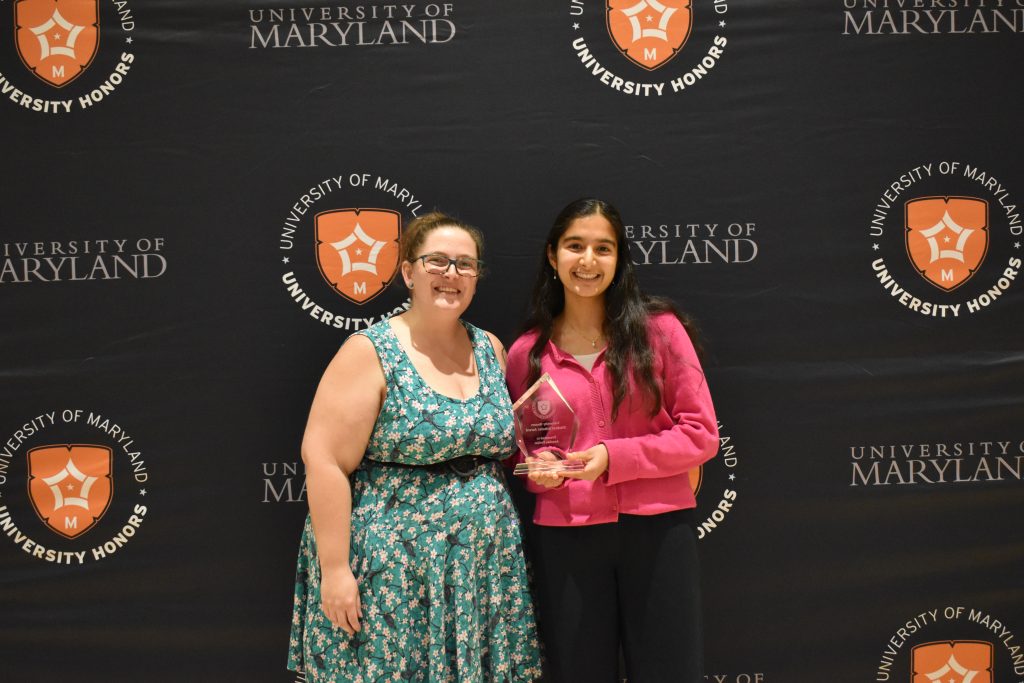
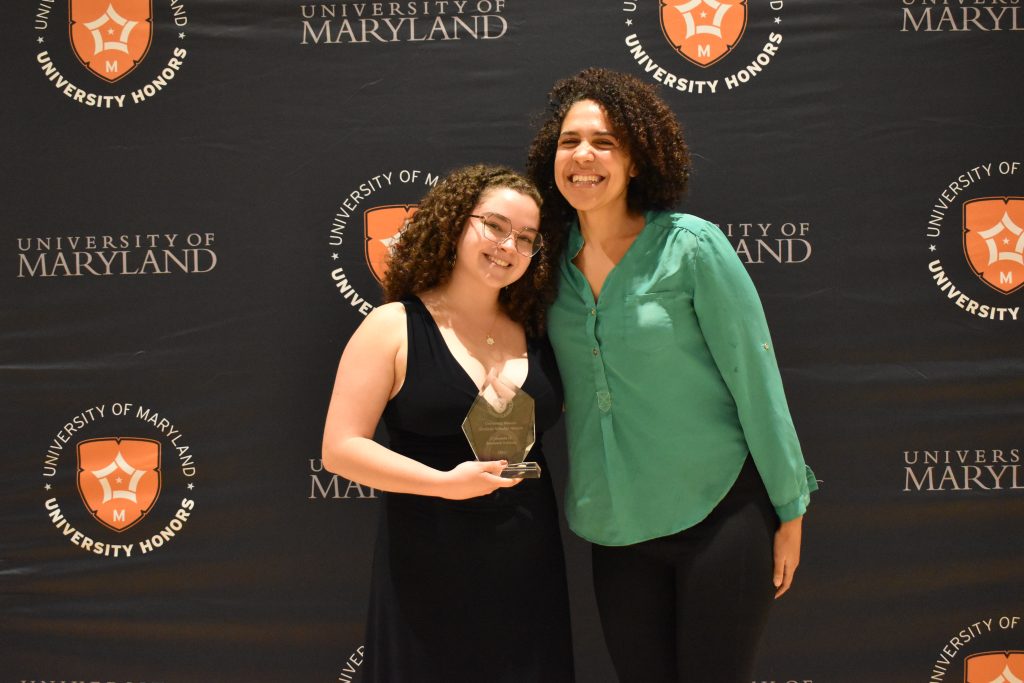
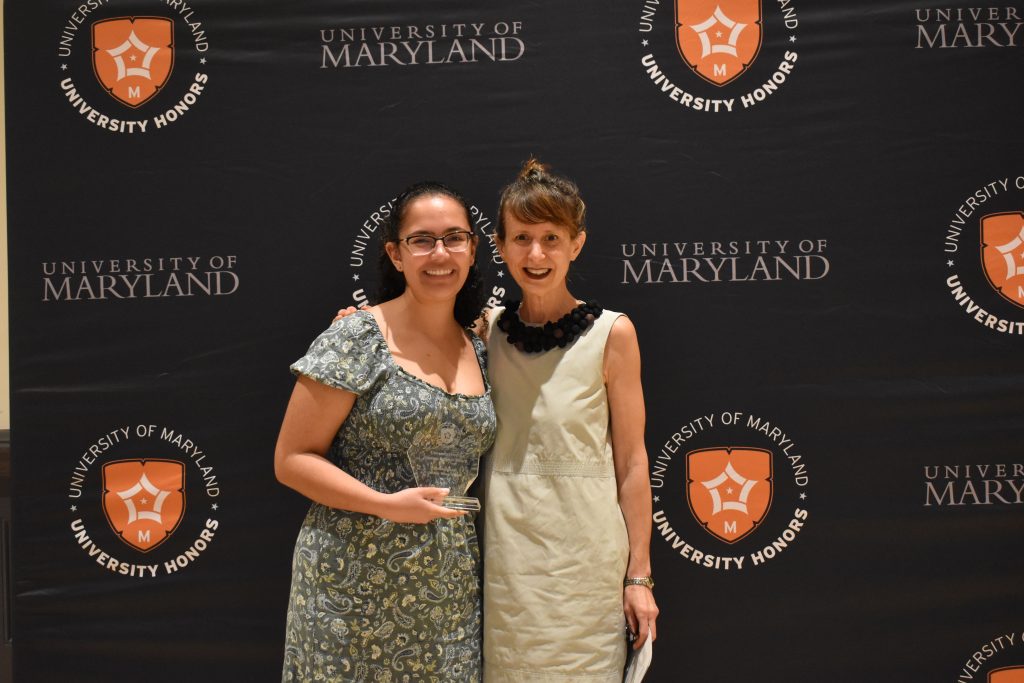
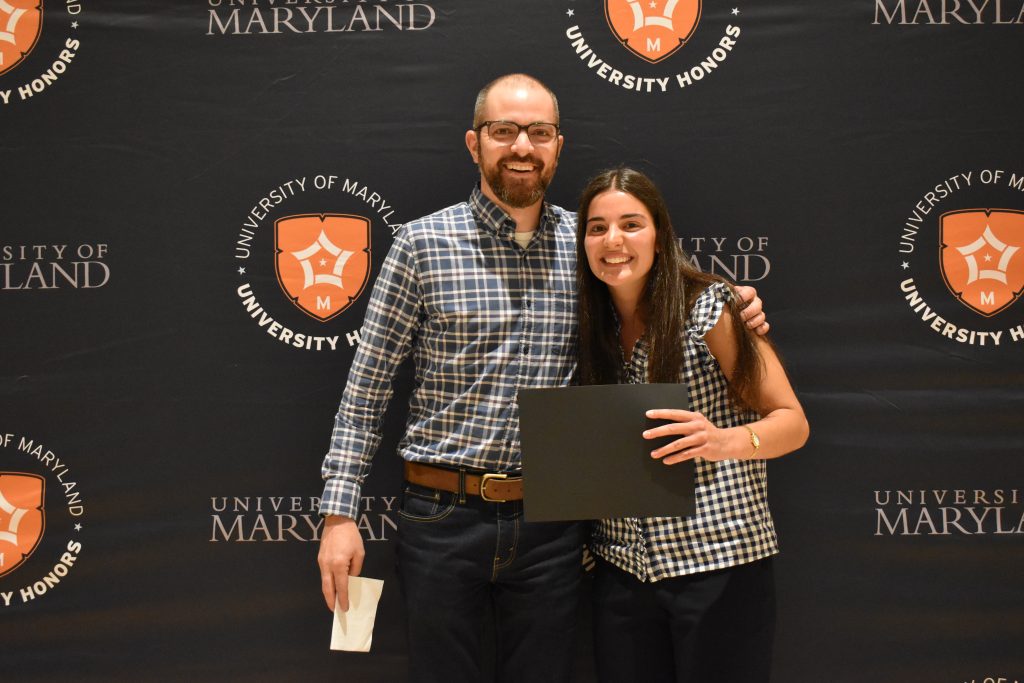
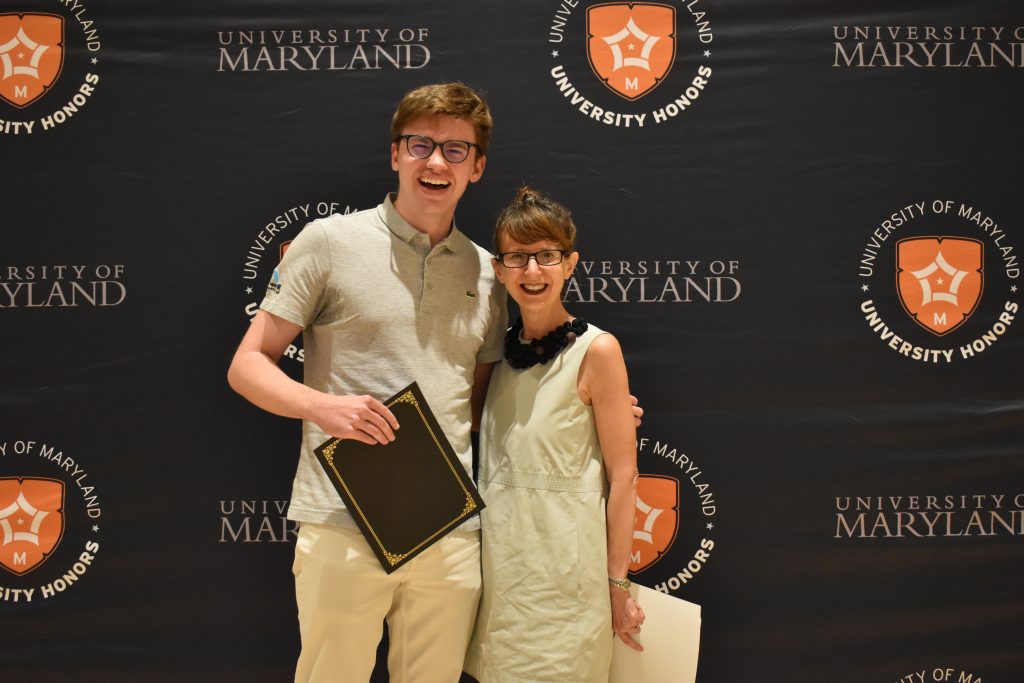
Student Scholar Award Winners
Anushka Poddar, Savannah Robbins, & LeeAnn Wong Arbelo
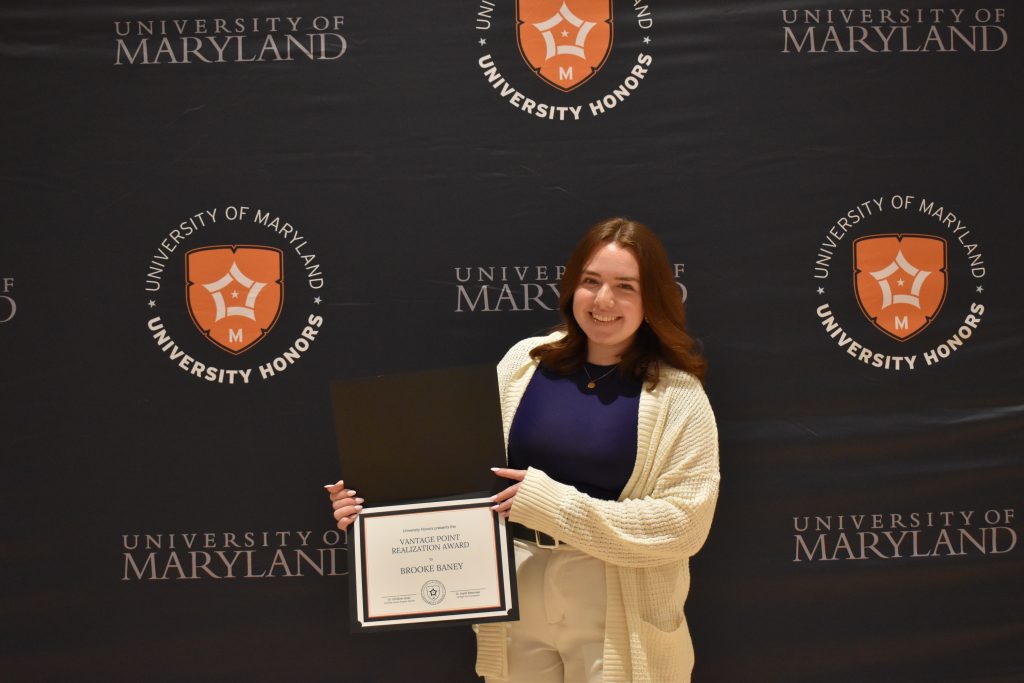
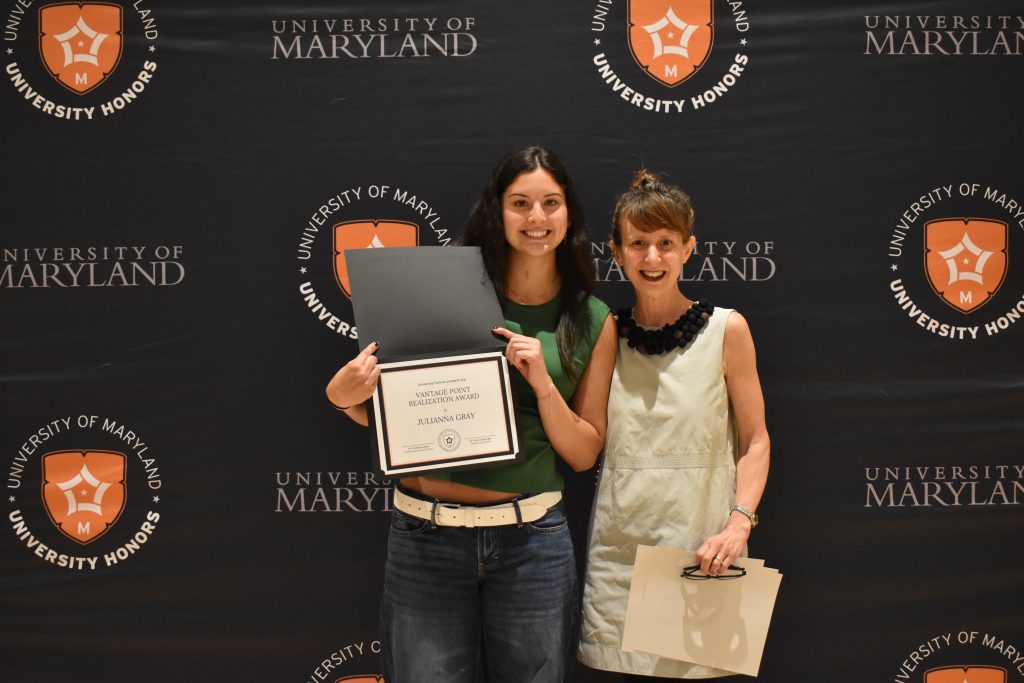
Vantage Point Realization Award Winners
Brooke Baney, Adam Didouchevski, Julianna Gray, & Hannah Richard
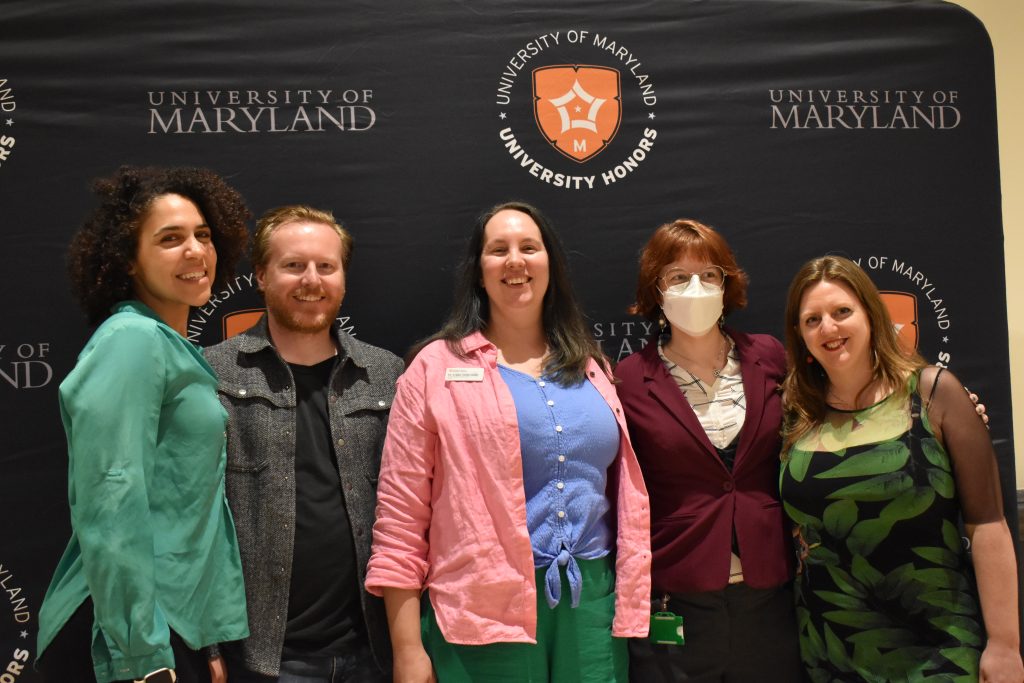
Outgoing Thematic Clusters Recognition
Artificial? Intelligence?: Roland Rust, Rebecca Jones, Cody Buntain, Kenneth Frauwirth, & Alex Harlig
Butterfly Effects: Richard Bell, Daniel Yoder Zipp, DeNeen Brown, Todd Cooke, Marisa Franco, & Robert Graham
Science & Fiction: Kim Coles, Brynne McBryde, Luz Martínez-Miranda, & Mitchell Pavao-Zuckerman
Surveillance: Brian Connor, Jordan Johnson, Jessica Vitak, & Leigha McReynolds
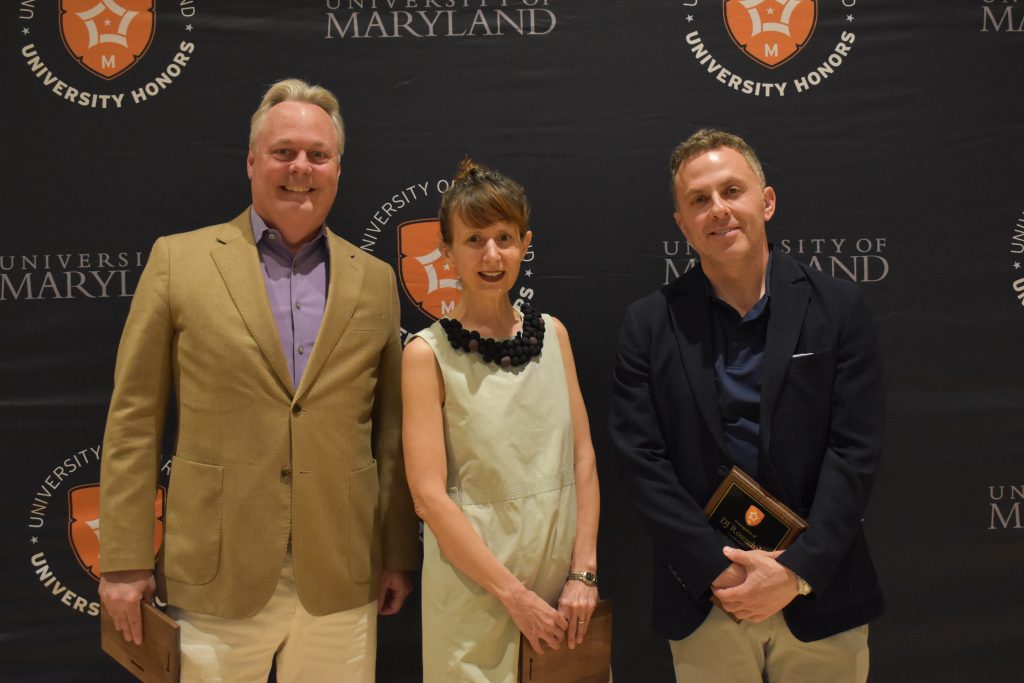
Legacy Tracks Recognition
Climate in Crisis: Tyson Slocum
Drawn to D.C.: Ingrid Satelmajer
National Security: Tim Nusraty & DJ Rosenthal
Strategic Cross-Cultural Change: Gerald Suarez
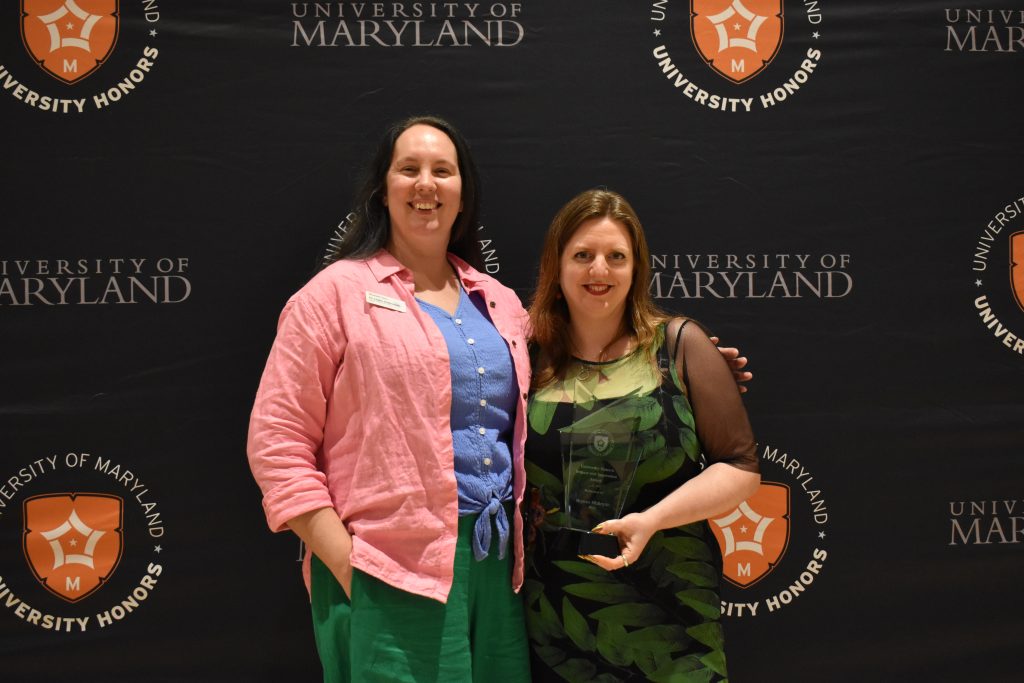
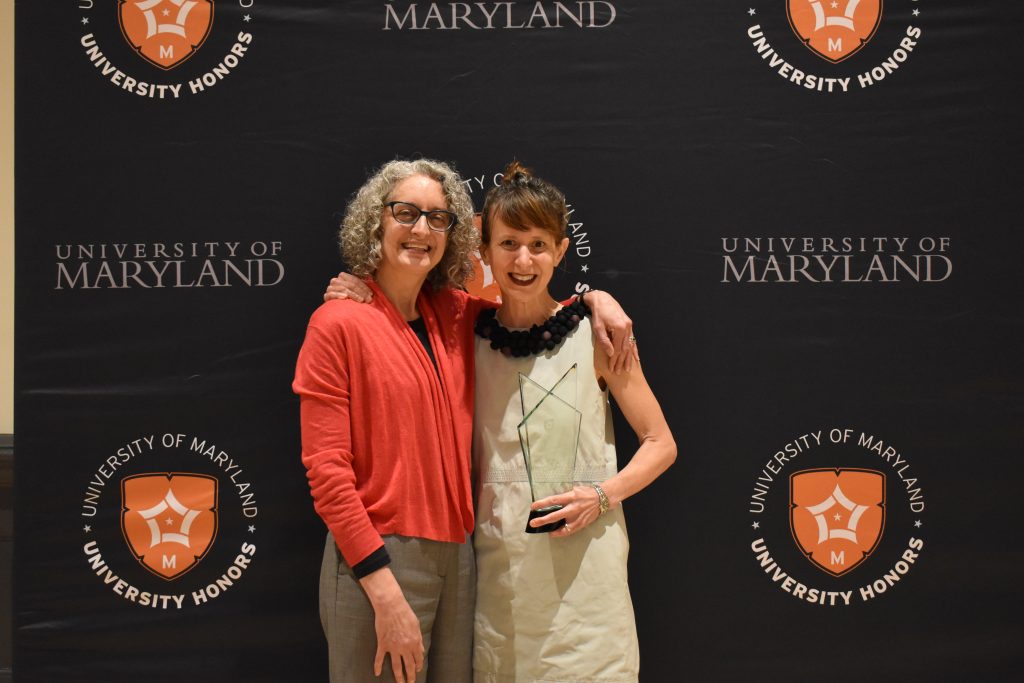
Impact & Innovation Award Winners
Brynne McBryde & Ingrid Satelmajer
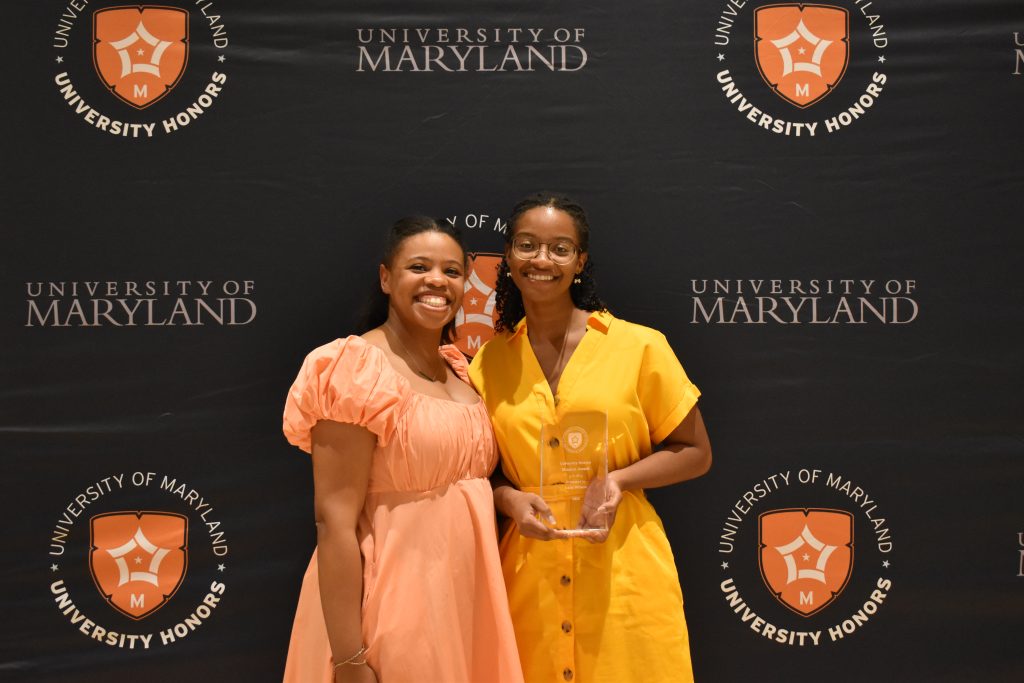
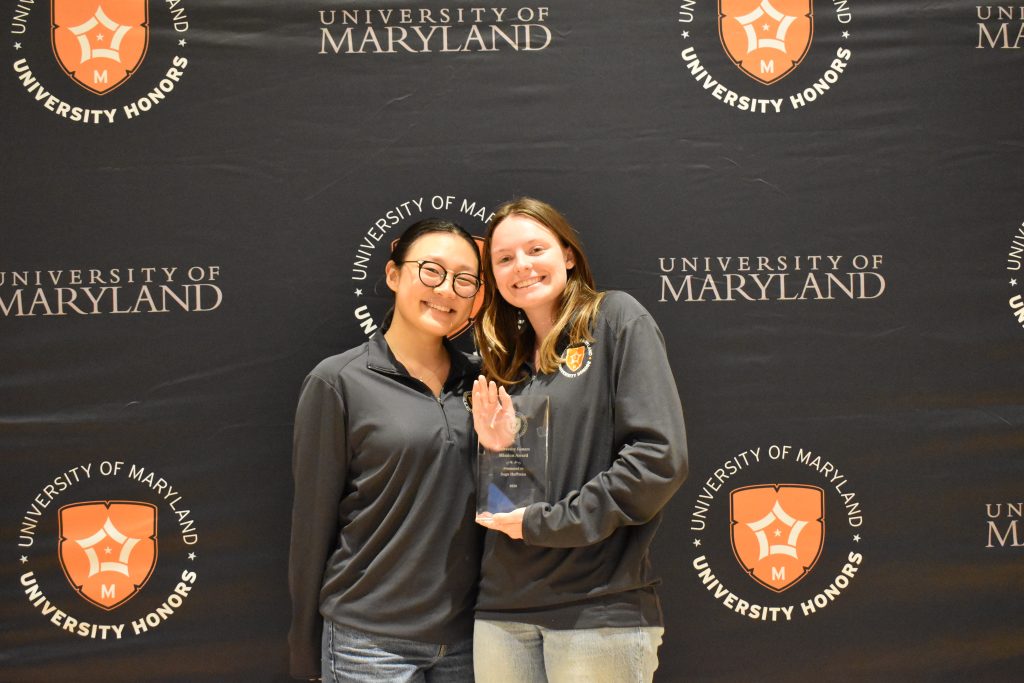
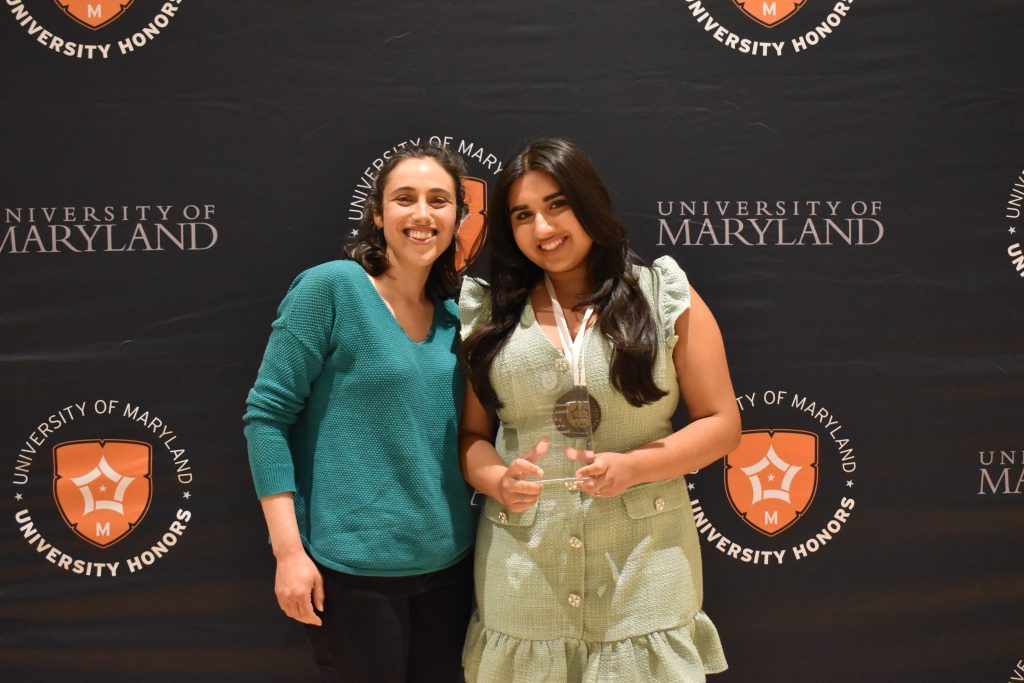
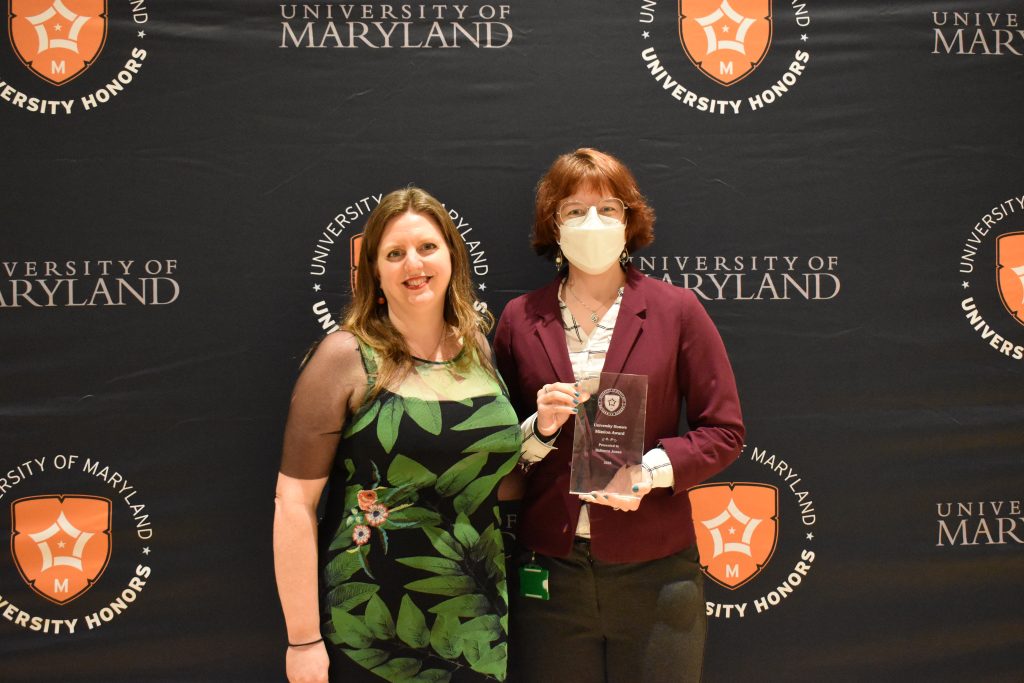
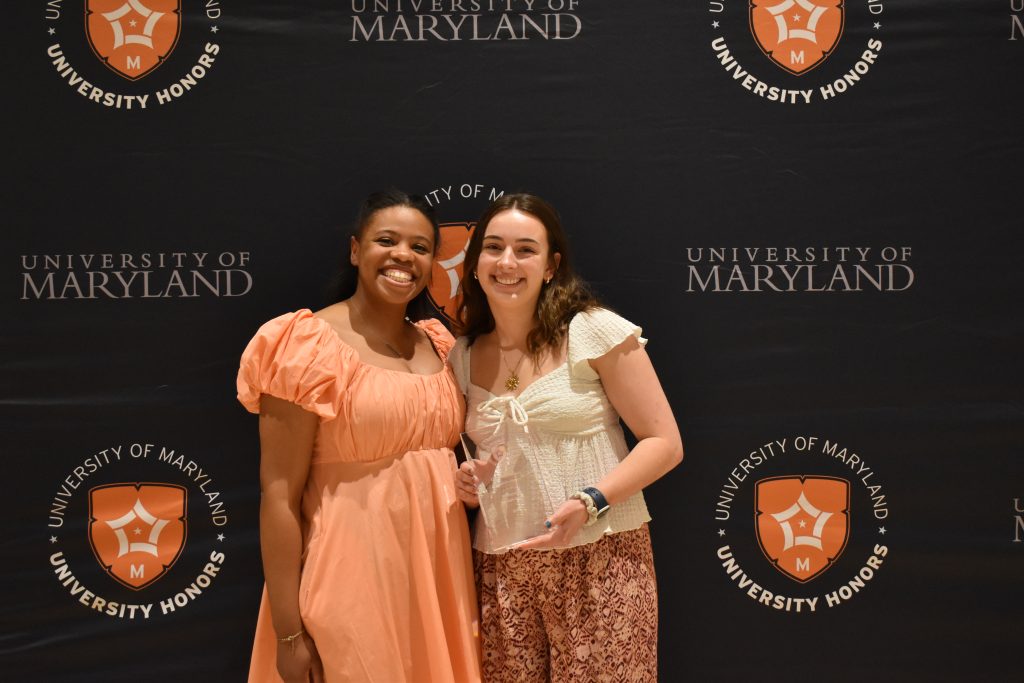
UH Mission Award Winners
Sage Hoffman, Anika Hukmani, Rebecca Jones, Hannah Smith, & Laila Wilson
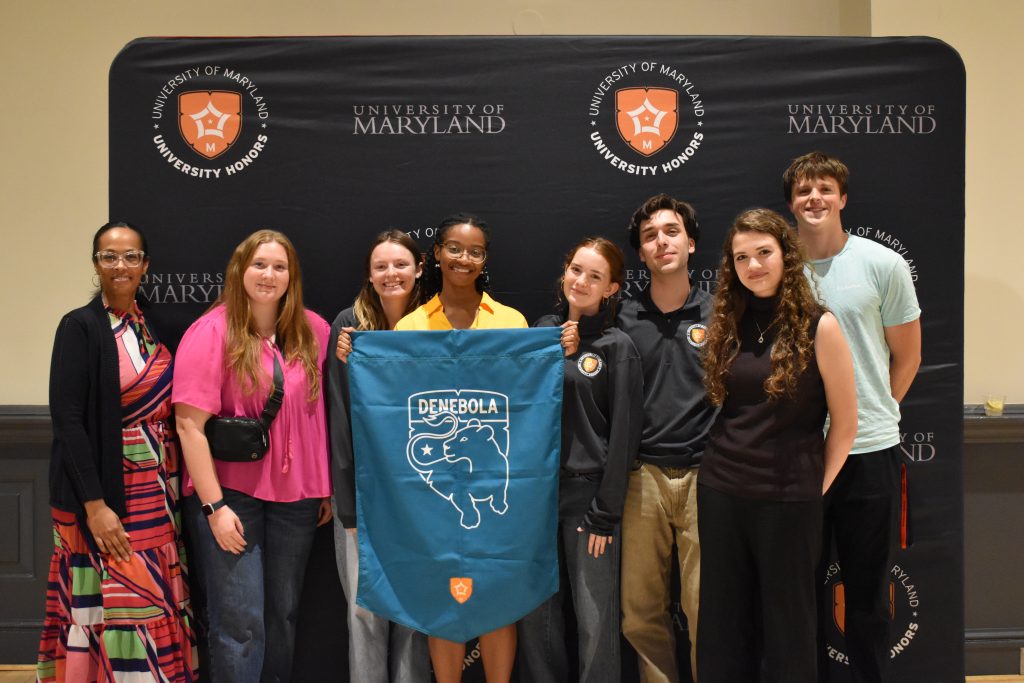
House Cup Winners
House Denebola!
UH Class of 2026
Karim Abdallah
Nishan Abeywardena
William Adams
Ayodele Adeyeri
Ayomiposi Ajayi
Madison Akers
Paul Akiyama
Alisa Alford
Ava Allen
Shayna Alter
Chisom Amaikwu
Simon Ambrozak
Dillon Amin
Simran Arora
Naana Asamoah
Alexandra Atherton
Nisha Athrey
Kendall Auffarth
John Baik
Anne Bair
Nicole Baker
Alseny Balde
Paul Baliff
Zoe Barbour
Ava Bautista
Lara Becker
Maya Beckman
Addis Belayneh
Adam Ben Youssef
Lina Berhaneyessus
Alexander Bierly
Deeraj Binkam
Bridget Bisson
Adryanna Blocker
Noa Blumenthal
Nathan Bogin
Tanvi Bolarum
Maria Bond-Lamberty
Madisen Bonner
Anthony Boscolo
James Botti
Mason Boyers
Nolan Brennan
Tal Bresler
Violet Brungart
Carleigh Buckler
Fatima Bundu
Sara Busch
Maeve Campbell
Natalie Carpenter
Jenna Catlett
Mia Censoprano
Megan Cha
Julia Chamberlin
David Chang
Elise Chang
Nihar Chegireddy
Andy Chen
Austin Chen
Jeffrey Chen
Natalie Chen
Rachel Chen
Spencer Chen
Tao Chen
Vicky Chen
David Chen
Tyson Cheung
Shreenitha Chikyala
Joseph Cho
Michelle Choi
Christopher Connor
Rebecca Contreras
Alessandra Crippa
Gwen Cuadra
Jack Cullum
Aya Daher
Zaharias Dakoulas
Kenna Dalu
Caleb Daniele
Calvin Davis
Madison Davitt
Tara Davoodi
Conrad Decressin
Gianna DeLucca
Dylan Dembo
Yemisrach Deneke
Medhanit Desta
Julia Devine
Zoe Devine
Maeya Devlin-Tremble
Anna Devoto
Neha Dheenadhayalan
Gabrielle Dorsey
Isabella Dos Santos
Cole Drumgoole
Leo Du
Olivia Duran
Sean Eby
Dylan Edwards
Kamryn Edwards
Thomas Edwards
Christina Elebeke
Divine Enyi
Keola Evans
Monica Eze
Klint Faber
Benjamin Falco
Ashley Fearon
Gabriella Feinberg
Amber Felger
Emmanuel Felix
Ella Ferbert
Ari Ferneau
Noah Ferrara
Mia Ferraro
Harrison Fike
Jaime Fonseca Gonzalez
Adelia Fontes
Arya Forohar
Fiona Forrest
Megan Freiermuth
Jake Friedman
Nikko Fukui
Catherine Furtado
Meherzan Gai
Aidan Gaines
Vaibhav Garg
Caroline Garrett
Alston Geckle
Patrick Gee
Ainsley Giles
Ashley Gitau
Darcia Gleason
Amber Godil
Christian Gomez
Nicholas Gonzalez
Srikar Gosakan
Srikar Gosakan
Margaret Gouker
Julianna Gray
Skyler Gribbon
Luke Griffith
Kyle Grimsley
Kathryn Grow
Anthony Gu
Iris Guo
Daniel Guonjian-Pettit
Caleb Haber
Iris Ham
Avipsa Hamal
Dana Harel
Dana Harel
Rory Harmon
Julion Harris
Royce Hartin
Joseph Hauerstein
Nicholas Hearne
Emily Heath
Medha Hegde
Trevor Hennebery
Alanna Hennessey-Loyo
Ian Henry
Ava Hill
Lauren Hill
Sage Hoffman
Robert Hopkins
Liam Hornstein
Anika Hukmani
Elizabeth Ipe
Neisha Islam
Sarah Jacob
Daniel Jamison
Siddharth Jasti
Shane Jayasundera
Ephod Jima
Mia Jocic
Benjamin Johnson
Hudson Jones
Fredrick Jorgensen
Ayush Joshi
Charlotte Juengel
Rebecca Kanda
Kaviya Kandaswamy
Alexander Kantuni
Jacob Kaplan-Davis
Marzan Karim
Jamiesen Kavanagh
Charles Keene
Paul Kettlestrings
Elena Khanlarbeik
Irene Ki
Andrew Kim
Donggeon Kim
Paul Kim
Ryan Kim
Stanley Kim
Woo Kim
Sai Kodali
Shiri Kolom
Phoebe Korang
Megha Krishnakumar
Katherine Krotkov
Elyssa Kugler
Aditya Kumbhare
Steven Kuo
Noah Kupinsky
Nikhil Kurian
Nicole Kyei-Asare
Sebastien Lair
Khang Lam
Daniel Lamb
Cailyn Lamptey
Robert Latyak
Jameson Lau
Jackson Laub
Thomas Lazzarini
Alexis Le
Sarah Lederman
Benjamin Lee
Collin Lee
Eric Lee
Eunice Lee
Mingxin Lei
Luca Lemberger
Vivian Li
Anthony LiberatoreTyler Lin
Amber Liu
Qin Lu
Rebecca Lu
Sophie Lu
Austin Luu
Pacawat Luu
Mosiah Maddox
Zaina Maharoof
Dennis Malikov
Reva Mannan
Reva Mannan
Cierra Marshall
Cyril Mathew
Ryan Mathew
Aiden McCormick
Declan McGarry
Ainsley McNinch
Daniel Mehreteab
Sunjum Mehta
Tej Mehta
Jonathan Mei
Salem Mengistu
Casey Metzger
Aidan Meyer
Nadia Meyerovich
Zachary Miller
Dorian Mitchell
Kevin Mitchell
Keshav Mittu
Yassine Mohmand
Chris Moon
Hannah Moore
Susanna Moore
Bradley Morhiser
Joan Morningstar
Jonathan Moses
Rachel Mroz
Miku Nagao
Vikram Nagarajan
Praharsh Nanduri
Pranav Narayan
Adam Nazrul Hisham
Beryl Ndofor
Quinlan Ngo
Christine Nguyen
Huy Nguyen
Amanda Nobil
Obariagora Nwogu
Oriel Ockerman
Jaidan Odonoghue
Oluwatobiloba Oloye
Victoria Olyshko
Jenna Omar
Angel Oparaocha
Devora Organic
Prince Osei
Arya Palan
Aakash Pamnani
Nicholas Pappas
Tiana Parker-Bey
Ansh Patel
Maahi Patel
Tisha Patel
Kavi Patel
Alexander Paul
Keya Pawar
Ankit Penmatcha
Joseph Pennsy
Flavia Peredo Barbery
Yesenia Perez
Mika Persaud
Alex Pertea
Justin Pham
Ava Piatt
Terra Pickett
Isabel Polanco
Maya Popova
Carsten Portner
Caitlin Powell
Natalie Prieto
Andy Pu
Kyle Pumphrey
Asbah Qadri
Grant Quant
Maryellen Quinn
Maarij Qureshi
Schanze Qureshi
Silas Rager
Jasmine Ramos
Iara Rattner
Sanchay Ravindiran
Samiya Redd
Paige Reed
Ansh Rekhi
Ansh Rekhi
Quinn Renaghan
Angelica Reyes
Bruce Reyes
Michelle Rhee
Alex Ridolfi
Wyatt Riker
Savannah Robbins
Archer Romelli
David Romero
Luke Rose
Sophia Rowe
Rona Roy
Emma Rudolph
Adaline Ruff
Elizabeth Runsdorf
Aidan Sachs
Brynn Saffer
Priyansu Sahu
Logan Sampath
Valeria Sanchez-Mendoza
Nishan Sandhu
Archer Sariscak
Khary Sarr
Jenneth Sayson
Andrew Schaefer
Tali Schlenoff
Zachary Schneider
Riley Schoch
Trevor Scholz
Patrick Scott
Sierra Scott
Curtis Sechler
Parsa Sedghi
Bennett Sellers
Ryan Selser
Maaya Senthilkumar
Hannah Seok
Olivia Sevy
Arjun Shah
Kunal Shah
Archit Shankar
Katherine Shen
Stephen Shkeda
Susan Shollenberger
Anna Simpson
Surabhi Singh
Anna Sladic
Alyson Smallhorn
Hannah Smith
Lindsey Smith
Nathan Smith
Nathaniel Smith
Jakob Snyder
Sriya Sogal
Minjae Sohn
Evan Song
Anthony Spinelli
Vishnu Sreekanth
Campbell Stein
Megan Stuller
Eashana Subramanian
Nadia Sumah
Peampat Suphaphon
Mia Swaby-Rowe
Benjamin Tabor
Nico Tantengco
Anais Taupenot
Christopher Taylor
Sydney Taylor
Naomi Tesfai
Johann Thomas
Sharvari Tirodkar
Nicholas Todirita
Meena Toolaabee
Angelina Tran
Samuel Tran
Clara Tuske
Sophie Umansky
Franz Uriona Lizarraga
Ryan Vacek
Emma Vanden Berg
Samuel Verbrugge
Deven Verma
Isabella Vidal
Cricia Villanueva
Sanjanaa Viswanathan
Joseph Vogel
Danylo Voloshyn
Luke Walker
Brian Wall
Abigail Wambach
Davin Wambogo
Elliot Wang
Justenn Wang
Alison Wang
Peter Wange
Grace Warfield
Matthew Welling
Braden White
Ryan Whittaker
Noah Wigglesworth
Laila Wilson
Katelynn Winebrenner
Benjamin Winig
Ashley Witcher
Alexander Wolfson
Sophia Wolin
Matthew Won
Annika Wong
Tyler Wong
Leeann Wong Arbelo
Kenny Wu
Josephine Wu
Isabella Xerri
Michelle Xie
Chuanhai Xu
Nathan Xu
Lydia Yom
Ashley Yoon
Meilin Yuan
Azhan Zafar
Doniella Zak
Tahmid Zaman
Zain Zarger
Andrew Zhang
Frank Zhang
Lauren Zhang
Daisy Zheng
Joseph Zolkiewicz
Shoshana Zuck -
Student Spotlight: Gabriel Santiago Named Hollings Scholar
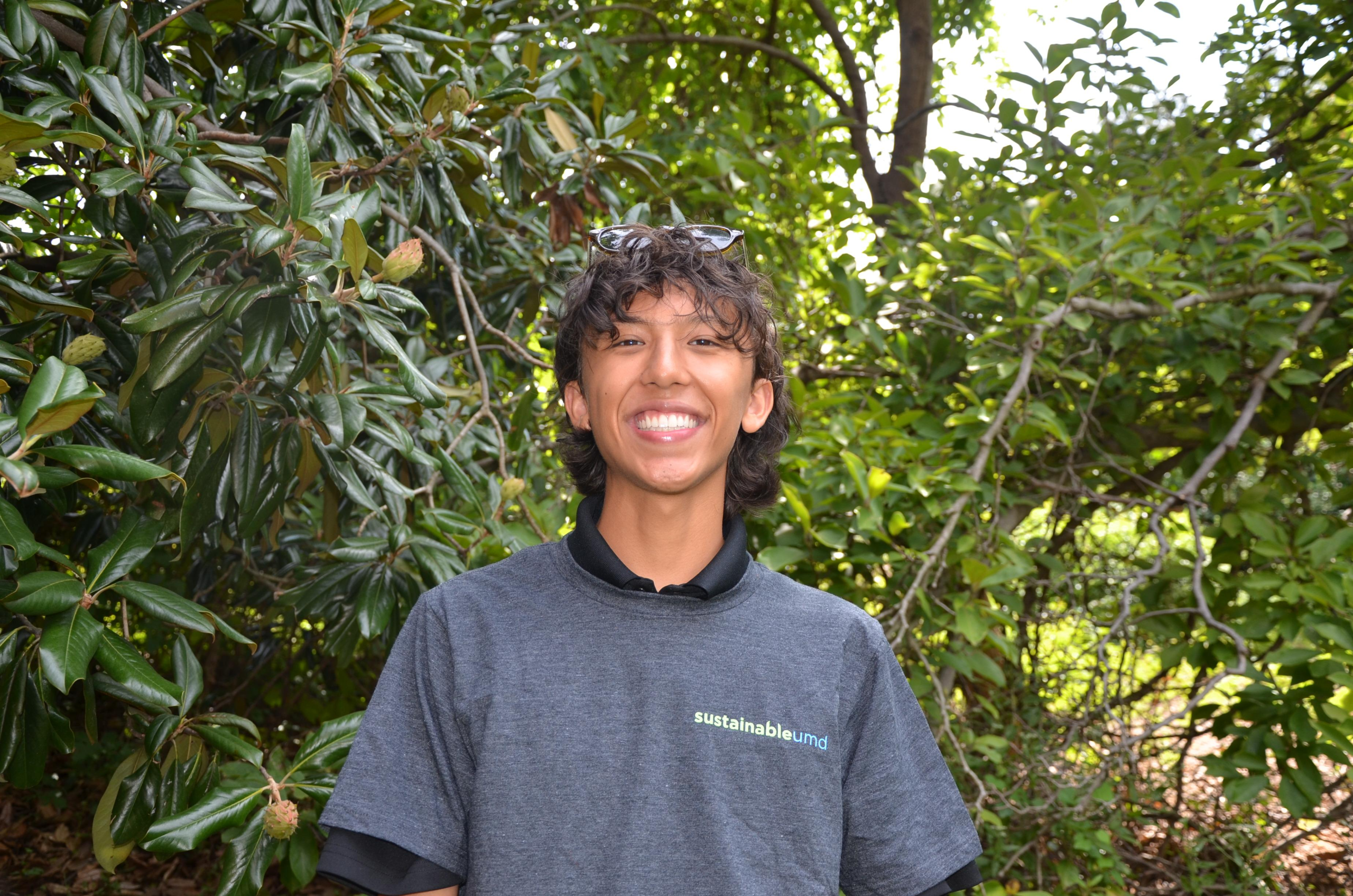
Gabriel “Gabe” Santiago has always approached academics with curiosity and interdisciplinarity. From his University Honors Vantage Point project exploring the relationship between pop culture, musicology, and climate change to his publication in UMD’s Interpolations: Journal of Academic Writing focused on the nuanced discourse of cultural borrowing in the fashion world, Gabe is not afraid to tackle big topics from a multitude of perspectives. So it’s no surprise that he was recently named a 2025 NOAA Undergraduate Hollings Scholar. This prestigious two-year program awards recipients with financial assistance and a paid, 10-week summer internship with the National Oceanic and Atmospheric Administration. The internship provides scholars with hands-on, practical experience in NOAA-related science, research, technology, policy, management, and education activities. The award also includes travel funds to attend a mandatory NOAA Scholarship Program orientation, the annual Science & Education Symposium, and scientific conferences where students present their research.
Gabe interned with The Maryland General Assembly as an Energy and Environmental Policy Federal Fellow. During this experience, he noted his surprise that many public and environmental policymakers, both at the state and federal levels, lacked a deep understanding of the science behind the environmental decisions they were making. This realization was part of his motivation to apply for the Hollings Scholarship, as a step toward bridging the gaps he witnessed between science and policy. “As someone passionate about innovative solutions to climate change adaptation and mitigation, I’m excited about the opportunity to contribute to this mission through NOAA’s work over the next two years, even amidst uncertainty from the current administration,” says Gabe.
As an Environmental Science and Policy major within University Honors, Santiago’s approach to academics is inherently interdisciplinary. “Through University Honors, I’ve learned to approach complex issues from multiple angles and to value interdisciplinary thinking. These skills,” he said, “are essential to the mission of the Hollings Scholarship, which lies at the intersection of science and research, communication, and public service.” Santiago thanks UH professors Dr. Jordan Johnson (Vantage Point Seminar), Tyson Slocum (Climate in Crisis: Strategy & Advocacy) and Dr. Jonathan Dinman (Climate Change, Infectious Disease, & Civil Society) specifically for their support of his academic growth. “Their classes have nurtured my scientific curiosity about the environmental problems we face, and their mentorship has guided my commitment to shaping policy solutions,” he states.
“This is so well deserved,” said Dr. Johnson of Gabe’s appointment. “Gabe’s attention to thoughtful project management and his passion for environmental policy enriched the experience of our class throughout the semester. Gabe brought a sense of intellectual curiosity to each conversation, excelling in class discussions as well as individual assignments and workshops. He also demonstrated an eagerness to explore interdisciplinary approaches to environmental studies, most notably in his final which culminated in an interdisciplinary art project on climate change, eco-anxiety, musicology, and pop culture. I know he will do amazing things working with NOAA!”
-
A Parting Interview with Dr. Blatti
After six years as Director of University Honors, Dr. Stephan Blatti recently announced that he will step down at the end of this academic year. Dr. Blatti fearlessly captained the UH ship through a highly innovative update to the curriculum, the construction and move into Heritage Community, and a global pandemic. Under Blatti’s leadership, UH has grown from a time in 2019 when he was the program’s sole employee to a dedicated team of more than 20 full-time faculty and staff. From teaching in one of the original thematic clusters, to the inauguration of the Maryland Honors in Oxford track at his alma mater, to his much-anticipated Breakfasts with Blatti, it is fair to say that Dr. Blatti will leave a lasting legacy in the program he helped to reimagine.
Before he decamps for his next adventure in New England, the UH Student Board sat down with Dr. Blatti to talk about his time at UH and his hopes for the future of the program. Enjoy their conversation below, and make sure to stop by his office before the end of the semester to wish Dr. Blatti a fond “See you later!”
What brought you to University Honors?
I came to UMD in 2017 after nearly a decade at the University of Memphis where I’d been an Associate Professor of Philosophy. At Memphis I had been moving into administrative roles, serving as director of the humanities center and later as chair of the Philosophy Department. I care a great deal about public higher education, and I especially enjoy teaching honors students.
So, when our family decided to relocate to Maryland, I was immediately drawn to UMD, in general, and to the Honors College, in particular, which was then searching for an Associate Director to work closely with University Honors. That was eight years ago, almost to the day.


What was the most rewarding experience that UH gave you and how will you carry that into your future endeavors?
Far too many rewarding experiences to pick just one! But if I had to pick one, it would be … everything.
Here’s what I mean. Shortly before I came to Maryland in 2017, a strategic visioning committee had completed a study of the Honors College. Included in the final report was a recommendation to reimagine University Honors. So I joined then Executive Director, Sue Dwyer, in developing a plan to transform just about everything about UH, from its curriculum and its staffing model to its residential home and relationship with the College. For nearly two years, we worked with UH students and university leadership in refining that plan. By the spring of 2019, we’d secured the requisite approvals from across campus, and the “new UH” was officially under construction. I say that my most rewarding experience in UH has been everything because we’ve been hard at work ever since in trying to realize that plan and because it has been so rewarding to witness the impact of this work for hundreds and hundreds of UH students. And I emphasize the “we” because it’s the deep sense of gratitude that I feel toward the many, many faculty, staff, and student leaders who have devoted so much time and energy into launching the “new UH” that I will cherish long after I leave.
What is the biggest challenge you faced during your time in UH, and what did you learn from it?
The transition from “old UH” to “new UH” was long and bumpy. The first cohort of students to join the “new UH” arrived in Fall 2020. As if launching a new living-learning program wasn’t challenging enough, we did so in the teeth of COVID-19, in the midst of a nationwide racial reckoning, and whilst actively supporting “old UH” students still working to complete the existing curriculum (which itself needed to be wound down as the new one ramped up). Complicating things further was the ongoing construction of Heritage Community, with first-year students split between Pyon-Chen and Hagerstown Halls in 2021-22. Not until Johnson-Whittle and the UH Commons (Yahentamitsi Hall) opened in Fall 2022 did it begin to feel like the vision for the “new UH” was realized. Except that, in many ways, we’d only just arrived at the starting line: because even with the restructured curriculum, a full team of faculty and staff, and the new buildings all in place, we hadn’t even begun, really, to build the culture of the new program. Which brings me to the lesson that I take from these years: meaningful change takes much time and care.
What piece of advice do you have for UH students?
My advice is encapsulated in a phrase that, by now, students will be tired of hearing me say, viz. “epistemic humility,” which means modesty with respect to what you think you know and a willingness to acknowledge all that you don’t know. As the opposite of intellectual arrogance, epistemic humility is the sort of virtue that isn’t much celebrated or prized these days. But it’s vital that students cultivate this disposition. Here is just one reason among many: a lot of what you don’t yet know has to do with yourself. For the overwhelming majority of you, the tape at the finish line that you envision as a first-semester freshman will not be the same as the tape you’ll break a few years later at graduation. Along the way, you’ll drop your initial major in favor of a different one. Or you’ll keep your initial major, but add a second one. You’ll pick up a minor, or a certificate, or both. You’ll attempt things and fail. You’ll try other things and flourish. You’ll fall in and out of love. You’ll develop passions you could hardly have fathomed when you began. You’ll take a course, or study abroad, or complete an internship that changes your life. There’s so much you don’t know about what you believe and who you are that it would be utterly foolish to pretend otherwise. So why on earth would you be rigid about anything? Instead, be open to unfamiliar ideas and experiences. Whether personally or intellectually, don’t be closed off or arrogant. Be epistemically humble!


What do you hope for UH’s future?
I often think about something that a former student said about UH. Sasha Kahn was an “old UH” student on whom I relied for counsel as we developed and began to implement our plan for the “new UH.” For his many contributions to the program, we recognized Sasha with an award just before he graduated in Spring 2020. The award was accompanied by an invitation to give a brief address to UH students. Because the pandemic prevented us from in-person gatherings, Sasha elected to record a video that could be shared with all UH students; it’s still available online here. Being a Government & Politics and Architecture double-major, Sasha spends much of the video drawing a picture of Hagerstown Hall while he shares a story from his first year in UH. Along the way, he makes the following observation which has stuck with me all these years:
University Honors is a huge program—it’s thousands of people. And sometimes it struggles to find a unifying identity. And, you know, I think that’s kind of a good thing. We aren’t all a single living-learning community in the way that some of the other smaller ones are. We are many living-learning communities under one name. We’re lounge friends and roommates and study groups that divide and reform when we need to. And in times like these, when distancing and isolation are the only things we know, those communities become more important than ever. We are all in this together—as University Honors, as the Honors College, and as Maryland.
-Sasha Kahn, ’20
I couldn’t agree more, and from the “old UH” through the “new UH,” that’s always been true. It seems fitting, therefore, that Sasha’s drawing of Hagerstown hangs today in the main office of the UH Commons—in a building, that is, that was barely under construction at the time he graduated. Because it’s never really been about “old UH” or “new UH.” Our one UH has been many UHs all the way along.
So as I depart and as new leadership steps in (watch this space for news!), let me first register what a privilege it has been to work alongside you these past few years. My sincere hope is that students, faculty, and staff will continue to push the program to evolve in ways that support and educate the many communities University Honors serves, because it’s in that innovation, co-creation, and multiplicity that UH’s identity consists.
-
Climbing for Connection
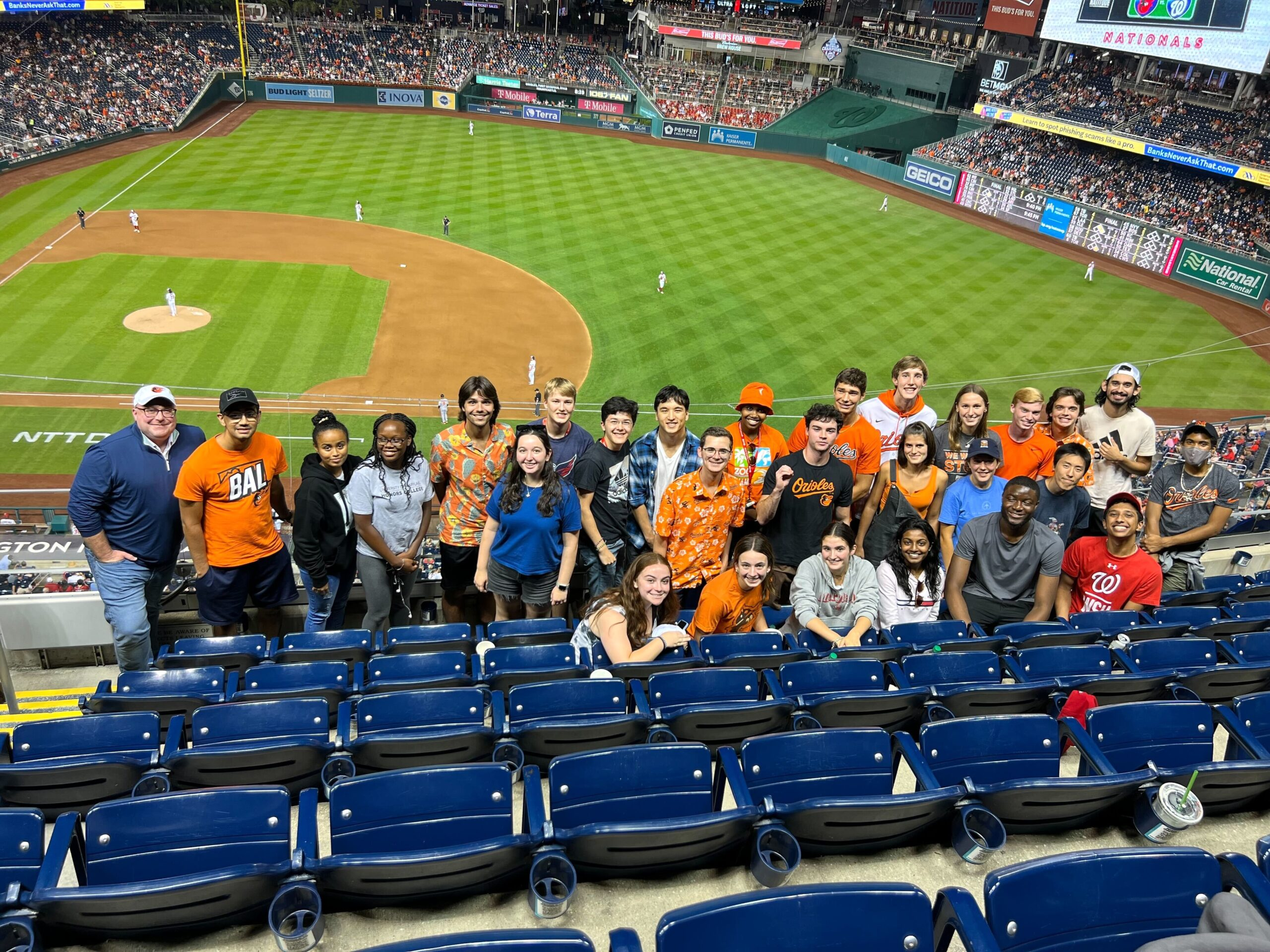
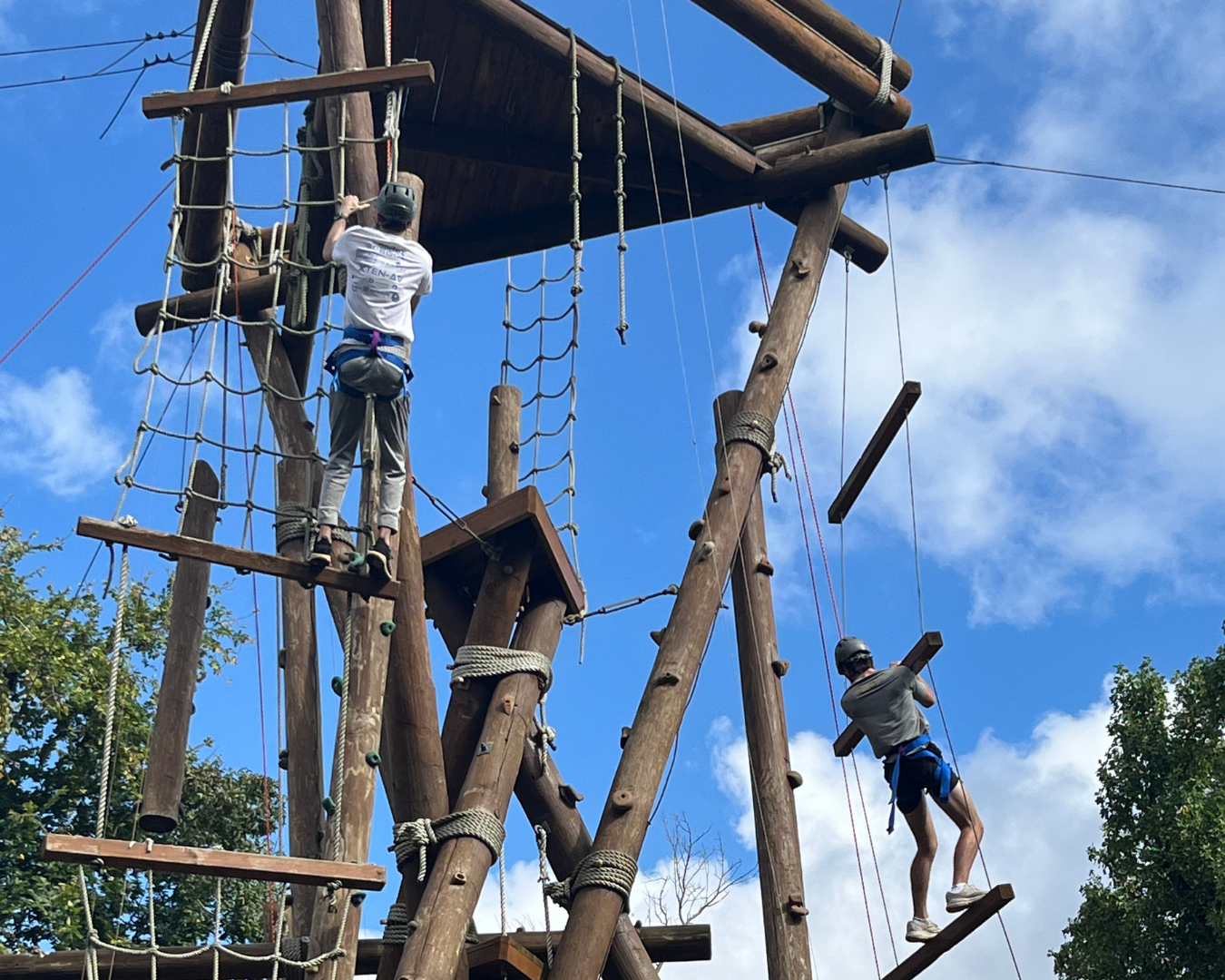
Another annual House Challenge Course is safely in the books! We were thrilled to have so many students interested in taking part in this yearly event intended to bring together students from each house to connect with one another outside of the classroom. From ice-breakers and teamwork games on the ground to high-flying antics climbing the RecWell Challenge course, we love to see our UH students rise to the occasion (literally!).
Special thanks to the RecWell team and the UH Staff and Faculty members who came to join our students for this experience!
Check out the photo gallery below.
House Altair


House Denebola


House Eltanin


House Shaula


-
Student Spotlight: UH iGEMs Earn Gold in Paris
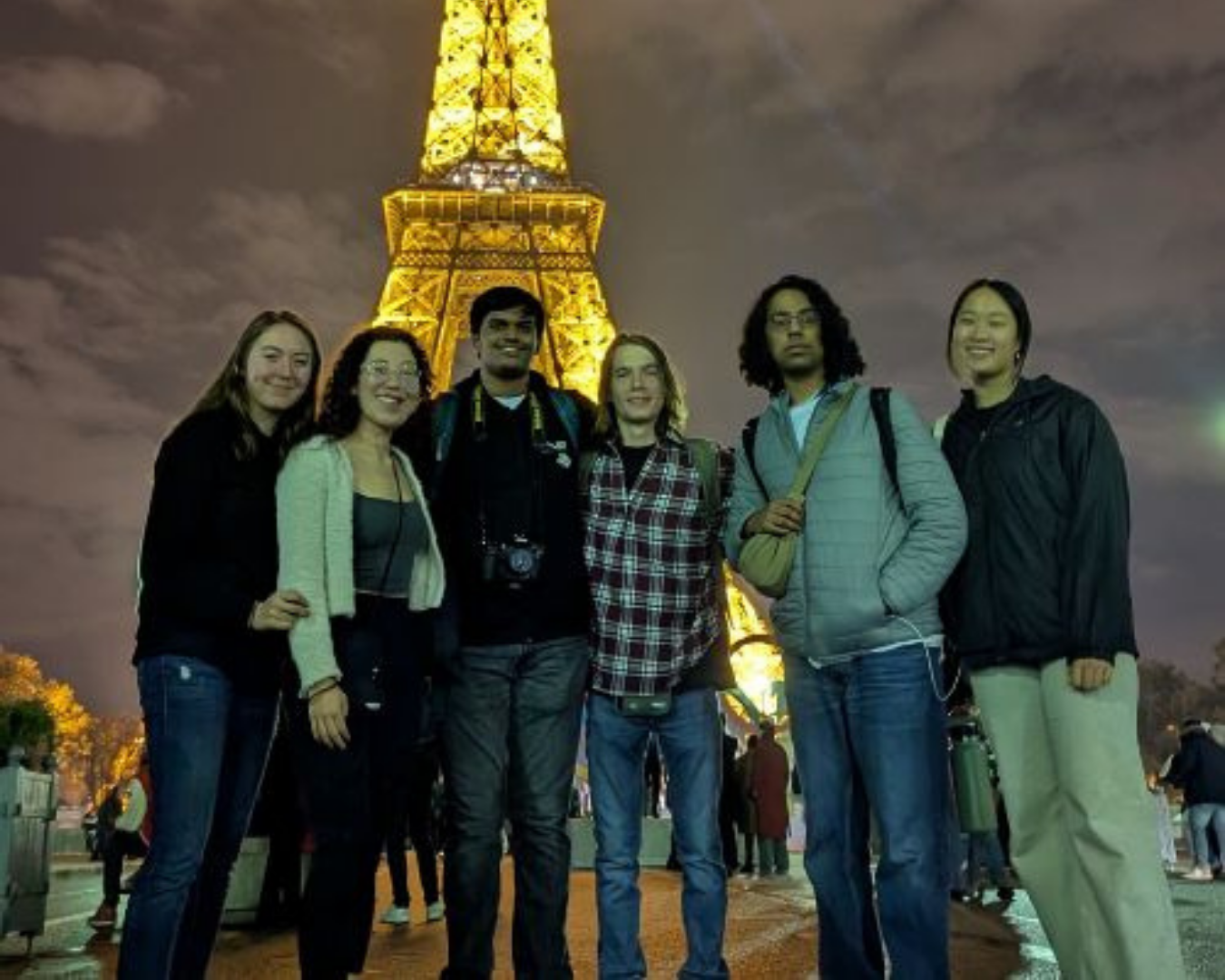
Join us in congratulating UH’s own Lauren Applegate, Rebecca Lu, and Krista Adu-Osei on bringing home the gold alongside their UMD iGEMs teammates!
iGEM is known as the heart of Synthetic Biology, working hard to create a vibrant, innovative, and responsible research community and industry surrounding topics of synthetic biology. Each fall, the iGEM foundation hosts their Jamboree, a 3-day international expo featuring exhibits, networking events, panels, and competitions for high school, undergraduate, and graduate students alongside industry veterans and startups. This year’s Jamboree was held in Paris, France, and included keynotes by representatives from Colorifix, Neoplants, Twist Bioscience, BIOFABRICA, Gingko Bioworks, Asimov, and more.

UMD’s iGEM team presented their project CerviCare at this year’s expo. CerviCare is a urine-based, cervical precancer screening tool they created to detect cervical cancer early, easily, and safely for users across the globe, especially in lower and middle-income countries. The test avoids common barriers to cervical cancer diagnosis like cost, anxiety, patient discomfort, refrigerated storage, and reliance on lab equipment/technicians.
Utilizing a novel approach to toehold switch design, the project detects microRNAs (miRNAs) upregulated in the urine of cervical precancer patients. Urine is introduced onto a test strip containing plasmid DNA and cell-free expression components, triggering toehold switch-mediated reporter gene output. This output is measured by a low-cost portable reader to provide a risk assessment for cervical precancer.


The team earned a Gold Medal for their project, an accolade only awarded to iGEM teams who fulfill a specific judged set of criteria, indicating high competitive excellence. UMD was one of two Big 10 teams to achieve a Gold Medal, alongside prestigious programs from Cambridge, Cornell, McGill, MIT, Oxford, Princeton, and Stanford.
We caught up with Lauren, Rebecca, and Krista before their trip to Paris to learn more about iGEM and how their UH experiences influenced them as they devised and created CerviCare alongside their teammates.


UH: How did your time and courses in UH help you formulate and execute your iGEM project and research?
LA: The interdisciplinary focus of UH translates very well to the interdisciplinary work we do in iGEM. Because of UH, I know how to work with people who have different interests and areas of expertise to accomplish a common goal – something we do every day in iGEM. Also, my UH class the Ecology of Child Poverty helped me bring a sociological perspective to our project. I can take my understanding of how environmental factors and policy affect people, and apply it to our device’s design and implementation.
RL: My time in UH really made me understand the importance of having multiple perspectives and a division of roles. In iGEM, we need to consider a variety of factors besides the actual research part that is integral to our project. From the numerous discussions through my UH courses, I’ve seen how important voicing those opinions are.
KA: My time in UH really helped with iGEM by allowing me to work on my research skills when it comes to huge projects like these. It also helped with learning different interdisciplinary skills and applying those to various projects, since iGEM is interdisciplinary as well.
UH: Why do you think incoming students should consider joining UH? And why should students of all years check out iGEM?
LA: I think students should join UH because of the wide variety of classes available – it is easier to be engaged in what you are learning when it appeals to your personal interests. Joining iGEM is a great way to get involved in student-directed research: we all get a say in our project’s development and direction. In addition, no matter what your major is, there are opportunities to gain valuable experience. Whether you’re interested in biology, web development, art and design, mathematical modeling, fundraising and budgeting, public health, or engineering, there’s an aspect of iGEM for you.
RL: I think students should join iGEM because it allows for a unique hands-on experience that allows students to be involved in a variety of aspects of synthetic biology research! Similar to UH, it encourages students to learn more deeply by interacting closely with the material and further enriching their educational experience. UH is beneficial in this manner because the courses are often smaller and discussion-based, allowing students to connect with each other and the faculty.
KA: I think students should join UH because it allows them to learn from a variety of different subjects that they would not have the opportunity to learn outside of it. I also think students should join iGEM because it allows you to build up different skills you have and also encourages you to work on those skills both collaboratively and independently.
-
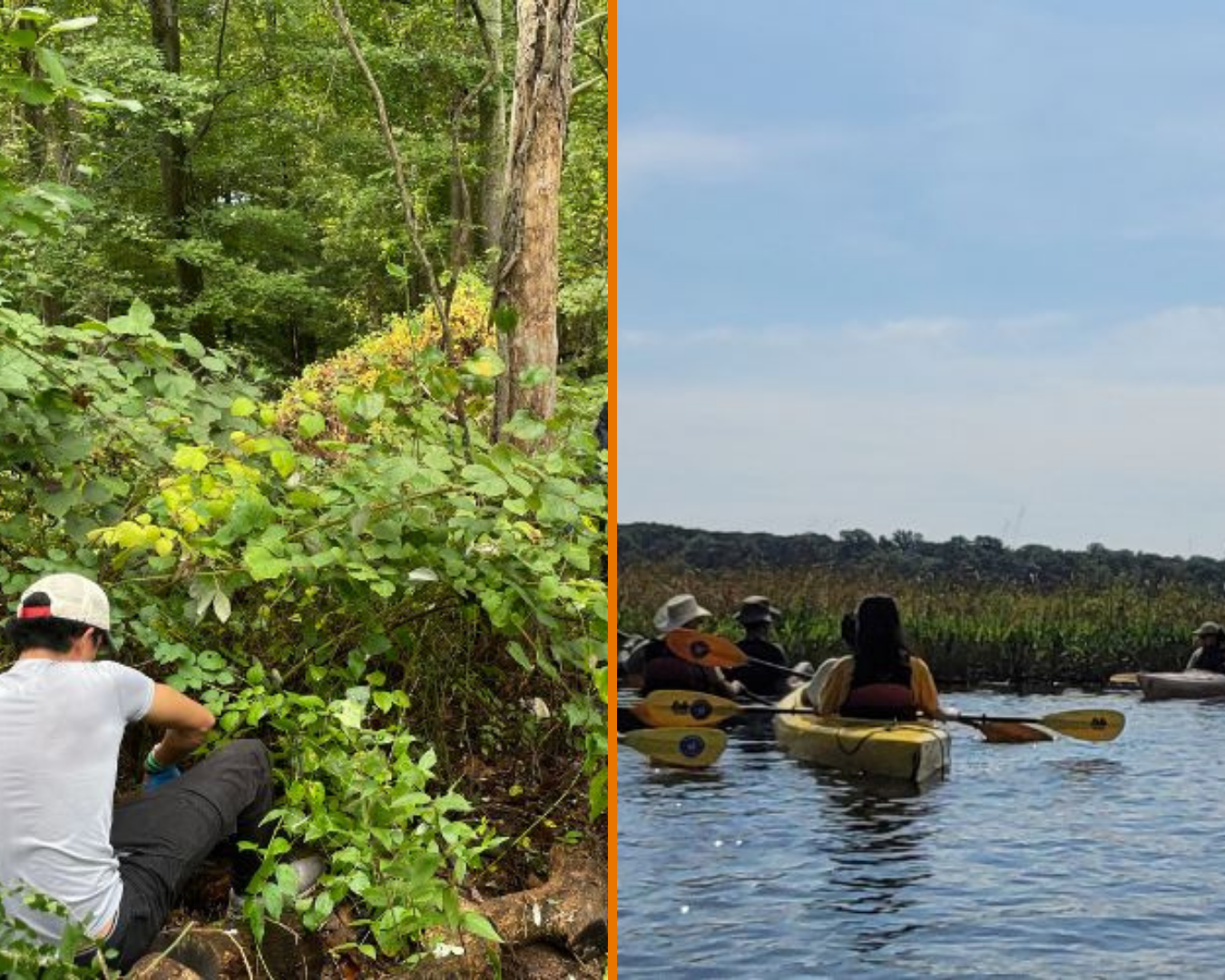
From Kayaks to Clean-Up: Learning Through Action
It’s not every day that students get the unique opportunity to enhance their academic experiences outside the classroom—but here in University Honors, it’s more common than you may think. Students in the Metamorphosis and Heritage clusters recently joined their professors in the great outdoors for some hands-on learning. Learn more about each of these exciting excursions below!
HNUH 238R: Invasive: Feminist Perspectives on Power, Politics, and Ecosurveillance
On a balmy Saturday in September, students in Professor Johnson’s Metamorphosis cluster course ventured out to Greenbelt Park to hear from a local resource manager and work together on a restoration project focused on invasive plantlife in the park. Coinciding with their recent coursework on the practice and ethics of invasive species management, students rolled up their sleeves and assisted with the removal of wineberry and mile-a-minute-weed that were encroaching on the edges of a playground within the park.
“I really want to celebrate the great work these students have done–they came out and got really sweaty and dirty on a Saturday, embodied an admirable work ethic the whole time, and never ceased to bring their creative and curious questions into the conversation and the process itself,” says Johnson of the experience. “It was truly a delight to work and learn alongside them!”


HNUH 268W: Where the Waters Blend: Contemporary Indigenous Perspectives on History, Traditions, and Modern Issues
Students in Professor Stoltz’s Heritage cluster course recently traveled out to Indian Head, Maryland for a guided kayak tour of the Mattawoman Creek. Before heading out, students were invited to give an offering of gratitude to the land and the water. While out on the creek, they were introduced to an abundant variety of native plants integral to the health of the Potomac’s ecosystem.
Unlike many traditional courses focused on the Indigenous experience, this course aims to center the narratives of the Piscataway people (rather than the voices of their colonizers). Co-taught by Stoltz and multiple members of the local Piscataway-Conoy tribe, this innovative and transformative excursion gave students a first-hand look at the culture and history of Maryland’s Indigenous people.


-
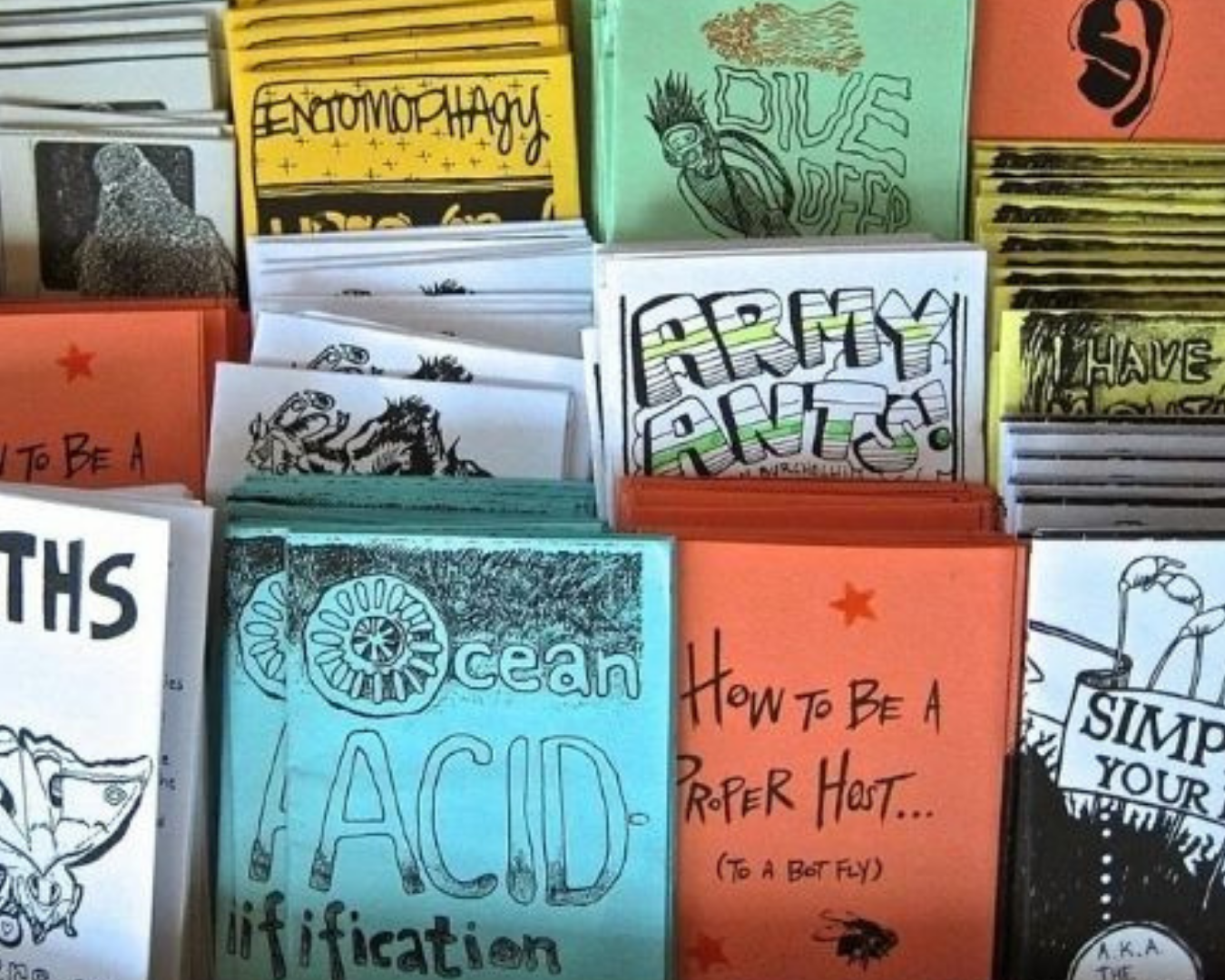
Faculty Spotlight: Max Barnewitz and the Return of the Zine
UH Collegiate Fellow and Faculty Leader of House Shaula, Professor Max Barnewitz, has been busy! They recently worked alongside UMD’s BookLab to revive the Zine Club—and have since been featured in The Diamondback for their hard work. Check out the article below to learn more about this cultural phenomenon and to hear from Max about their love of the zine.

Zine Club relaunch invites students to create, connect through design
by Emely Miranda-Aguilar
posted online October 15, 2024
The DiamondbackZines — pronounced like “magazine” — are the history books of counterculture, inviting students for decades to experiment with clippings, texts and art.
Students at the University of Maryland can design their own eclectic booklets at Zine Club, which lecturer Max Barnewitz relaunched at a meeting earlier this month in Tawes Hall with the help of the English department’s BookLab.
BookLab previously ran a Zine Club before the pandemic, but was unable to continue the club afterward, Barnewitz said.
Zines have historically been a form of self-expression. Barnewitz said zines can be artistically inclined, comics, scientific or informative — it is what the maker makes it.
“[Zines] are, I think, generally described as self-published works of a small print size,” Barnewitz said. “They’re more dedicated to sharing ideas, sharing things that you’re interested in.”
Barnewitz, also a Collegiate Fellow at this university’s Honors College, received a masters of fine arts degree in comics, coordinated zine festivals and continued their research on comics and zines at this university.
Barnewitz and BookLab provide students with collage materials, magazines and art supplies. Immediately, students at the meeting jumped into action and started to share their ideas with each other.

“[It’s important] to have people come together to create together,” junior geology major Charlie McFadden said. “It’s important for group creation, as well as individual.”
McFadden was looking for arts and writing clubs to get involved with before he found Zine Club. McFadden said he enjoys mixed media creation and was glad for the friendly atmosphere.
At the meeting, McFadden created an oceanic life-themed collage with cutouts from National Geographic magazines. McFadden is drawn to images of seascapes and wanted to show his interest in art and the ocean together in his collage, he said.
Jamie Thurmond, a freshman technology and information design major, found the club’s atmosphere to be pleasant, and liked the community of people interested in zines.
“What really makes a club, and also what really makes a zine is this community,” Thurmond said. “Being able to hear other people’s stories [and] perspectives, but also being able to see their zines is pretty cool.”
Thurmond began working on the cover for a zine during the club meeting, but said she was unsure of the route to take her work, considering a more comedic route.
For a long time, Thurmond made copies of books, soon developing an interest in alternative comics that led her to zine culture.

Barnewitz said the club’s goal will emerge as time goes on, but they hope to build a community where students learn to make zines and connect with their artistic side.
“I think regardless of whether students are pursuing the arts as their major, the arts can help you process your own experiences and also make connections with other people,” Barnewitz said.
Want to learn more about Zines? Join Professor Barnewitz at the Annual DC Zine Fest! This free and accessible event is scheduled for October 26, 2024, from 11am to 4pm at the Martin Luther King Jr. Memorial Library. Featuring zinesters from DC and beyond selling zines, comics, and more at their tables, this exciting event also has a full schedule of hands-on zine workshops.
The Fest is conveniently located off the Green Line of the DC Metro. If you need access to the metro, UH has a limited number of pre-loaded metro cards available.
For your attendance at Zine Fest, we are offering 50 House Cup Points! So sign up below to guarantee you receive the 50 points. This form will also ask if you need a metro card to attend DC Zine Fest! By receiving a metro card your attendance at Zine Fest is REQUIRED and we are expecting to see you there. Please sign up for a metro card by Friday, October 18th!
-
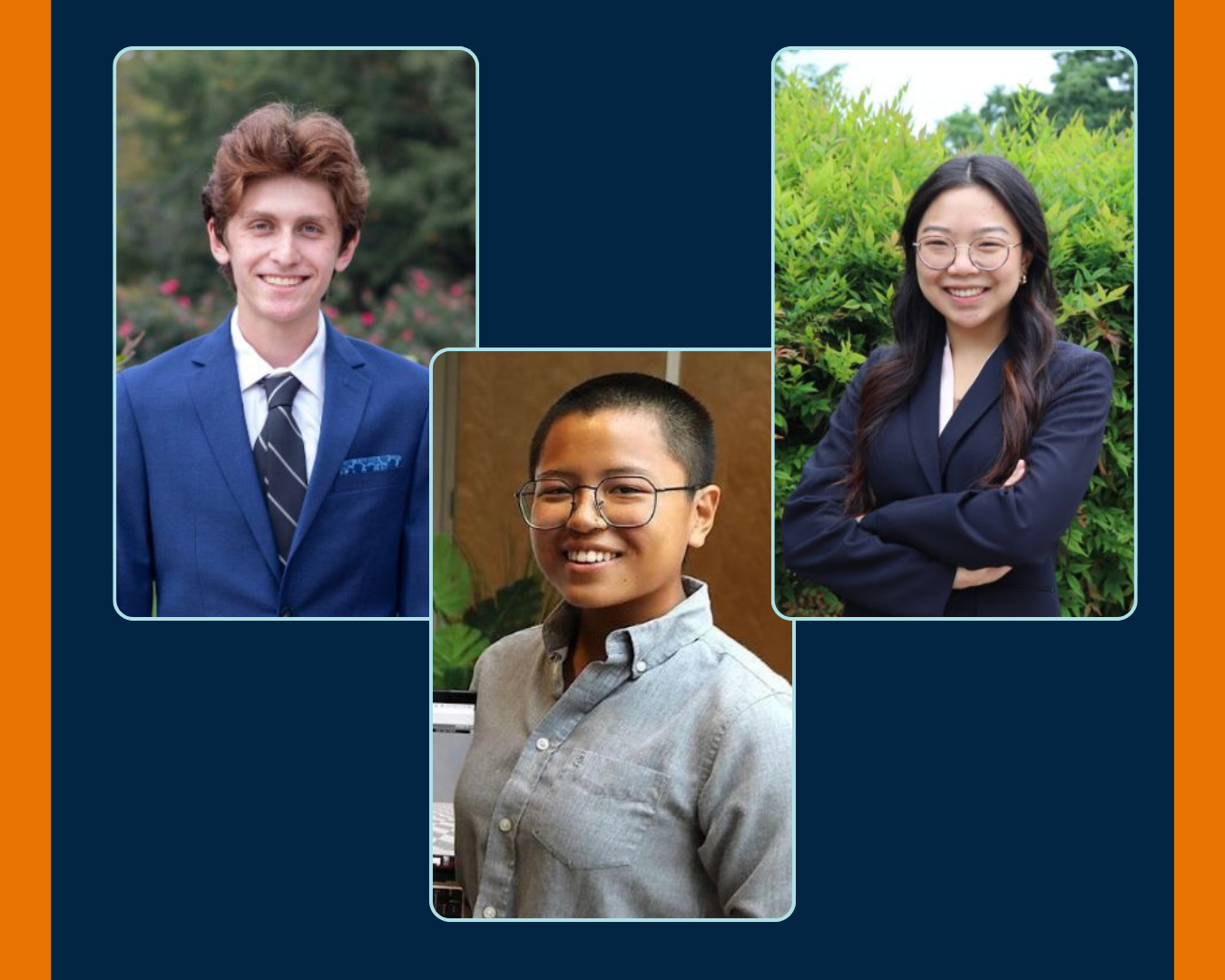
UH Students Receive 24-25 Philip Merrill Presidential Scholar Acceptance
The Philip Merrill Presidential Scholars Program honors UMD’s most outstanding graduating seniors, while also recognizing the teachers who have played a significant role in ensuring their success. Each scholar is given an opportunity to recognize the high school teacher who most inspired their scholastic development and the UMD faculty member who most significantly contributed to their college experience.We are thrilled to celebrate three UH students among this year’s recipients of this prestigious award: Shawn Edelstein, Avery Moe, and Anna Petersen. Learn more about each of our scholars and hear a snippet of their praises for their mentors below!
To see the full list of Merrill Presidential Scholars, click here.

Shawn Edelstein, Statistics and Public Policy
Teacher Mentor: Barbara Felicciardi, P.S. 169 Bay Terrace School, Queens, New York
Faculty Mentor: Jiehong Lou, School of Public Policy, Center for Global Sustainability“…As my first ever science teacher and my primary second-grade teacher, [Ms. Barbara Felicciardi] taught me to be curious and explore the world around me… Professor Lou helped me bridge the gap between my studies in statistics and public policy, while teaching me new skills to analyze complex challenges in clean energy and environmental policy…”

Avery Moe, Kinesiology
Teacher Mentor: Andrea Dickie, Hammond High School, Columbia, Maryland
Faculty Mentor: Ross Miller, Department of Kinesiology“My high school calculus teacher, Ms. Andrea Dickie, created a supportive, safe space where I could grow both academically and personally… [Professor Ross Miller from the Department of Kinesiology] noticed my passion for biomechanics and offered his mentorship, playing a crucial role in my research and my path towards graduate school…”

Anna Petersen, Psychology and Criminology & Criminal Justice
Teacher Mentor: Amber Perkins, Paint Branch High School, Burtonsville, Maryland
Faculty Mentor: Tracy Tomlinson, Department of Psychology“…Both Ms. Perkins and Professor Tomlinson are committed and dedicated educators who actively engage their students in learning and in confronting the many challenges of our time. I sincerely thank them for their mentorship and meaningful impact on the trajectory of my life.”