Author: UNIVERSITY-HONORS

  • Student Spotlight: Gabriel Santiago Named Hollings Scholar

    Student Spotlight: Gabriel Santiago Named Hollings Scholar

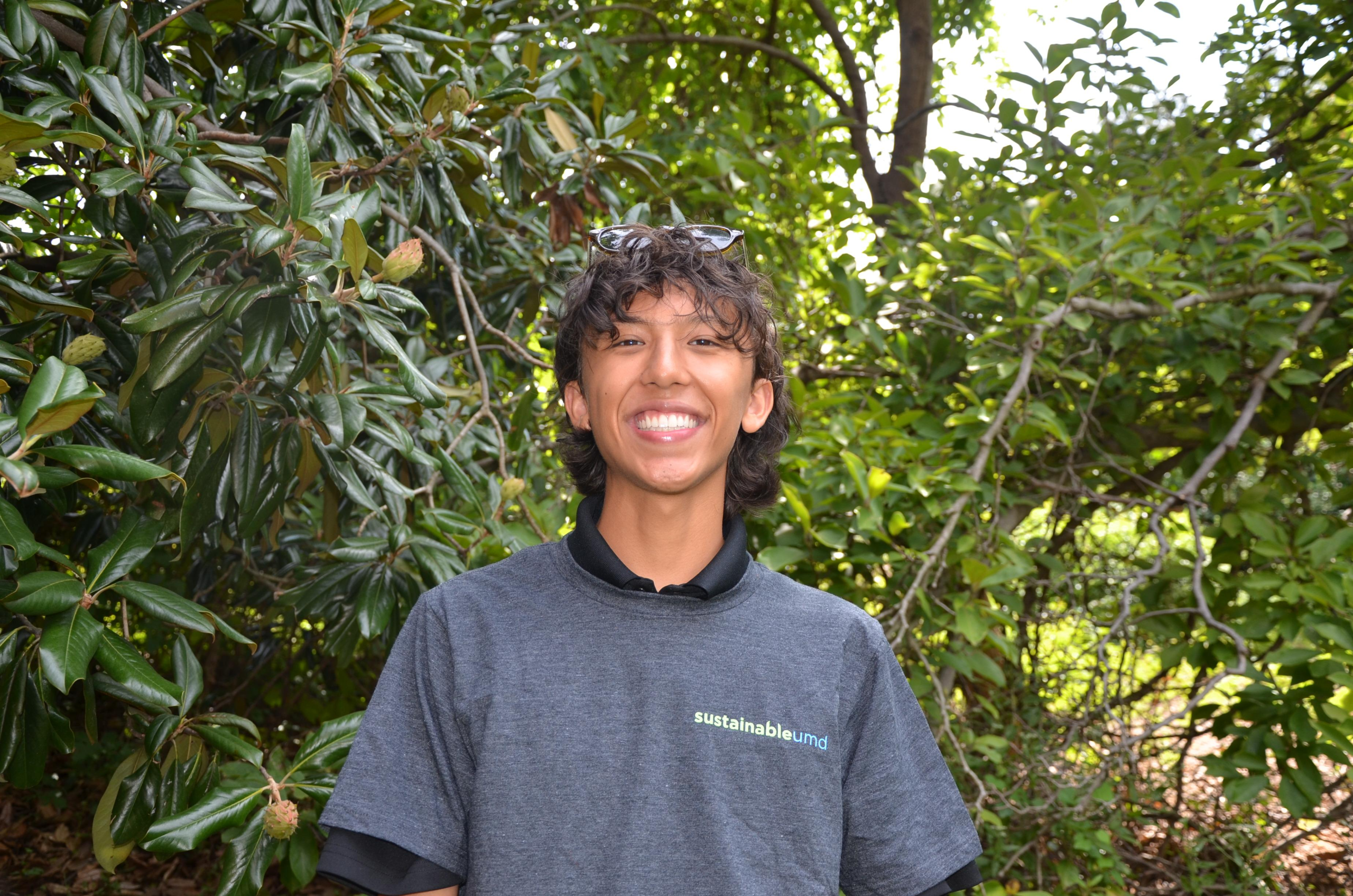
    Gabriel “Gabe” Santiago has always approached academics with curiosity and interdisciplinarity. From his University Honors Vantage Point project exploring the relationship between pop culture, musicology, and climate change to his publication in UMD’s Interpolations: Journal of Academic Writing focused on the nuanced discourse of cultural borrowing in the fashion world, Gabe is not afraid to tackle big topics from a multitude of perspectives. So it’s no surprise that he was recently named a 2025 NOAA Undergraduate Hollings Scholar. This prestigious two-year program awards recipients with financial assistance and a paid, 10-week summer internship with the National Oceanic and Atmospheric Administration. The internship provides scholars with hands-on, practical experience in NOAA-related science, research, technology, policy, management, and education activities. The award also includes travel funds to attend a mandatory NOAA Scholarship Program orientation, the annual Science & Education Symposium, and scientific conferences where students present their research.

    Gabe interned with The Maryland General Assembly as an Energy and Environmental Policy Federal Fellow. During this experience, he noted his surprise that many public and environmental policymakers, both at the state and federal levels, lacked a deep understanding of the science behind the environmental decisions they were making. This realization was part of his motivation to apply for the Hollings Scholarship, as a step toward bridging the gaps he witnessed between science and policy. “As someone passionate about innovative solutions to climate change adaptation and mitigation, I’m excited about the opportunity to contribute to this mission through NOAA’s work over the next two years, even amidst uncertainty from the current administration,” says Gabe.

    As an Environmental Science and Policy major within University Honors, Santiago’s approach to academics is inherently interdisciplinary. “Through University Honors, I’ve learned to approach complex issues from multiple angles and to value interdisciplinary thinking. These skills,” he said, “are essential to the mission of the Hollings Scholarship, which lies at the intersection of science and research, communication, and public service.” Santiago thanks UH professors Dr. Jordan Johnson (Vantage Point Seminar), Tyson Slocum (Climate in Crisis: Strategy & Advocacy) and Dr. Jonathan Dinman (Climate Change, Infectious Disease, & Civil Society) specifically for their support of his academic growth. “Their classes have nurtured my scientific curiosity about the environmental problems we face, and their mentorship has guided my commitment to shaping policy solutions,” he states. 

    “This is so well deserved,” said Dr. Johnson of Gabe’s appointment. “Gabe’s attention to thoughtful project management and his passion for environmental policy enriched the experience of our class throughout the semester. Gabe brought a sense of intellectual curiosity to each conversation, excelling in class discussions as well as individual assignments and workshops. He also demonstrated an eagerness to explore interdisciplinary approaches to environmental studies, most notably in his final which culminated in an interdisciplinary art project on climate change, eco-anxiety, musicology, and pop culture. I know he will do amazing things working with NOAA!”

  • A Parting Interview with Dr. Blatti

    A Parting Interview with Dr. Blatti

    After six years as Director of University Honors, Dr. Stephan Blatti recently announced that he will step down at the end of this academic year. Dr. Blatti fearlessly captained the UH ship through a highly innovative update to the curriculum, the construction and move into Heritage Community, and a global pandemic. Under Blatti’s leadership, UH has grown from a time in 2019 when he was the program’s sole employee to a dedicated team of more than 20 full-time faculty and staff. From teaching in one of the original thematic clusters, to the inauguration of the Maryland Honors in Oxford track at his alma mater, to his much-anticipated Breakfasts with Blatti, it is fair to say that Dr. Blatti will leave a lasting legacy in the program he helped to reimagine.

    Before he decamps for his next adventure in New England, the UH Student Board sat down with Dr. Blatti to talk about his time at UH and his hopes for the future of the program. Enjoy their conversation below, and make sure to stop by his office before the end of the semester to wish Dr. Blatti a fond “See you later!”

    What brought you to University Honors?

    I came to UMD in 2017 after nearly a decade at the University of Memphis where I’d been an Associate Professor of Philosophy. At Memphis I had been moving into administrative roles, serving as director of the humanities center and later as chair of the Philosophy Department. I care a great deal about public higher education, and I especially enjoy teaching honors students.

    So, when our family decided to relocate to Maryland, I was immediately drawn to UMD, in general, and to the Honors College, in particular, which was then searching for an Associate Director to work closely with University Honors. That was eight years ago, almost to the day.

    What was the most rewarding experience that UH gave you and how will you carry that into your future endeavors?

    Far too many rewarding experiences to pick just one! But if I had to pick one, it would be … everything.

    Here’s what I mean. Shortly before I came to Maryland in 2017, a strategic visioning committee had completed a study of the Honors College. Included in the final report was a recommendation to reimagine University Honors. So I joined then Executive Director, Sue Dwyer, in developing a plan to transform just about everything about UH, from its curriculum and its staffing model to its residential home and relationship with the College. For nearly two years, we worked with UH students and university leadership in refining that plan. By the spring of 2019, we’d secured the requisite approvals from across campus, and the “new UH” was officially under construction. I say that my most rewarding experience in UH has been everything because we’ve been hard at work ever since in trying to realize that plan and because it has been so rewarding to witness the impact of this work for hundreds and hundreds of UH students. And I emphasize the “we” because it’s the deep sense of gratitude that I feel toward the many, many faculty, staff, and student leaders who have devoted so much time and energy into launching the “new UH” that I will cherish long after I leave.

    What is the biggest challenge you faced during your time in UH, and what did you learn from it?

    The transition from “old UH” to “new UH” was long and bumpy. The first cohort of students to join the “new UH” arrived in Fall 2020. As if launching a new living-learning program wasn’t challenging enough, we did so in the teeth of COVID-19, in the midst of a nationwide racial reckoning, and whilst actively supporting “old UH” students still working to complete the existing curriculum (which itself needed to be wound down as the new one ramped up). Complicating things further was the ongoing construction of Heritage Community, with first-year students split between Pyon-Chen and Hagerstown Halls in 2021-22. Not until Johnson-Whittle and the UH Commons (Yahentamitsi Hall) opened in Fall 2022 did it begin to feel like the vision for the “new UH” was realized. Except that, in many ways, we’d only just arrived at the starting line: because even with the restructured curriculum, a full team of faculty and staff, and the new buildings all in place, we hadn’t even begun, really, to build the culture of the new program. Which brings me to the lesson that I take from these years: meaningful change takes much time and care.

    What piece of advice do you have for UH students?

    My advice is encapsulated in a phrase that, by now, students will be tired of hearing me say, viz. “epistemic humility,” which means modesty with respect to what you think you know and a willingness to acknowledge all that you don’t know. As the opposite of intellectual arrogance, epistemic humility is the sort of virtue that isn’t much celebrated or prized these days. But it’s vital that students cultivate this disposition. Here is just one reason among many: a lot of what you don’t yet know has to do with yourself. For the overwhelming majority of you, the tape at the finish line that you envision as a first-semester freshman will not be the same as the tape you’ll break a few years later at graduation. Along the way, you’ll drop your initial major in favor of a different one. Or you’ll keep your initial major, but add a second one. You’ll pick up a minor, or a certificate, or both. You’ll attempt things and fail. You’ll try other things and flourish. You’ll fall in and out of love. You’ll develop passions you could hardly have fathomed when you began. You’ll take a course, or study abroad, or complete an internship that changes your life. There’s so much you don’t know about what you believe and who you are that it would be utterly foolish to pretend otherwise. So why on earth would you be rigid about anything? Instead, be open to unfamiliar ideas and experiences. Whether personally or intellectually, don’t be closed off or arrogant. Be epistemically humble!

    What do you hope for UH’s future?

    I often think about something that a former student said about UH. Sasha Kahn was an “old UH” student on whom I relied for counsel as we developed and began to implement our plan for the “new UH.” For his many contributions to the program, we recognized Sasha with an award just before he graduated in Spring 2020. The award was accompanied by an invitation to give a brief address to UH students. Because the pandemic prevented us from in-person gatherings, Sasha elected to record a video that could be shared with all UH students; it’s still available online here. Being a Government & Politics and Architecture double-major, Sasha spends much of the video drawing a picture of Hagerstown Hall while he shares a story from his first year in UH. Along the way, he makes the following observation which has stuck with me all these years:

    University Honors is a huge program—it’s thousands of people. And sometimes it struggles to find a unifying identity. And, you know, I think that’s kind of a good thing. We aren’t all a single living-learning community in the way that some of the other smaller ones are. We are many living-learning communities under one name. We’re lounge friends and roommates and study groups that divide and reform when we need to. And in times like these, when distancing and isolation are the only things we know, those communities become more important than ever. We are all in this together—as University Honors, as the Honors College, and as Maryland.

    -Sasha Kahn, ’20

    I couldn’t agree more, and from the “old UH” through the “new UH,” that’s always been true. It seems fitting, therefore, that Sasha’s drawing of Hagerstown hangs today in the main office of the UH Commons—in a building, that is, that was barely under construction at the time he graduated. Because it’s never really been about “old UH” or “new UH.” Our one UH has been many UHs all the way along.

    So as I depart and as new leadership steps in (watch this space for news!), let me first register what a privilege it has been to work alongside you these past few years. My sincere hope is that students, faculty, and staff will continue to push the program to evolve in ways that support and educate the many communities University Honors serves, because it’s in that innovation, co-creation, and multiplicity that UH’s identity consists.
  • Climbing for Connection

    Climbing for Connection

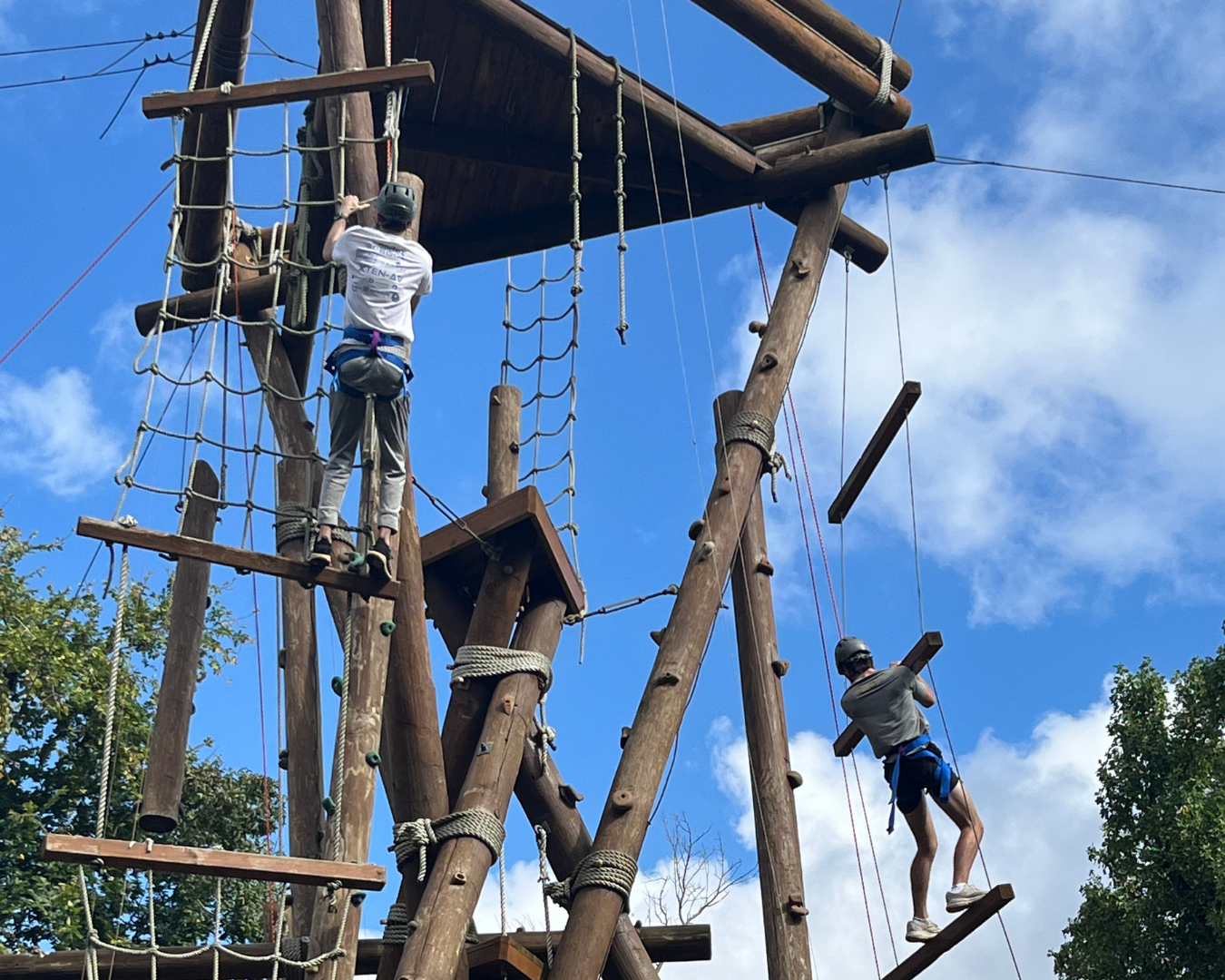
    Another annual House Challenge Course is safely in the books! We were thrilled to have so many students interested in taking part in this yearly event intended to bring together students from each house to connect with one another outside of the classroom. From ice-breakers and teamwork games on the ground to high-flying antics climbing the RecWell Challenge course, we love to see our UH students rise to the occasion (literally!).

    Special thanks to the RecWell team and the UH Staff and Faculty members who came to join our students for this experience!

    Check out the photo gallery below.


    House Altair


    House Denebola


    House Eltanin


    House Shaula

  • Student Spotlight: UH iGEMs Earn Gold in Paris

    Student Spotlight: UH iGEMs Earn Gold in Paris

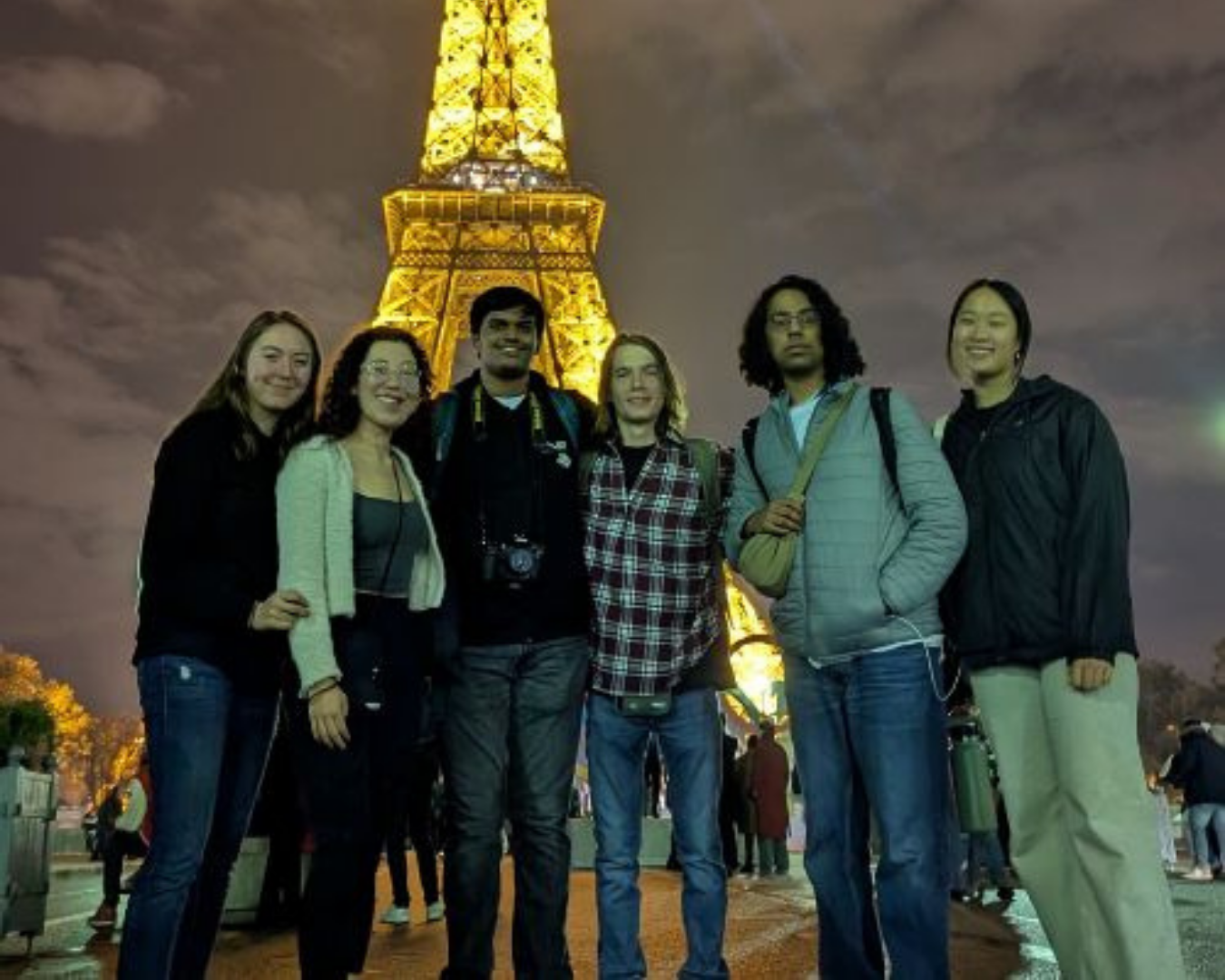
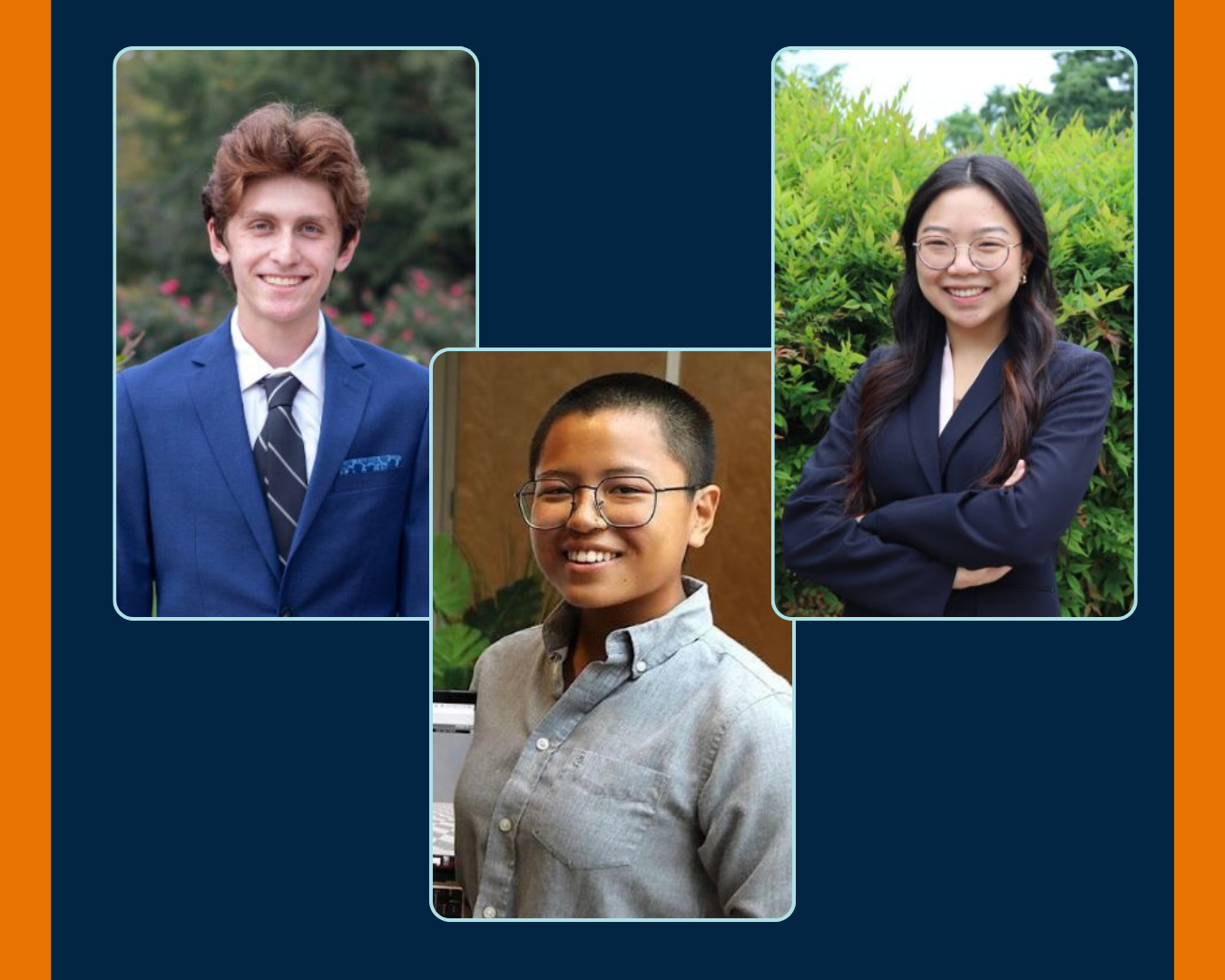
    Join us in congratulating UH’s own Lauren ApplegateRebecca Lu, and Krista Adu-Osei on bringing home the gold alongside their UMD iGEMs teammates!

    iGEM is known as the heart of Synthetic Biology, working hard to create a vibrant, innovative, and responsible research community and industry surrounding topics of synthetic biology. Each fall, the iGEM foundation hosts their Jamboree, a 3-day international expo featuring exhibits, networking events, panels, and competitions for high school, undergraduate, and graduate students alongside industry veterans and startups. This year’s Jamboree was held in Paris, France, and included keynotes by representatives from Colorifix, Neoplants, Twist Bioscience, BIOFABRICA, Gingko Bioworks, Asimov, and more. 

    UMD’s iGEM team presented their project CerviCare at this year’s expo. CerviCare is a urine-based, cervical precancer screening tool they created to detect cervical cancer early, easily, and safely for users across the globe, especially in lower and middle-income countries. The test avoids common barriers to cervical cancer diagnosis like cost, anxiety, patient discomfort, refrigerated storage, and reliance on lab equipment/technicians.

    Utilizing a novel approach to toehold switch design, the project detects microRNAs (miRNAs) upregulated in the urine of cervical precancer patients. Urine is introduced onto a test strip containing plasmid DNA and cell-free expression components, triggering toehold switch-mediated reporter gene output. This output is measured by a low-cost portable reader to provide a risk assessment for cervical precancer.

    The team earned a Gold Medal for their project, an accolade only awarded to iGEM teams who fulfill a specific judged set of criteria, indicating high competitive excellence. UMD was one of two Big 10 teams to achieve a Gold Medal, alongside prestigious programs from Cambridge, Cornell, McGill, MIT, Oxford, Princeton, and Stanford.

    We caught up with Lauren, Rebecca, and Krista before their trip to Paris to learn more about iGEM and how their UH experiences influenced them as they devised and created CerviCare alongside their teammates. 

    UH: How did your time and courses in UH help you formulate and execute your iGEM project and research?

    LA: The interdisciplinary focus of UH translates very well to the interdisciplinary work we do in iGEM. Because of UH, I know how to work with people who have different interests and areas of expertise to accomplish a common goal – something we do every day in iGEM. Also, my UH class the Ecology of Child Poverty helped me bring a sociological perspective to our project. I can take my understanding of how environmental factors and policy affect people, and apply it to our device’s design and implementation.

    RL: My time in UH really made me understand the importance of having multiple perspectives and a division of roles. In iGEM, we need to consider a variety of factors besides the actual research part that is integral to our project. From the numerous discussions through my UH courses, I’ve seen how important voicing those opinions are. 

    KA: My time in UH really helped with iGEM by allowing me to work on my research skills when it comes to huge projects like these. It also helped with learning different interdisciplinary skills and applying those to various projects, since iGEM is interdisciplinary as well.

    UH: Why do you think incoming students should consider joining UH? And why should students of all years check out iGEM?

    LA: I think students should join UH because of the wide variety of classes available – it is easier to be engaged in what you are learning when it appeals to your personal interests. Joining iGEM is a great way to get involved in student-directed research: we all get a say in our project’s development and direction. In addition, no matter what your major is, there are opportunities to gain valuable experience. Whether you’re interested in biology, web development, art and design, mathematical modeling, fundraising and budgeting, public health, or engineering, there’s an aspect of iGEM for you.

    RL: I think students should join iGEM because it allows for a unique hands-on experience that allows students to be involved in a variety of aspects of synthetic biology research! Similar to UH, it encourages students to learn more deeply by interacting closely with the material and further enriching their educational experience. UH is beneficial in this manner because the courses are often smaller and discussion-based, allowing students to connect with each other and the faculty.

    KA: I think students should join UH because it allows them to learn from a variety of different subjects that they would not have the opportunity to learn outside of it. I also think students should join iGEM because it allows you to build up different skills you have and also encourages you to work on those skills both collaboratively and independently.

    Learn more about CerviCare and UMD’s iGEM team here. 

  • From Kayaks to Clean-Up: Learning Through Action

    From Kayaks to Clean-Up: Learning Through Action

    It’s not every day that students get the unique opportunity to enhance their academic experiences outside the classroom—but here in University Honors, it’s more common than you may think. Students in the Metamorphosis and Heritage clusters recently joined their professors in the great outdoors for some hands-on learning. Learn more about each of these exciting excursions below!


    HNUH 238R: Invasive: Feminist Perspectives on Power, Politics, and Ecosurveillance

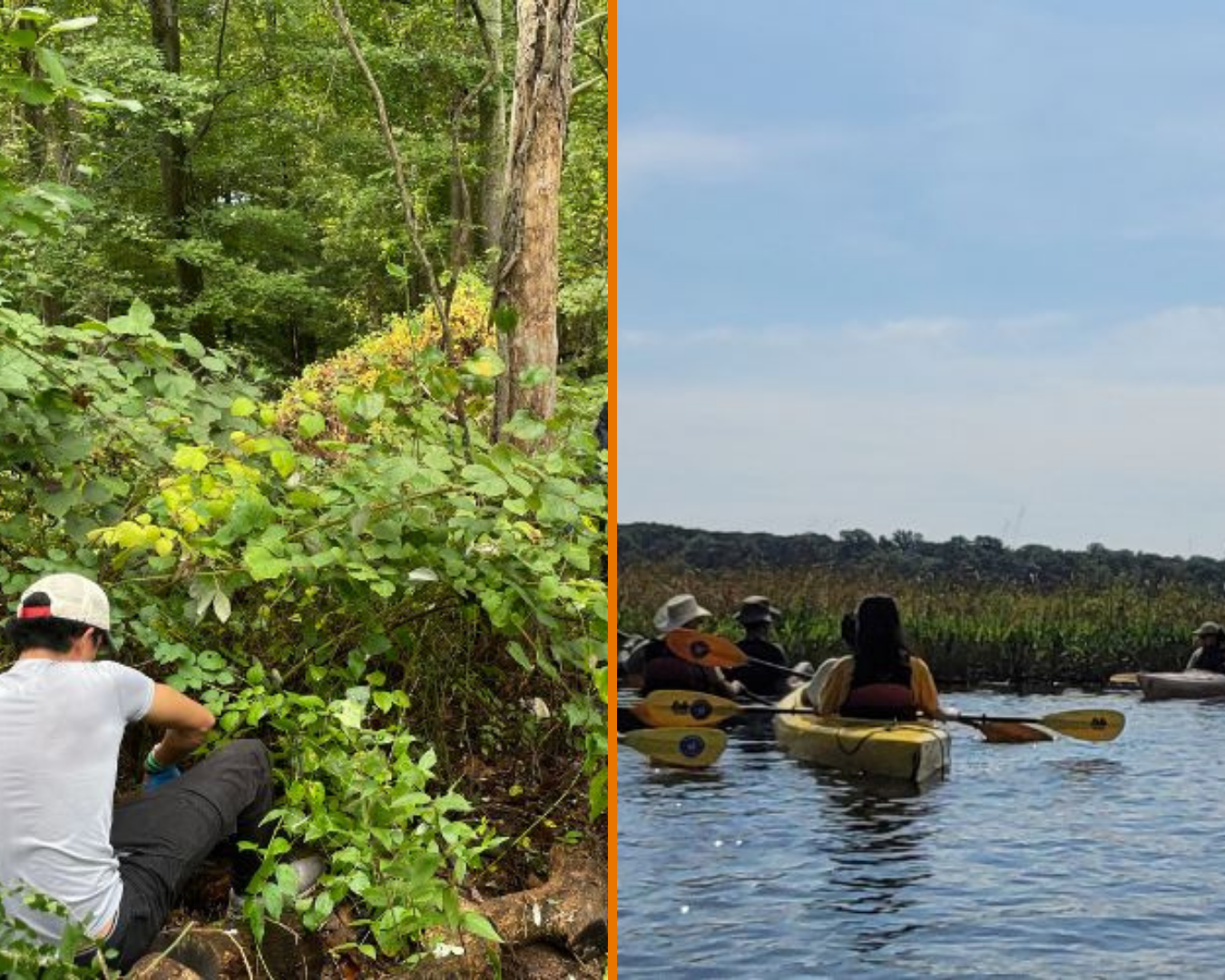
    On a balmy Saturday in September, students in Professor Johnson’s Metamorphosis cluster course ventured out to Greenbelt Park to hear from a local resource manager and work together on a restoration project focused on invasive plantlife in the park. Coinciding with their recent coursework on the practice and ethics of invasive species management, students rolled up their sleeves and assisted with the removal of wineberry and mile-a-minute-weed that were encroaching on the edges of a playground within the park. 

    “I really want to celebrate the great work these students have done–they came out and got really sweaty and dirty on a Saturday, embodied an admirable work ethic the whole time, and never ceased to bring their creative and curious questions into the conversation and the process itself,” says Johnson of the experience. “It was truly a delight to work and learn alongside them!”


    HNUH 268W: Where the Waters Blend: Contemporary Indigenous Perspectives on History, Traditions, and Modern Issues

    Students in Professor Stoltz’s Heritage cluster course recently traveled out to Indian Head, Maryland for a guided kayak tour of the Mattawoman Creek. Before heading out, students were invited to give an offering of gratitude to the land and the water. While out on the creek, they were introduced to an abundant variety of native plants integral to the health of the Potomac’s ecosystem. 

    Unlike many traditional courses focused on the Indigenous experience, this course aims to center the narratives of the Piscataway people (rather than the voices of their colonizers). Co-taught by Stoltz and multiple members of the local Piscataway-Conoy tribe, this innovative and transformative excursion gave students a first-hand look at the culture and history of Maryland’s Indigenous people.

  • The Return of the Zine

    The Return of the Zine

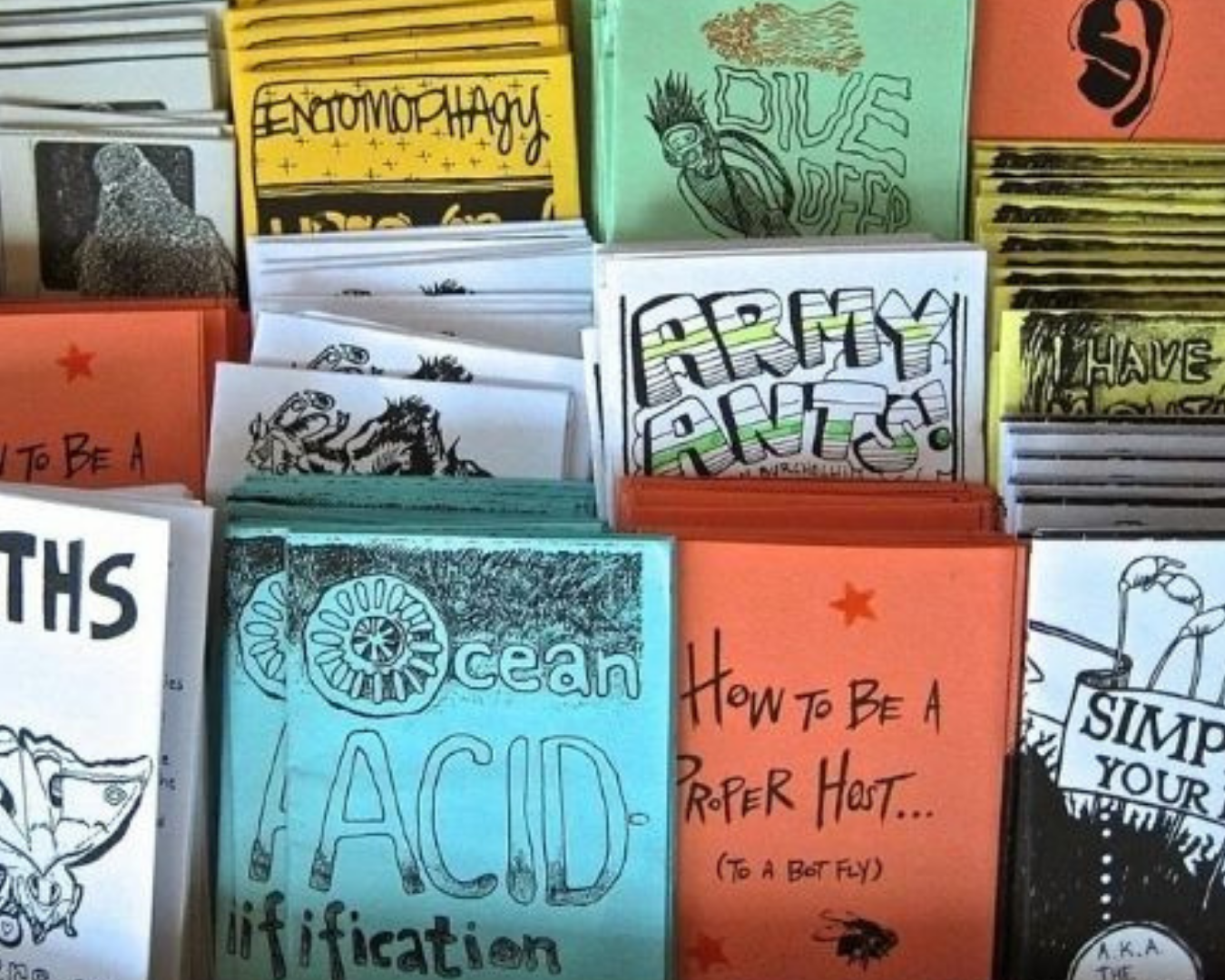
    UH Collegiate Fellow and Faculty Leader of House Shaula, Professor Max Barnewitz, has been busy! They recently worked alongside UMD’s BookLab to revive the Zine Club—and have since been featured in The Diamondback for their hard work. Check out the article below to learn more about this cultural phenomenon and to hear from Max about their love of the zine.


    Zine Club relaunch invites students to create, connect through design

    by Emely Miranda-Aguilar
    posted online October 15, 2024
    The Diamondback

    Zines — pronounced like “magazine” — are the history books of counterculture, inviting students for decades to experiment with clippings, texts and art.

    Students at the University of Maryland can design their own eclectic booklets at Zine Club, which lecturer Max Barnewitz relaunched at a meeting earlier this month in Tawes Hall with the help of the English department’s BookLab.

    BookLab previously ran a Zine Club before the pandemic, but was unable to continue the club afterward, Barnewitz said.

    Zines have historically been a form of self-expression. Barnewitz said zines can be artistically inclined, comics, scientific or informative — it is what the maker makes it.

    “[Zines] are, I think, generally described as self-published works of a small print size,” Barnewitz said. “They’re more dedicated to sharing ideas, sharing things that you’re interested in.”

    Barnewitz, also a Collegiate Fellow at this university’s Honors College, received a masters of fine arts degree in comics, coordinated zine festivals and continued their research on comics and zines at this university.

    Barnewitz and BookLab provide students with collage materials, magazines and art supplies. Immediately, students at the meeting jumped into action and started to share their ideas with each other.

    “[It’s important] to have people come together to create together,” junior geology major Charlie McFadden said. “It’s important for group creation, as well as individual.”

    McFadden was looking for arts and writing clubs to get involved with before he found Zine Club. McFadden said he enjoys mixed media creation and was glad for the friendly atmosphere.

    At the meeting, McFadden created an oceanic life-themed collage with cutouts from National Geographic magazines. McFadden is drawn to images of seascapes and wanted to show his interest in art and the ocean together in his collage, he said.

    Jamie Thurmond, a freshman technology and information design major, found the club’s atmosphere to be pleasant, and liked the community of people interested in zines.

    “What really makes a club, and also what really makes a zine is this community,” Thurmond said. “Being able to hear other people’s stories [and] perspectives, but also being able to see their zines is pretty cool.”

    Thurmond began working on the cover for a zine during the club meeting, but said she was unsure of the route to take her work, considering a more comedic route.

    For a long time, Thurmond made copies of books, soon developing an interest in alternative comics that led her to zine culture.

    Barnewitz said the club’s goal will emerge as time goes on, but they hope to build a community where students learn to make zines and connect with their artistic side.

    “I think regardless of whether students are pursuing the arts as their major, the arts can help you process your own experiences and also make connections with other people,” Barnewitz said.


    Want to learn more about Zines? Join Professor Barnewitz at the Annual DC Zine Fest! This free and accessible event is scheduled for October 26, 2024, from 11am to 4pm at the Martin Luther King Jr. Memorial Library. Featuring zinesters from DC and beyond selling zines, comics, and more at their tables, this exciting event also has a full schedule of hands-on zine workshops. 

    The Fest is conveniently located off the Green Line of the DC Metro. If you need access to the metro, UH has a limited number of pre-loaded metro cards available. 

    For your attendance at Zine Fest, we are offering 50 House Cup Points! So sign up below to guarantee you receive the 50 points. This form will also ask if you need a metro card to attend DC Zine Fest! By receiving a metro card your attendance at Zine Fest is REQUIRED and we are expecting to see you there. Please sign up for a metro card by Friday, October 18th!

  • UH Students Receive 24-25 Philip Merrill Presidential Scholar Acceptance

    UH Students Receive 24-25 Philip Merrill Presidential Scholar Acceptance


    The Philip Merrill Presidential Scholars Program honors UMD’s most outstanding graduating seniors, while also recognizing the teachers who have played a significant role in ensuring their success. Each scholar is given an opportunity to recognize the high school teacher who most inspired their scholastic development and the UMD faculty member who most significantly contributed to their college experience. 

    We are thrilled to celebrate three UH students among this year’s recipients of this prestigious award: Shawn Edelstein, Avery Moe, and Anna Petersen. Learn more about each of our scholars and hear a snippet of their praises for their mentors below!

    To see the full list of Merrill Presidential Scholars, click here


    Shawn Edelstein, Statistics and Public Policy
    Teacher Mentor: Barbara Felicciardi, P.S. 169 Bay Terrace School, Queens, New York
    Faculty Mentor: Jiehong Lou, School of Public Policy, Center for Global Sustainability

    “…As my first ever science teacher and my primary second-grade teacher, [Ms. Barbara Felicciardi] taught me to be curious and explore the world around me… Professor Lou helped me bridge the gap between my studies in statistics and public policy, while teaching me new skills to analyze complex challenges in clean energy and environmental policy…”


    Avery Moe, Kinesiology
    Teacher Mentor: Andrea Dickie, Hammond High School, Columbia, Maryland
    Faculty Mentor: Ross Miller, Department of Kinesiology

    “My high school calculus teacher, Ms. Andrea Dickie, created a supportive, safe space where I could grow both academically and personally… [Professor Ross Miller from the Department of Kinesiology] noticed my passion for biomechanics and offered his mentorship, playing a crucial role in my research and my path towards graduate school…”


    Anna Petersen, Psychology and Criminology & Criminal Justice
    Teacher Mentor: Amber Perkins, Paint Branch High School, Burtonsville, Maryland
    Faculty Mentor: Tracy Tomlinson, Department of Psychology

    “…Both Ms. Perkins and Professor Tomlinson are committed and dedicated educators who actively engage their students in learning and in confronting the many challenges of our time. I sincerely thank them for their mentorship and meaningful impact on the trajectory of my life.”

  • Student Spotlight: Laila Wilson & Chris Moon

    Student Spotlight: Laila Wilson & Chris Moon

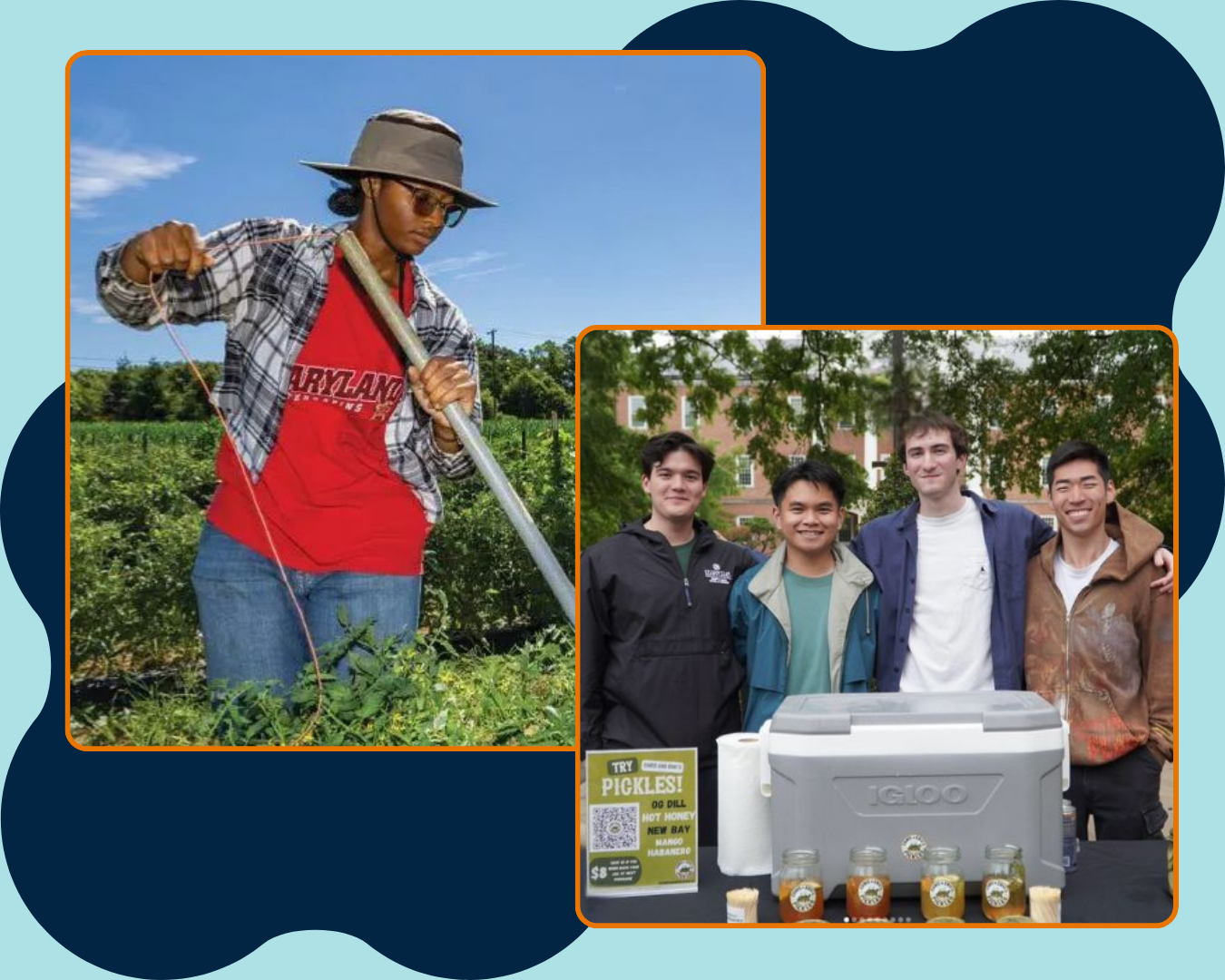
    From pickles to produce, UH students have been busy! This September, two University Honors students were recognized in two separate UMD publications for their extracurricular work. 

    • Laila Wilson was featured in TERP Magazine in an article celebrating the tenth anniversary of Terp Farm operations. Terp Farm, originally piloted in 2014 as part of a Sustainability Fund grant, provides fresh vegetables and herbs to the UMD Dining Halls, Catering Services, and the Campus Pantry; it also serves as a source for research initiatives across campus. Wilson is quoted in the article, explaining her reasons for joining this urban farming community: “Helping to feed people on campus is really rewarding.” Read the full article and see Laila in action here.
    • Chris Moon’s campus pickle business (alongside partner Eric Bennett) was the subject of an article in The Diamondback. From creating their own unique flavors (Hot Honey and Old Bay, for example) to canning and selling their wares across campus, Chris and Eric’s Small Batch Pickles is a small business that aspires to take McKeldin Mall by storm. Learn more about the friendship that fueled this growing pickle empire here. 

    If you know any UH students doing amazing things across campus, let us know through the form linked here. Help us celebrate the successes in our community!

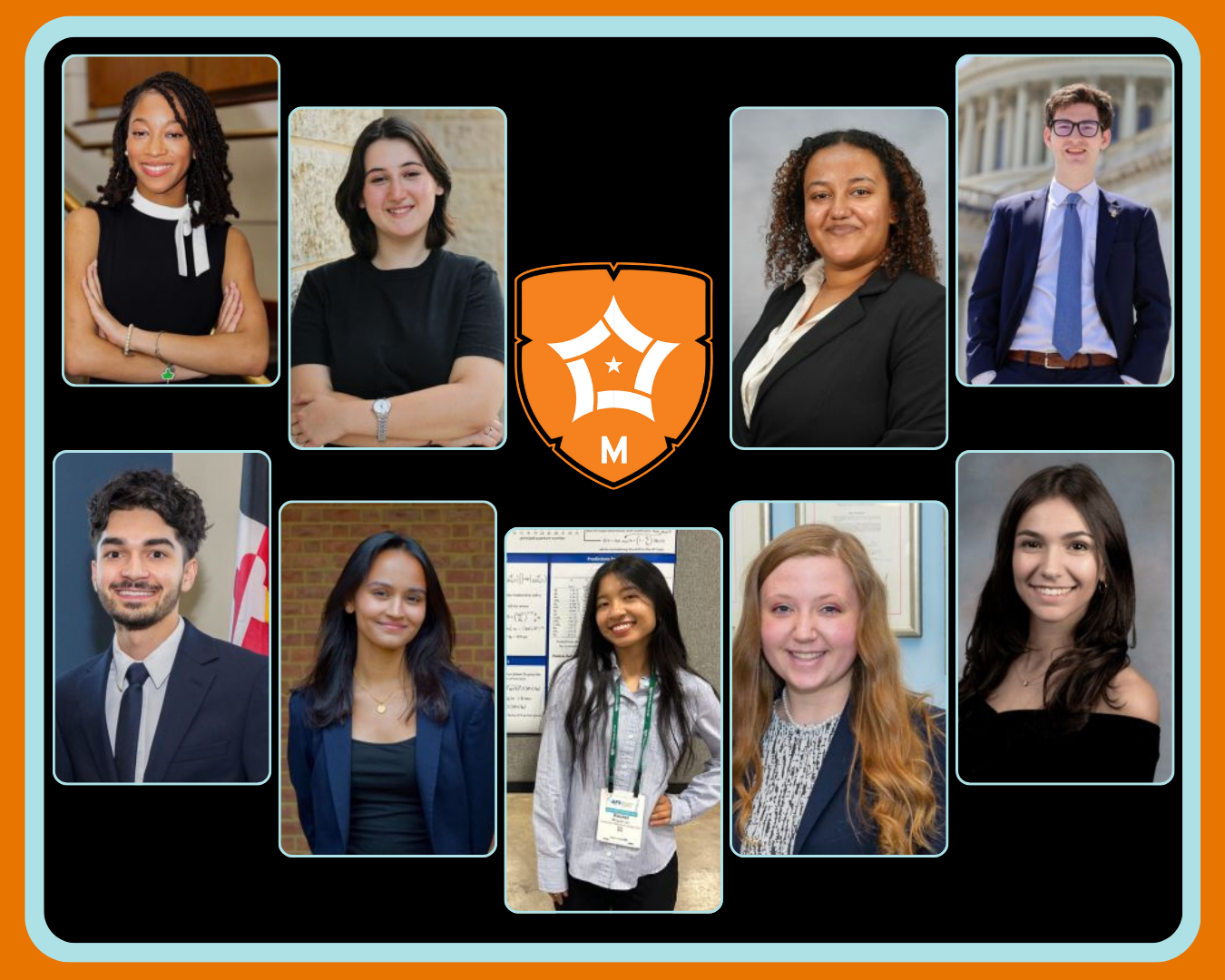
  • Student Spotlight: UMD Fellows 24/25

    Student Spotlight: UMD Fellows 24/25


    Autumn K. Ballard
    Public Health Practice Major, Minors in Public Leadership and Anti-Black Racism
    Maryland General Assembly- Office of Delegate Karen R. Toles

    My favorite memory as a Federal Fellow with a Public Health Policy concentration is having the privilege of being taught by an esteemed thought leader in the public health field, Dr. Woodie Kessel. As a mentor, deeply connected with government work, he generously shared his insights and experiences with us. Being a fellow connected me with hardworking students, current professionals, and opportunities that will contribute to my long-term success.


    Tal Bresler
    Neuroscience: Molecular, Cellular, and Physiological Major, Minor in Women, Gender, and Sexuality Studies
    U.S. Department of Health and Human Services- Office of the Inspector General

    My primary takeaway from my experience in Federal Fellows and my internship at HHS OIG is a revolutionized view of public health in the United States. As I wrote in my review of the fall Public Health Seminar, “This class was the single most impactful class I think I will ever take in college. Dr. Kessel gives you an unparalleled overview of the American Public Health system… Dr. Kessel made me want to go into public health.” Dr. Kessel truly created an unparalleled class that opened up new career and life aspirations for me.

    My internship experience was a practical look into many of the programs and the logistical backbone of our discussions in the fall Public Health Seminar. Working in the nitty-gritty of financial support for IT to support HHS OIG auditors truly showed me the process and sheer amount of human labor involved in every government action. Seeing the depth of the governmental organization and procedural rigidity myself gave me a highly increased sense of awe at how anyone can pass and implement public health legislation.

    I would recommend both the Federal Fellows program and HHS OIG to a friend. In fact, I have recommended the Federal Fellows program to several friends, one of whom ended up applying, getting accepted, and will be beginning the program this fall. I feel the Federal Fellows program has been invaluable to my college experience because of the fantastic seminar, the constant professional help from the graduate TAs, and the hands-on experience with government work, a rare opportunity for an undergraduate student.


    Medhanit Desta
    Theatre and Economics Double Major
    Maryland General Assembly- Office of Delegate Bonnie Cullison

    My most memorable moment as a fellow was at the end of my first semester in the program. My fall seminar was on Civic Leadership and Human Services (FGSM315) and it was taught by Delegate Emily Shetty. Our final for the class was a mock floor debate and this assignment is one of my most memorable moments in the program. We were assigned to either the majority or minority party and given a bill on which the debate was to be on. From there, we prepared our statements and met as a team to practice before the debate. During the debate, I was able to experience what it was like to prepare responses on the spot and got to experience what an MGA floor debate was like. I appreciated how this assignment allowed us the opportunity to expand our teamwork and presentation skills. This class prepared me for the internship I then had at the Maryland General Assembly in the spring semester. 


    Harrison Forest
    Public Policy and Government & Politics Major
    U.S. Senate- Senate Foreign Relations Committee

    My most memorable moment as a fellow was during my internship when I got to meet a foreign leader. As interns on the Senate Foreign Relations Committee, when the Chairman meets with a foreign leader, the interns help prepare and work the meeting. When I worked the meeting I was lucky enough to get to meet the foreign leader. 


    Arya Forohar

    Biological Sciences: Neurobiology and Physiology Major
    U.S. Senate- Office of Senator Chris Van Hollen

    My most memorable moment as a fellow was doing the mock committee hearing with Dr. Kessel in my Public Health Policy class. The presentation was fun and intense, and helped give me a thorough understanding of committee hearings as I interned in the U.S. Senate.


    Anandita Guar
    Physiology and Neurobiology Major, Minors in Human Development and Science, Technology, Ethics, and Policy (STEP)
    Maryland General Assembly- Office of Delegate Samuel I. Rosenberg

    My most memorable moments as a fellow occurred while attending bill hearings related to current public health issues. Hearing the differing perspectives of constituents, patients, and stakeholders gave me insight into the behind-the-scenes of patient care that healthcare providers often don’t get the opportunity to see. One of the most meaningful moments for me during this process was drafting testimony for Delegate Rosenberg’s bill to improve the accessibility of medical records for patients receiving Social Security benefits and seeing him present it at the bill hearing.


    Mingxin Lei
    Dual Degree in Chemistry and Mathematics (Statistics Track)
    U.S. Department of Commerce- National Institute of Standards and Technology

    My most memorable moment as a fellow was the banquet at the end of the school year! There were posters around the room with all the fellows’ research and it was really incredible seeing all the great work everyone was doing.


    Liliana Norkaitis
    Government & Politics Major, Minor in Rhetoric
    U.S. Senate- Office of Senator Joni Ernst

    My most memorable moment as a fellow was being able to witness the delivery of the articles of impeachment against Secretary Mayorkas to the U.S. Senate. The galleries were filled, and near every senator was in their seat to watch the historic event. As an intern for U.S. Senator Joni Ernst, I had the honor of witnessing several important votes and decisions in the 118th Congress. 


    Shoshana Zuck
    Economics and Philosophy, Politics, & Economics Major
    U.S. Department of the Navy- Naval Sea Systems Command

    My most memorable moments as a fellow were listening to the exciting career experiences of Nadia Farra, my U.S. Diplomacy and Policymaking (HNUH368T) instructor. I felt inspired learning about her passion for foreign affairs in the Middle East and the fascinating ways she has represented U.S. interests abroad. Additionally, Farra gave us the opportunity to converse with several other experts in the foreign policy field. Her classes were undoubtedly some of the most engaging classes that I have taken at the University of Maryland.