Thematic Clusters Archive
Looking for a former cluster course? Check out our full archive below!
Fall 2024 – Spring 2026
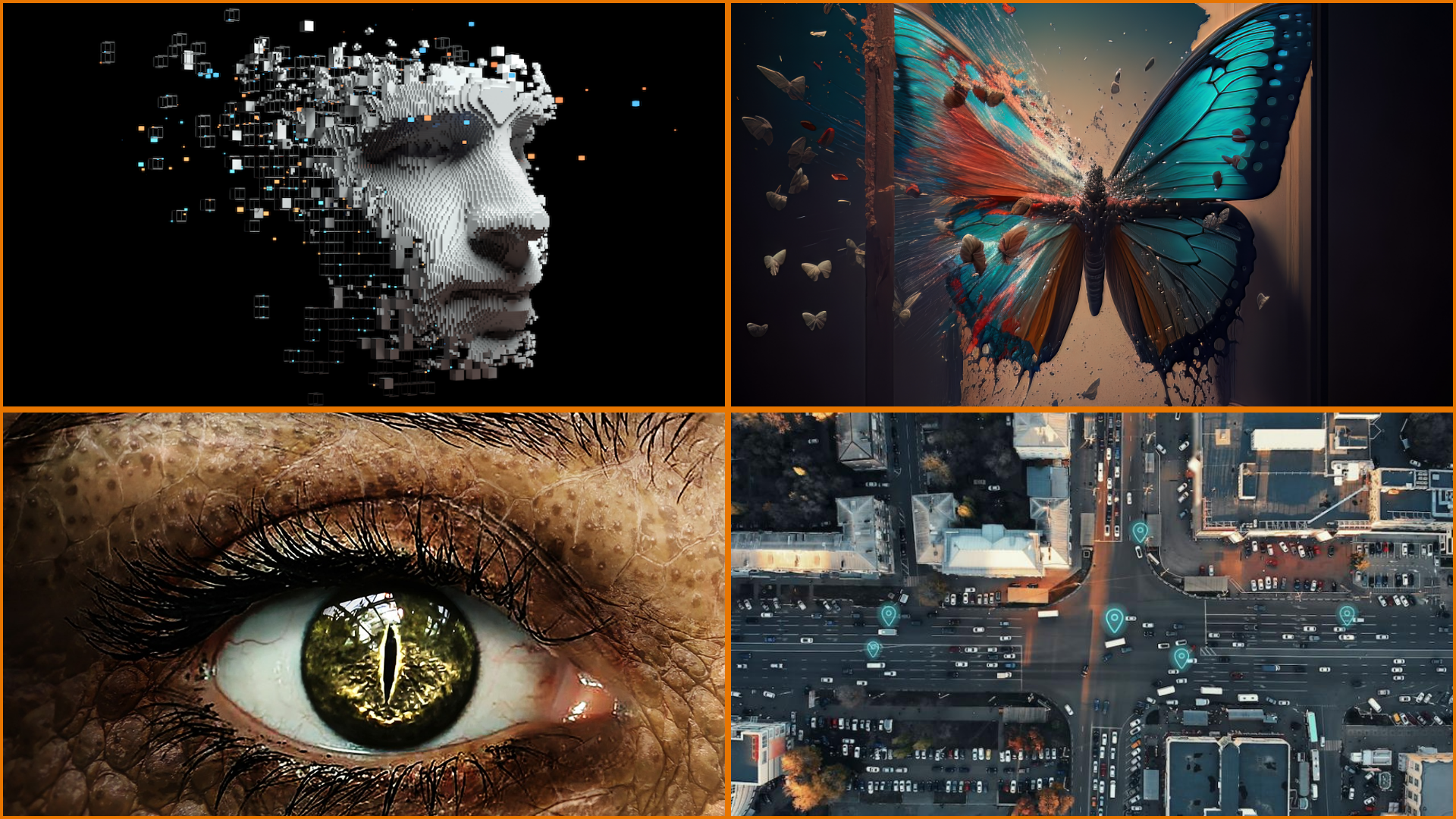
How will we survive and thrive in an AI-dominated world? This cluster turns to science fiction’s intuitions for advance warning about the implications of AI, explores the way politics will manage deep fakes and algorithmic bias, and invites students to question whether intelligence needs to be biological to support human life.
Complete One Required for the Cluster
HNUH 248I: Critical Imagination and the Potential for Ethical AI
Instructor: Alex Harlig
Could AI be part of a sustainable, safe, and just world? The consumer AI boom has raised critiques about energy, land, and water use; reshaping education and the workforce; reinforcing bias and misinformation; and mental health safety for users, among others. But the ability to recognize patterns, analyze large data sets, and synthesize input has allowed for early detection of cancer, provided support for critical journalism, and aided research. This class will use ethical paradigms, economic theories, and systems and design thinking to examine how we got to the present moment, what could have happened differently, and what could yet change. We will reframe the technological future not as inevitable but as a product of human action, and grapple with how to shape that action going forward.
Offered in: Spring 2026
HNUH 248C: The Societal Impact of Artificial Intelligence
Instructor: Roland Rust
How will AI change society? AI is changing not only business, but the nature of society itself. This course investigates the nature of those changes and forecasts their future development. Through the exploration of the unprecedented pitfalls and opportunities that AI represents, students will learn how best to cope with a world that is dependent on AI.
Offered in: Fall 2024, Spring 2025, Fall 2025
Choose One to Complete the Cluster
HNUH 248R: Artificial Intelligence: Critical Examinations through Science Fiction and Technology
Instructor: Rebecca Jones
AI permeates our world, but science fiction (SF) told stories about it for centuries before AI became a reality in the 1950s, shaping our understanding and expectations through words and images. In this course, students will critically examine how SF has shaped how we think about intelligence, and what the evolution of fictional and real AI means for technology and humanity.
Offered in: Fall 2024, Spring 2025, Fall 2025, Spring 2026
HNUH 248O: We the Artificial People: How AI has Reshaped Politics
Instructor: Cody Buntain
Artificial intelligence (AI) has had profound impacts on the modern political landscape, in the US and abroad. This course encourages the critical evaluation of how AI has impacted political behavior and opened new threats like foreign electoral inference, disinformation, and manipulation through deep-fakes and generative language models. Students will debate ethical, fair, transparent, and accountable AI.
Offered in: Fall 2024, Fall 2025
HNUH 248Q: Frankenscience: The “Natural” and “Artificial” in Society and Science Fiction
Instructor: Kenneth Frauwirth
How do we define the boundaries between “natural” and “artificial”? Modern biology has blurred this distinction, yet humans have grappled with fears and innovation through speculative fiction for far longer than they have had practical applications. Through an exploration of biomedical research and its treatment in science fiction, students will develop tools for grappling with Frankenscience.
Offered in: Fall 2024, Fall 2025
How do our actions reverberate in an unpredictable world? The insight at the heart of the so-called ‘butterfly effect’ is that decisions made in one place can produce unintended consequences felt far away. This cluster invites students to explore how small actions can have large impacts in our ever more inter-connected world.
Required for the Cluster
HNUH 218C: Globalizing the American Revolution
Instructor: Richard Bell
How is the American Revolution a creation story of our multi-cultural and interconnected world? Consider the diverse people mobilized by the Declaration of Independence: Creek farmers, Spanish soldiers, Canadian fugitives, and African statesmen. In this globe-trotting class, students will debate the familiar story of the American Revolution in transnational context.
Offered in: Fall 2024, Spring 2025, Fall 2025, Spring 2026
Choose One to Complete the Cluster
HNUH 218R: Stealing from the Poor, Giving to the Rich: The Political Economy of Global Capitalism
Instructor: Daniel Yoder Zipp , Robert Graham
Street names and museum exhibits are being renamed in Europe to erase the ghosts of their colonial history. Yet, this speaks of the colonial “era” as the past when it is very much our present. This course surveys colonial capitalism and its global legacies to explore how history informs the present, as well as pathways towards resistance and reconciliation.
Offered in: Fall 2024, Spring 2025, Fall 2025, Spring 2026
HNUH 278I: Bonded: Loneliness, Health, and Quality of Life
Instructor: Marisa Franco
Society has become more and more disconnected, with 61% of American reporting being lonely. The U.S. Surgeon General’s Advisory on the Healing Effects of Social Connection and Community reports that “The mortality impact of being socially disconnected is similar to that caused by smoking up to 15 cigarettes a day, and even greater than that associated with obesity and physical inactivity.” Disconnection is devastating for health and for society. Particularly in a democracy predicated on the health of civic life, which requires interpersonal and community relationships, where does this predicament leave us as a society? This course illuminates the potential root causes of disconnection: early familial relationships, attachment styles, and broader technological trends. Students will leave the course with a toolkit of evidence-based strategies they can use – and share – to help heal these divides and repair our core social connections.
Offered in: Spring 2026 ONLY
HNUH 218O: The Butterfly Effect in Writing
Instructor: DeNeen Brown
How does investigative journalism impact change among individuals, local communities and global events? Stories have the power to change the world. In this course, we will examine how writing and multi-media storytelling in journalism have the power to impact change at local, regional and international levels. This course will introduce students to journalism that has had a mighty ripple effect, often around the world. Students will examine investigative and breaking-news journalism that has impacted individuals and global institutions alike. Once they have studied the work of writers who have effected change, particularly those of the African Diaspora, students in this course will have an opportunity to research their own investigative features and seek out ways to share them to make change in their own communities.
Offered in: Spring 2025 ONLY
HNUH 218Q: Plants and Empires: Historical Issues and Contemporary Consequences
Instructor: Todd Cooke
Although seldom mentioned in the grand narratives of war, culture, and technology, plants have profoundly influenced the course of human history. Plant domestication and human civilization have been co-evolving ever since the origins of agriculture. This perspective leads to a number of provocative multidisciplinary questions: How did certain cereal grasses and legumes civilize a nomadic hunting-and-gathering primate at a few advantageous locations? How did the cultivation of sugar, tobacco, and cotton affect the colonization and exploitation of the world? What roles did tea, coffee, opium, rubber, and quinine play in the spread, economics, and military actions of the British Empire? Students will apply their appreciation of historical human-plant dynamics to address such contemporary challenges as global climate change, genetic engineering, biodiversity, industrial agriculture vs. sustainable stewardship, and the use of indigenous medicinals in modern cultures.
Offered in: Spring 2025 ONLY
If what we know grounds our perception of the natural world, how do we think our way to the world we hope to live in? This cluster interrogates how science both expands and limits what we can imagine, and how imagining has long fed the scientific pursuits that show us the futures we want.
Required for the Cluster
HNUH 228C: The Fiction of Fact: Race, Science, and Storytelling
Instructor: Kimberly Coles
What is a fact? Science is often viewed as an unbiased, fact-based, analytical discipline, but has sometimes been a potent weapon for creating and supporting political fictions and social hierarchies. Through a range of materials—from fiction and film to scientific and political theses—this course will explore one of the most potent cases of “scientific” storytelling: the case of race.
Offered in: Fall 2024, Spring 2025, Fall 2025, Spring 2026
Choose One to Complete the Cluster
HNUH 228R: The Picture of Health and Illness: Modern Medicine in Illustration
Instructor: Brynne McBryde
From prehistoric carvings to the Lincoln Memorial, images have long been used to communicate what people can and should be. Do pictures reveal the truth about our bodies? In this class, students will develop their own theory of how science continues to shape who we think we can be, and how we might resist those limitations.
Offered in: Fall 2024, Spring 2025, Fall 2025, Spring 2026
HNUH 228O: Liquid Crystals: the Secret of Life
Instructor: Luz Martínez-Miranda
From Superman’s Kryptonite to the Star Trek crew traversing the universe, space travel has occupied science fiction for ages. To understand how real life can catch up with fiction, we look at liquid crystals: the secret of life itself. Students will learn to address such pressing concerns as why extremes of temperature and pressure affect life, and what we can do about it.
Offered in: Fall 2024, Fall 2025
HNUH 228Q: Science, Fiction, and our Environmental Future
Instructor: Mitchell Pavao-Zuckerman
What will the world look like in 2070? This course explores how science fiction can inform future visioning by expressing and challenging ideas about nature, culture, society, and politics. It challenges students to think about how ‘smart’, ‘just’, ‘green’ and ‘resilient’ visions can be integrated into sustainability transitions informed by collaborations between science and fiction.
Offered in: Spring 2025, Spring 2026
Populations, organizations, and the environment are all under surveillance. Surveillance, in turn, shapes identities, social categories, and environmental policy. This cluster take up the potential costs of surveillance in terms of the individual, social inequalities, and ethical dilemmas within systems of surveillance themselves.
Required for the Cluster
HNUH 238C: Surveillant Society, Surveillant Selves
Instructor: Brian Connor
Do the social and individual benefits of surveillance outweigh its risks? Surveillance is a ubiquitous practice in contemporary society. Governments surveil populations; corporations surveil customers and users; individuals surveil themselves and others. Students will debate the role of surveillance in society today, and what, if anything, should be done to change it.
Offered in: Fall 2024, Spring 2025, Fall 2025, Spring 2026
Choose One to Complete the Cluster
HNUH 238O: Surveillance, Technology, and the “Death” of Privacy
Instructor: Jessica Vitak
In 1949, when George Orwell published “1984,” few imagined how much the future would resemble the fictional surveillance state he depicted in his novel. Yet, 75 years later, surveillance technologies have not ceased to expand thanks to advances in computing and big data. We are at a point where many decry the “end of privacy,” a world sketched with frightening detail in the popular Netflix series “Black Mirror.” Are we destined to live in a dystopia like those described in popular science fiction books and films, or can we take steps now to ensure that privacy does not fall into oblivion? This course traces the rise of surveillance technologies used in homes, schools, workplaces, and everywhere in between to understand how we got here and where we are headed. Students will explore various framings of surveillance in Western culture, critically assess the challenges surveillance technology raises for vulnerable populations, and explore ways to stop the seemingly inevitable push toward a society without privacy.
Offered in: Spring 2025, Spring 2026
HNUH 238Q: Surveilled Bodies: Eugenics, Genetics, and Disability in Science Fiction and Society
Instructor: Leigha McReynolds
Body-based technologies of surveillance — from fingerprinting to genetic testing to facial recognition to biometric scans — are rooted in the “science” of eugenics. In the early twentieth century, eugenicists identified certain bodies as inherently suspect: they were deemed deviants, that is, they were said to deviate from desired physical, social, and political norms. One legacy of this movement is the surveillance and control of disabled bodies, which have been confined, cured, and erased, often in the name of technological and social progress. And we see the influence of eugenic surveillance in concerns over who is and who isn’t, or shouldn’t be, reproducing.
Offered in: Spring 2026
HNUH 238R: Invasive: Feminist Perspectives on Power, Politics, and Ecosurveillance
Instructor: Jordan Johnson
Invasive species play a key role in 60% of plant and animal extinctions, constituting a serious threat to global biodiversity and costing over $423 billion annually. But what is at stake in the impulse to frame a species as “invasive”? What modes of watching, tracking, and surveilling emerge in the context of invasive species management? What are the material and ethical implications of these practices? As the cost of invasive species management has quadrupled every decade since 1970 and is likely to continue to increase, what alternatives exist? Reading through the lens of feminist science studies, this course asks what species movement might teach us about the possibilities and challenges of multispecies environmental ethics. Students will examine theoretical, historical, cultural, and practice-based accounts to better understand how our collective and individual actions continue to unevenly shape the biodiversity of our changing planet.
Offered in: Fall 2024, Spring 2025
Fall 2023 – Spring 2025

How do entities of all kinds—from people and processes to artifacts and ideas—achieve their full potential? How is this development affected by their environments? And what are the enduring effects of early exposure on development? From patterns of emergence that are common across species and transitions in behavior that happen over millennia, to the ways that identity is remade through migration and the lifelong effects of early poverty, the behaviors of complex organisms are shaped by social needs and community concerns. This cluster examines the mechanisms and conditions of natural growth patterns to explore the many ways these metamorphoses are enabled—and imperiled—by the forces around them.
Required for the Cluster
HNUH 258B: The Ecology of Childhood Poverty
Instructor: Natasha Cabrera
How does poverty shape the relationship between humans and their environment? It may seem obvious that being poor in childhood has enduring effects on development. What is less obvious is how experiencing poverty in childhood shapes relationships between children and their surroundings, including family interactions, peer relationships, adult dynamics, and the health of the community. Less clear still is the extent to which positive interactions with caretakers and social supports can protect children from potential harm as they grow up. This course focuses on the complexity of poverty as a social force and community concern. Students will investigate the nature of poverty through an interdisciplinary lens that includes social theory, developmental psychology, and empirical studies. After analyzing various approaches to the study of child poverty, students will be in a position to use research on parenting and poverty to evaluate public policy and social programs in their own backyard.
Offered in: Fall 2023, Spring 2024, Fall 2024, Spring 2025
Choose One to Complete the Cluster
HNUH 258U: The Basis of Behavior: Evolution and the Origin of Actions
Instructor: Riva Riley
Why do some monkeys spend time grooming each other in large groups, while others lose their minds with rage if another monkey comes too close? Complex organisms exhibit behaviors that both fascinate and confound, and the way an animal behaves dictates how it interacts with its environment, with profound consequences. Individual behaviors can have dramatic effects on individual fitness, an individual’s groupmates, and even the evolution of species. This leads to a fundamental question in behavioral evolution: why do animals do the things they do? The answer lies in the interaction between individual experiences and eons of natural selection. In this seminar, students investigate what organisms were, what they have become, and why. With a focus on the transitions in behavior that caused single cells to evolve over time into complex societies, students will apply evolutionary principles to individual development and explore how and why individuals choose certain behaviors over others.
Offered in: Fall 2023, Spring 2024
HNUH 258I: Forced Metamorphosis: The “Unnatural” Creation of Future Humans
Instructor: Leigha McReynolds
What will future humans look like? Will technology or mutations alter our bodies to survive on other planets? Will widespread cloning create a population of genetic copies? Even as we celebrate the advances in genetics that make imagined futures more realistic, we need to acknowledge that these impulses are often rooted in schools of thought — for example, eugenics — that want to alter racial and other biological characteristics of future generations. In this class, we’ll use science fiction to extrapolate what might happen as the natural processes of growth and change continue to be disrupted or rerouted by human intervention. Through the lens of disability studies, students will be invited to rethink how we talk about changing human bodies and which bodies society seems willing to let disappear.
Offered in: Spring 2025
HNUH 258V: Collective Behavior in Natural and Artificial Systems
Instructor: Derek Paley
From fish schools to traffic jams, natural and artificial systems alike exhibit forms of collective behavior. In fact, the onset of collective behavior in a system of interacting individuals often corresponds to a period of broader transition in the system from a disordered to ordered state. Why do environments as diverse as the ocean and human society follow the same pattern of emergence? The course takes up this question through an exploration of physical and biological systems, such as insects and animal groups, and human crowds; and case studies in transportation, robotics, and social networks. Students will learn to model, analyze, predict, and even synthesize collective networks of all kinds using quantitative methods such as graph theory, dynamical systems theory, agent-based modeling, and data-driven approaches. No prior knowledge of systems theory or methodology is necessary.
Offered in: Spring 2024, Spring 2025
HNUH 258W: Migration, Myth, and Memory: Change and Hope in the Immigrant Novel
Instructor: Robert Chiles
Stories of immigrants to the United States reveal the metamorphosis of the nation itself: labor, culture, religion, and politics have all been transformed by diverse waves of new Americans. Simultaneously, the outlook and traditions of migrants have been profoundly affected by these processes. As a result, both migration and Americanism remain highly contested notions, particularly in light of forced migrations that mark the nation’s early history. This course grapples with the complex ways that identity, memory, and culture are made and remade. Moreover, students engage these concepts at the granular level, considering how individual experiences interface with broad historical trends. Through discussions centered on novels about diverse immigrant experiences, students will learn to contextualize problems, re-humanize individuals associated with major social trends and political controversies, and transcend clichés about immigration and American culture through humane interrogation.
Offered in: Spring 2024, Spring 2025
As we chart innovative pathways to the future, does the past matter? And what are our present obligations to it? The idea of “heritage” is a bundle of contrasts and contradictions. It is as much about the present and future as it is about the past. What we think of as our collective heritage is invested with intensely personal and emotional connection, while also being highly managed by authorities and governments, and disciplined within legal and economic regimes. This cluster interrogates the ways in which we fashion, forsake, and mobilize our histories. Courses explore the way material, natural, and cultural heritage celebrates past traditions, reckons with historical injustices and atrocities, and helps us chart our future.
Required for the Cluster
HNUH 268B: Global Heritage
Instructor: Kathryn Lafrenz Samuels
What traction does the past have in society today? This course explores globally how the past gains traction in society today and becomes remade in the present. That inquiry will be guided by the idea of heritage as it mobilizes the past within a broad spectrum of social, political, economic, and environmental issues. We will examine western relationships to the past as intimately tied to property and the drive to plunder, collect, and catalogue. Increasingly, conceptions of heritage include landscapes, as well as intangibles such as music, dance, and folklore. This broad definition honors the diversity of present-day relations to the past, even as it strains heritage management models that are organized around definitions and regulations, and bear the weight of historical injustice. Close examination of heritage at work within global crisis and struggle prompts questions on who owns the past, and who owns up to it. What do we owe the past, and will we be good ancestors to the future?
Offered in: Fall 2023, Spring 2024, Fall 2024, Spring 2025
Choose One to Complete the Cluster
HNUH 268U: Power, Politics, and the Past: Local Communities and Cultural Heritage
Instructor: Samuel Holley-Kline
The politics of the past surround us. An online memorial to the struggle against the Dakota Pipeline, the call to commemorate Indigeneity instead of Columbus, monuments to the Confederacy torn down… How do diverse communities claim—or reject—particular places, practices, and ideas as their shared heritage, and why? In this course, we will explore these questions with reference to Indigenous communities in global context, with a particular focus on Mexico. Students will engage with theoretical approaches and contemporary case studies to analyze the politics and ethics surrounding the use of the past in diverse Indigenous presents. Visits to DC’s museums and archives will help students practice theorizing real-world materials. Students will leave the course with the analytical tools necessary to understand cultural heritage and advocate for Indigenous perspectives on the past. A typical day in this course will involve reading an article-length work and participating in student-led discussion.
Offered in: Fall 2023, Spring 2024
HNUH 268I: Origin Stories: Case Studies in American Identity
Instructor: Robert Graham
E Pluribus Unum, the motto on U.S. currency, is one way to describe how America sees itself as a nation. Yet, the United States has always been a country of disparate, converging cultural identities brought together through circumstance and movement such as colonization, immigration, and the transatlantic slave trade. Despite unifying notions such as the melting-pot metaphor and the Pledge of Allegiance, the American experience is one that features racial and ethnic tensions, varying in intensity depending on the geopolitical context of the moment. If we say we are American, where does that shared heritage align with individual identity and where does it diverge? With theories and tools drawn from Cultural Studies, Sociolinguistics, and Microhistory, this course will explore the construction of racial and ethnic differences to understand the dynamic nature of our heritage(s) and how it shapes our identities.
Offered in: Fall 2024, Spring 2025
HNUH 268V: Art Museums and the Politics of Cultural Heritage
Instructor: Aneta Georgievska-Shine
Despite the great variety of art museums in the world, these institutions share a common goal: to preserve and interpret cultural consciousness through objects or other material facets of human agency. While these collections often feature the cultural heritage(s) of their lands, in many cases, they also hold objects that have been taken away through illegal or morally questionable practices from their original context. Thus, they prompt discussions about who these holdings really belong to, how they should be displayed and interpreted, and whether they should return to their places of origin. This course explores a number of these issues by asking some fundamental questions: why do art museums matter? How have they evolved over time? What can they become in the future? Students will debate these questions to gain a finer understanding of the complex role of these institutions as custodians of cultural heritage.
Offered in: Spring 2024, Spring 2025
HNUH 268W: Where the Waters Blend: Contemporary Indigenous Perspectives on History, Traditions, and Modern Issues
Instructor: Angela Stoltz & Tiara Thomas
Although seldom mentioned in the grand narratives of war, culture, and technology, plants have profoundly influenced the course of human history. Plant domestication and human civilization have been co-evolving ever since the origins of agriculture. This perspective leads to a number of provocative multidisciplinary questions: How did certain cereal grasses and legumes civilize a nomadic hunting-and-gathering primate at a few advantageous locations? How did the cultivation of sugar, tobacco, and cotton affect the colonization and exploitation of the world? What roles did tea, coffee, opium, rubber, and quinine play in the spread, economics, and military actions of the British Empire? Students will apply their appreciation of historical human-plant dynamics to address such contemporary challenges as global climate change, genetic engineering, biodiversity, industrial agriculture vs. sustainable stewardship, and the use of indigenous medicinals in modern cultures.
Offered in: Fall 2023, Fall 2024
What are the fundamental rights and responsibilities of choosing to live in community with other humans? How do human communities collaborate to solve shared problems, and what are the consequences when they fail to do so? Looking to examples across time and around the globe, this cluster considers how communities have adapted to natural, industrial, and economic changes. The courses in this cluster identify examples of community resilience in the face of wars, plagues, and other unrest, as well as occasions when communities have ignored challenges, avoided responsibility, and scapegoated others. Together they seek to understand how to maximize civil bonds and minimize destructive habits of individualism.
Required for the Cluster
HNUH 278B: Democratic Habits
Instructor: Kristjana Maddux
How do ordinary citizens power democracy? At the age of 18, every American citizen is endowed with the right to vote, but what if democracy demands more than voting? With democratic processes seemingly in peril all around us, what can and should ordinary citizens do to safeguard democracy? Looking beyond the basic right to vote, this class will instead explore the complex ecosystem of citizenship practices necessary for collective self-governance. Turning to both philosophy and history, the course material addresses the power and peril of such civic habits as mutual aid, economic participation, tolerance, attention, organizing, protest, and more. We consider what resources these habits require, what virtues they inspire, and what happens when they conflict with each other. Students in this course will acquire the tools to develop and act on their own answer to the pressing question of what it will take to save democracy.
Offered in: Fall 2023, Spring 2024, Fall 2024, Spring 2025
Choose One to Complete the Cluster
HNUH 278U: Indigenous Knowledge, Supernatural Remedy, and Collective Action: Lessons from Agrarian Societies
Instructor: Yupeng Jiao
How were human communities sustained before the rise of capitalism, individualism, and secularism? Where can we look to imagine a world in which modern science, polity, and ethics are not the defining system of civil social? Through an exploration of stories from late medieval Europe, China, Southeast Asia, and other regional communities, with a particular focus on the East, this course aims at de-orientalizing the narratives of the Western world by recovering the collective practices of the global past and present. Interrogating the idea that human history has been a linear process of industrialization and secularization, this course encourages students to reflect on the limits and problems of modernization, and learn from cultures whose practices were displaced or silenced by colonial knowledge production. Students will be empowered to consider, and even envision, alternative versions of modernity and the future of our world.
Offered in: Fall 2023, Spring 2024
HNUH 278I: Bonded: Loneliness, Health, and Quality of Life
Instructor: Marisa Franco
Society has become more and more disconnected, with 61% of American reporting being lonely. The U.S. Surgeon General’s Advisory on the Healing Effects of Social Connection and Community reports that “The mortality impact of being socially disconnected is similar to that caused by smoking up to 15 cigarettes a day, and even greater than that associated with obesity and physical inactivity.” Disconnection is devastating for health and for society. Particularly in a democracy predicated on the health of civic life, which requires interpersonal and community relationships, where does this predicament leave us as a society? This course illuminates the potential root causes of disconnection: early familial relationships, attachment styles, and broader technological trends. Students will leave the course with a toolkit of evidence-based strategies they can use – and share – to help heal these divides and repair our core social connections.
Offered in: Fall 2024, Fall 2025
HNUH 278V: Climate Change, Infectious Disease, and Civil Society
Instructor: Jonathan Dinman
Viruses that are lethal to human life have been on earth for centuries. Why are they surging now? And how can we respond to the recent breakneck spread of Coronavirus? This class begins its journey with Homo sapiens, our ancestor that dispersed out of Africa and carried infectious diseases across the planet. Human expansion into new ecosystems also provided opportunities for us to acquire new pathogens. While all of human history is marked by diseases caused by human migration, the Industrial Revolution greatly accelerated human mobility while planting the seeds of the human impact on climate change. Today, the increasingly rapid movement of people and goods, combined with a warming planet and the large-scale disruption of major ecosystems has witnessed an unprecedented spread of infectious diseases. Students will explore how these trends impact our lives and collectively challenge themselves to do what must be done to save our planet and ourselves.
Offered in: Fall 2023, Spring 2024, Fall 2024, Spring 2025
What is health in an unhealthy world? What is the role of restorative justice in individual and collective well-being? Social inequalities including race, class and gender fundamentally shape physical and mental health outcomes. The COVID-19 pandemic has exacerbated the existing health disparities in the United States and globally. This cluster takes up these systemic challenges to health and well-being, from social inequality and access, to social justice and the racism that persists in our medical institutions. Drawing on expertise from sociology, counseling psychology, family law, and performance studies, the courses in this cluster help students grapple with global debates around reproduction, mental health, coping with sexual violence, medical ethics, and the specific health needs of college students.
Required for the Cluster
HNUH 288B: Race, Reproduction, and Rights
Instructor: Sangeetha Madhavan
As a society, how do we move beyond pro-choice OR pro-life? The 2022 US Supreme Court decision that the right to an abortion is unconstitutional has generated impassioned debate about women’s rights and access to reproductive health care in the US and globally. These debates open space to think beyond polarization to create conditions that promote equity, respect for rights, and a healthy society. But to do that, we must examine the racism, gender inequalities, marginalization, and colonization that produce disparities in reproductive health care and jeopardize the well-being of women, children and families. Who controls the bodies of marginalized women and men? What is the meaning of reproductive rights for people who have little power? What is the difference between reproductive rights and reproductive justice? This course challenges students to bring together multiple disciplines, become critical data consumers, and develop innovative ways to use this knowledge to influence policy.
Offered in: Fall 2023, Spring 2024, Fall 2024, Spring 2025
Choose One to Complete the Cluster
HNUH 288U: The Body Knows: Creating Healthy Intimacies on College Campuses
Instructor: K. Frances Lieder
How do we figure out what we physically desire? How do we know where our boundaries are and how do we communicate that to others? What would it look like to create a campus community where young people are confident about their sexuality and their ability to communicate the nuances of their needs to potential partners? This course is designed as a creative workshop to help students put their own embodied knowledge in conversation with theories and practices of healthy intimacy. Core texts explore the history of sexual violence as a tool of colonization, the relationship between feminism and sex-positivity in popular culture, and the consent theories that have become central to college campus responses to sexual violence. With the help of performance-based techniques, students will have the opportunity to research issues specific to UMD, design curricula for their peers, and advocate for an end to sexual violence on campus.
Offered in: Fall 2023, Spring 2024, Fall 2024, Spring 2025
HNUH 288V: Campus Well-Being: Solving the Health Inequity Puzzle
Instructor: Yu-Wei Wang
The last few years have highlighted the need to focus greater effort on health and well-being, and the challenge of doing it equitably. College campuses, in particular, have made student care and equitable access a priority. Yet, the data suggest that we are still not succeeding across the board. This seminar takes the current student body at UMD as its case study to understand the range of factors that contribute to well-being and health disparities. Students will review reports and relevant literature about the most recent campus surveys: the University New Student Census, Withdrawal Survey, the Food Access & Student Well-being Study, and surveys completed by Counseling Center clients. They will apply the study findings to their everyday lives, formulate evidence-based recommendations regarding student programs/services, brainstorm questions to be included in future campus surveys, and test ways to use research to promote positive change for all.
Offered in: Spring 2024, Spring 2025
HNUH 288W: Over My Dead Body: Law and Ethics of Healthcare
Instructor: Kerry Tripp
In real time during the pandemic, we had a front-row seat to how much global healthcare can be a function not of the law but of human action. From how to prioritize populations for vaccines to individual decisions about masks, we were plunged into an almost daily discussion of the values and moral principles that guide nations and people in making choices about healthcare. This class invites students to explore their sense of right and wrong in the public healthcare debate. We will look at traditional issues such as legal paternalism, informed consent, and governmental distrust. And we will take up pressing current issues like abortion’s impact on identity/privacy, disparities in marginalized communities, and biometric technologies. Students will acquire the tools to think critically think about these important issues of fairness and what our current practices reveal about society’s values.
Offered in: Fall 2023, Fall 2024
Fall 2022 – Spring 2024

How do we perceive, react to, and work together to solve the global crises facing us? This cluster proposes a broad approach to understanding the ways that overlapping crises affect society, as well as individuals, and explores ways we might begin to address them. Focusing on climate change, food security, and loneliness, the cluster takes up widespread environmental problems that currently challenge our ability to see the way forward. Students will be exposed to new technologies and approaches, and will consider and evaluate how various perspectives may offer a path to a sustainable future.
Required for the Cluster
HNUH 248B: Setting the Table: The Challenges and Opportunities for Sustainable Agriculture
Instructor: Stephanie Yarwood
What will the farm of the future look like? Our current food system is plagued with paradoxes. An estimated 41.2 million Americans are classified as food insecure, but we produce 4,000 calories per person per day. Between 2008 and 2012, 1.6 million acres of long-term grasslands were converted to crop production, yet more than 350,000 acres of farmland were lost to development annually. This course will investigate what determines the food we eat and how we can make changes today that will improve both food access and the environment for future generations. Students will learn agribusiness, as well as alternative food movements and regenerative agriculture. They will meet experts from the USDA and Maryland producers. By growing their own vegetables, tracking food consumption, and exploring family history linked to farming, students will leave the course as conscious consumers empowered to navigate food system reform.
Offered in: Fall 2022, Spring 2023, Fall 2023, Spring 2024
Choose One to Complete the Cluster
HNUH 248U: The Loneliness Crisis: Origins and Solutions
Instructor: Marisa Franco
In 2017, U.S. Surgeon General Vivek Murthy deemed loneliness an “epidemic.” Despite the rise of social media that is meant to foster connection, over 23% of adults report being lonely and social networks have been shrinking for decades. Like a viral epidemic, widespread loneliness has grave consequences. Loneliness shortens lifespans at a rate akin to smoking 15 cigarettes a day and predicts mortality risk better than poor diet or lack of exercise. This course will explore how loneliness became a crisis—exploring potential drivers of loneliness like social media, systemic racism, homophobia, and the rise of romantic love—and what we can do about it. It will end with students developing interventions to diminish loneliness and practicing skills to connect with one another.
Offered in: Fall 2022, Spring 2023, Fall 2023, Spring 2024
HNUH 248V: How Can We Study Environmental Problems?
Instructor: Dana Fisher
How do we study environmental problems? The course provides an overview of the ways social scientists collect information about environmental issues and environmental change, most of which are driven by society and the social world. The course focuses on learning how to collect data that are reliable and applicable to research questions. Through the lens of specific case studies of environmental efforts currently underway, students will learn how to construct a testable hypothesis, design a small-scale research project, and write up the findings of this work to understand environmental issues. They will develop a critical eye to the structure of social science research: identifying the object of inquiry, noting what is being tested; how it is operationalized; and evaluating the quality of the research conducted. The course requires no background or prerequisites.
Offered in: Fall 2022, Spring 2023
HNUH 248W: Save the Soil, Save the World
Instructor: Eni Baballari
Canada, Maui, eastern Libya. We are witnessing the burning and flooding of our planet. A major influence on these catastrophes are the greenhouse gasses presently trapping too much heat close to earth and warming it beyond acceptable limits. Our survival depends on reversing this trend. But how? An answer lies just beneath our feet. According to the UN Food and Agriculture Organization, the top 30 cm of the world’s soil contains about twice as much carbon as the entire atmosphere and more than is stored in all the vegetation on earth. Soil turns out to be a great way to keep carbon out of the atmosphere. This course explores the critical role soils play not just in our food production, but also in our efforts to prevent the worst effects of climate change. With their knowledge of the drivers of climate change and soil characteristics, students in this course will research and propose more sustainable soil management practices to help mitigate climate change and save the world.
Offered in: Spring 2024
What is freedom? How have people repurposed the language or liberty for protest or weaponized it to achieve their goals? How does freedom shape belonging and community development? From the ways incarcerated people build a sense of freedom for themselves to the ways transnational feminists theorize and practice it; and from the 19th-century experience of freedom to the ways African Americans have moved through natural landscapes across American history, this cluster explores the ways people imagine, seek, and construct freedom.
Required for the Cluster
HNUH 218B: Frederick Douglass’s America
Instructor: Christopher Bonner
What does it mean to be free in the United States? The concept of freedom was embedded in the nation’s political culture in the Declaration of Independence, and it has remained a cherished and contested ideal. We can interrogate this concept through the life and times of Frederick Douglass (1818-1895), who dreamed eloquently of freedom, thought carefully about its limits, and worked ardently to build a firmer freedom for a broader population. With Douglass as our guide, we will examine the survival of slavery in a nation built on freedom, images of the expanding United States as a land of opportunity, and the complex meanings and tremendous costs of freedom during the nineteenth century. This history will push you to think critically about the contested concepts that shape our lives, and to consider both the values and the perils of a society that positions freedom as its highest ideal.
Offered in: Fall 2022, Spring 2023, Fall 2023, Spring 2024
Choose One to Complete the Cluster
HNUH 218U: Finding Feminist Freedom
Instructor: Verónica Zebadúa Yáñez
“I’m the one that’ll make you pay.” So goes one verse of what has become a Latin American feminist hymn, “Canción sin miedo” (“Fearless Song,” by Vivir Quintana). Transnationally, feminists today—particularly in the Global South—are on fire: militant, unafraid, angry, and, above all, driven by a desire to build a world where the promise of freedom for all is finally fulfilled. But what is freedom? Is freedom an abstract concept or a lived experience? Is it individual or collective? What is the meaning of ‘feminist freedom’? These questions will be gauged by discussing, analyzing, and interpreting texts in feminist theory; decolonial and transnational feminist approaches; and feminist film, documentary, performance, and protest. At the end of the course, you will have learned that there is not one feminism, but many, become familiar with feminist theory and practice, and be equipped to live your own version of a feminist life.
Offered in: Fall 2022, Spring 2023
HNUH 218J: The Free Internet
Instructor: Alex Harlig
Free speech, free press, free porn… What does it mean for something to be ‘free’ online and how does our participation in that economy liberate and constrain our intersectional identities? In this class we’ll talk about the economics, politics, and culture of the internet to assess how value and values get made and circulated within its technologies. We’ll focus on the many ways the term ‘free’ operates in this context, notably, around the ability to create, distribute, and access information. Centered on the US with a comparative eye on the global internet ecosystem, this seminar asks: Where do the rights and responsibilities for a “free internet” come from, and to whom do they apply? What are the choices individuals, platforms, and governments must make to determine the future of the internet and the freedom of the people who build and use it?
Offered in: Fall 2023, Spring 2024
HNUH 218V: Black Bodies and Green Spaces: From 1619 to Today
Instructor: Jennifer Roberts
From the antebellum plantation slave, who used uncultivated land as a place of deliverance, healing and route to freedom, to the Central Park bird watcher, whose green space presence was perceived as a threat to White physical safety, black bodies have a vexed relationship to green space. This course critically examines how systemic racism has shaped the experience, connection, and relationship to nature among Black Americans. Students will conduct in-depth analysis, critical thinking, and discussion on topics ranging from slavery and nature; The Great Migration; and Jim Crow, segregation, and parks; to green space inequity and “Moving While Black” (Treyvon to Ahmaud). While some environments (built, natural, virtual) within the United States have represented the essence of anti-Black racism and indignity, this course will further explore how many Black Americans still regarded nature as a space of freedom, humanity, and spirituality.
Offered in: Fall 2022, Fall 2023
HNUH 218W: Freedom and Captivity: Prisons, Punishment, and Citizenship
Instructor: Robert Stewart
What does freedom mean if you’re incarcerated? How is freedom, citizenship, and social membership mediated through the power of the state? What are the implications of punishment on how freedom is constructed, understood, and experienced? The United States purports to be a beacon of freedom while simultaneously incarcerating more people than any other country in the world. Throughout the course, we will discuss the writings of scholars, theorists, historians, and–most importantly–incarcerated people to interrogate the concept of “freedom” from the vantage point of the prison. Students will use these insights to analyze the complex tensions and relationships between social ideals and practice.
Offered in: Spring 2023, Spring 2024
What is at stake as humans seek to redesign life? Biotechnology innovations have far-reaching consequences for medicine, agriculture, the environment, and energy. In ways that we can only imagine, and perhaps should fear, these consequences will reshape our planet and others we might explore. This cluster explores the thorny questions of who will be able to use the new technology and where, and who decides. What can we learn from the legacy of eugenics and its role in addressing scientific and societal barriers? What ethical questions arise as we confront what it means to be human? And beyond existence on earth, what lessons must we consider in our encounters with other forms of life?
Required for the Cluster
HNUH 228B: Redesigning Life: Prospects and Consequences
Instructor: Edward Eisenstein
What is at stake for our world as humans seek to redesign biological organisms? Scientific advances are enabling us to read, edit and write genomes, including our own. This revolution has been fueled by the quest to understand and cure disease. These innovations have far-reaching consequences, not only for medicine, but also for our world, which it will reshape in ways we can only imagine – or fear. The course will challenge students to confront the risks and rewards for them, their families, their community, and their future, as biotechnology moves outside specialized laboratories to our homes. A demystifying, low-tech approach will introduce contemporary genome redesign, clarifying current limitations and future goals. Students will debate whether redesigning plants and animals will enhance or inhibit momentum in human genome engineering, and formulate their own arguments about who should be able to use these tools and where, who decides, and how much society is willing to risk.
Offered in: Fall 2022, Spring 2023, Fall 2023, Spring 2024
Choose One to Complete the Cluster
HNUH 228U: A Life Worth Living: The Legacy of Eugenics in Genetics
Instructor: Leigha McReynolds
Should parents be able to choose their child’s eye color? Or alter their child’s genome to eliminate a hereditary disability? While these might seem like different concerns, both are eugenic questions. In this class students will learn about the legacy of eugenics and its role in the development of genetics by analyzing science fiction works through the lens of disability studies. We’ll explore the past to identify who has historically been considered “fit” and look to the future to consider what kinds of embodiments, and life experiences, society seems willing to let disappear.
Offered in: Fall 2022, Spring 2023, Fall 2023, Spring 2024
HNUH 228V: At What Cost? An Examination of the Societal and Ethical Impact of Modern Biological Research
Instructor: Kenneth Frauwirth
The results of modern biological research are pervasive – from cutting edge medical treatments, to debates about mandatory vaccination, to genetic engineering breakthroughs. This course will examine the social, ethical, and biological costs of research. The focus will be on the larger issues that surround the biology – questions of ethical research, the perception of science versus reality, the intersection of science and society, and even we may need to reconsider the meanings of “self” and “human”. Students will reflect on the lessons learned to propose how research can proceed in a way that balances the demands of discovery with social justice and the ethical use of animals and the environment.
Offered in: Fall 2022, Spring 2023
HNUH 228W: Planetary Protection vs. Planetary Imperialism
Instructor: Ricardo Arévalo, Jr.
International space agencies, such as NASA, ESA, and CNSA, continue to push the boundaries of deep space exploration, buoyed by public excitement, scientific ambition, and political motivation. However, the invasion of alien environments warrants an ethical consideration. What are the risks of forward contamination? What are the potential consequences of reverse contamination? With the drive to establish a permanent human presence on the Moon, how do we avoid a “space race” incentivized by imperialism or colonialism? What happens next if we successfully discover life on Europa, Titan, or another planetary body? Given the current state of planetary science and world affairs and the emerging commercialization of spaceflight, the next generation must be poised to grapple with these questions. Students will emerge from this course with the knowledge to engage in debates about these global priorities.
Offered in: Spring 2023, Spring 2024
What explains the stubborn persistence of racism in our institutions, and how should it be confronted? Through an examination of racism in public life – from the films we watch, the books we read, the laws we make, the views we share, and the places we gather together to live and work, this cluster investigates the insidious ability of racist systems to thwart efforts aimed at dismantling inequality. Although the issue of systemic racism looms large, this cluster helps students to understand their role in working toward change.
Required for the Cluster
HNUH 238B: Systemic Racism in Public Opinion and Policy Attitudes
Instructor: Janelle Wong
If we believe that racism is bad, why do we still support racist policies? No matter how hard we work to end it, the challenge of racism seems here to stay. Though attitudes toward racial segregation in schools have changed, schools are more racially isolated than ever. There is a disconnect in American public life between support for the idea of equality and resistance to policies aimed at addressing racism, and a deep divide over how to eliminate inequality. This course focuses on public opinion and how these attitudes inform public policy. Can we address systemic inequality through public engagement and by changing the national narrative with the support of evidence? Does change come from shifting views or shifting policies? Students will explore these issues through a case study on racial equity in the Honors College. By developing skills in evidence-based op-ed writing and survey-based experiments, students will add their voices to these pressing public debates of our time.
Offered in: Fall 2022, Spring 2023, Fall 2023, Spring 2024
Choose One to Complete the Cluster
HNUH 238U: Unequal Opportunity? Race and the Future of American Education
Instructor: Robert Graham
America’s schools are dynamic microcosms of society at large. They simultaneously reflect, reproduce, and shape what happens outside of the classroom, including the many ways that racism affects us all. The educational mechanisms that operate for the benefit of some and to the detriment of others can be hard to see, often because they are hidden in plain sight. For example, national tests are standardized. When racialized differences in test scores appear, they are called “achievement gaps” and the disparity is attributed to essential differences or cultural deficiency rather than inequitable access and opportunity. In this course students will learn methods to critically examine such commonplace notions as the achievement gap and to document their effects on society. They will also develop strategies for self-reflection that enable them to confront inequity in their own educational experience and work to create change.
Offered in: Fall 2022, Spring 2023, Fall 2023, Spring 2024
HNUH 238V: Still Separate and Unequal? The Enduring Role of Segregation in American Life
Instructor: Alana Hackshaw
Racial segregation remains an enduring feature of American life today though many believe segregation is a relic of the past. Using an interdisciplinary approach, this course examines the history of segregation and its connection to present-day patterns of inequality in the United States. Using an interdisciplinary approach that incorporates history, sociology, political science, and public policy, this course highlights the complex ways in which legacies of segregation continue to shape life in the US. We will identify how federal, state, and local governments endorsed systemic racism through policies that defined the racial geography and resources of racial groups in the US. Students will engage with policy experts to consider the promise and limits of policies that promote integration within communities and the connection between race, spatial location, and current political divisions.
Offered in: Fall 2022, Fall 2023
HNUH 238W: Monsters and Racism: Black Horror and Speculative Fiction
Instructor: Sydney Lewis
The previous decade has been considered a renaissance for Black Horror. From Get Out to Lovecraft Country, the genre has enjoyed unprecedented mainstream media buzz and accolades. This course looks at contemporary Black horror and speculative fiction as cultural texts which put into question our notions of human(e) and inhuman(e) through critiques of white supremacy and accompanying oppressions. Students will learn a host of critical skills through close reading and analysis of literature and film by Black creators such as Jordan Peele, Misha Green, Toni Morrison, Jewelle Gomez, and Octavia Butler. With the ability to interpret cultural texts using literary criticism, film analysis, history, cultural studies, ethnic studies, feminist theory, and the social sciences, students will connect these texts to continuing historical and contemporary issues of racial and cultural oppression such as medical discrimination, policing and criminalization, misogynoir, and racialized capitalism.
Offered in: Spring 2023, Spring 2024
Fall 2021 – Spring 2023
Be they cellular, animal, political, or planetary, bodies relate to each other in the world. These relationships are frequently negotiated to serve human interests or evolve over time to increase biological fitness. As a result, some bodies emerge as powerful and long-lasting while others are disempowered or short-lived. Some bodies enjoy rights and liberties, while others do not. What are the social and natural rules that govern relationships among bodies? Who decides which bodies are sellable, healthy, worthy of reproduction, or entitled to privilege? What happens to these negotiations when one party does not, or cannot, consent to the negotiated rules? This cluster explores the traditions, laws, racial tensions, sex/gender hierarchies, ethical considerations, and evolutionary contexts that have shaped and informed the concept of agency.
Required for the Cluster
HNUH 268A: Arbitrating our Bodily Rights: What it Means to Consent
Instructor: Hallie Liberto
What are the moral, social, legal, and natural factors that determine what constitutes true consent in the domain of the human body? Debate about the sovereignty of an individual’s body and the potential rights of others—including the state—over our bodies lies at the core of some of the most contentious issues facing us as a society. This class will investigate a variety of thorny debates within philosophy and law that pertain to consent in sexual relations, medicine and research, and bodily markets. These debates hinge on the phenomena of coercion, deception, exploitation, objectification, and speech acts. Students will look at the legal and philosophical history of these practices, as well as current debates. After evaluating arguments, exploring distinctions, and using philosophical tools to arrive at reasoned conclusions about consent, students will learn to apply these conceptual tools to cases from fiction and current events.
Offered in: Fall 2021, Spring 2022, Fall 2022, Spring 2023
Choose One to Complete the Cluster
HNUH 268X: Sex for Sale: Prostitution in Transnational Perspective
Instructor: Fatemeh Hosseini
Can sex be sold? Is prostitution work or violence, and who gets to decide if it is legal or illegal? The sex industry has provoked considerable debate in academia, policy circles, and aid organizations globally. This interdisciplinary seminar will engage with these debates through an exploration of histories of prostitution across time and space and in a variety of theoretical and material contexts. While our main focus will be on nineteenth- and twentieth-century United States, Europe, and the Middle East, we will also explore cases from South and East Asia and Latin America. We will use this transnational lens to interrogate social and cultural assumptions about bodies, agency, and social institutions. We will also consider a variety of social movements (from anti-prostitution to SlutWalks) and regulatory policies, from criminalization to legalization. Through readings, research, and reflection, this course invites students to move beyond stereotypes and develop their own approach to these body politics.
Offered in: Fall 2021
HNUH 268Y: The Politics of Disability: Life Narratives & Identity
Instructor: Jessica Diaz McKechnie
The politics of disability are fraught and contentious. This course takes up the experience of disability by asking how and why differently-abled bodies are excluded, marginalized, or threatened. Students will examine these questions through the psychosocial and cultural history of disability, as well as through life narratives and real-world exploration. Beginning with the history of disability, students will gain an understanding of how current disability identity and culture has develop in the US. Students will experience and also produce personal life narratives related to bodily politics and gain insights that help them navigate the politics and participate in the change-making advocacy of disability.
Offered in: Fall 2021, Fall 2022
HNUH 268Z: Body Boundaries: The Science Behind Asexuality, Coloniality, and Immortality
Instructor: Alexa Bely
Animal bodies have clear boundaries across space and time – or do they? Although the most familiar animals have clearly delimited bodies and persist only for a certain amount of time, evolution has produced many remarkable animals that defy simple definitions of bodies. Some animals shatter their bodies into pieces to reproduce, generating a collection of identical clones. Others remain physically attached to their siblings or offspring – coordinating activities across attached individuals and functioning as a meta-organism. Still others continually renew their bodies and attain immortality. In this seminar, we will explore the naturally-occurring phenomena that challenge our concept of body. As we analyze the complex ways that bodies relate to one another in the world and broaden the definition of body, students will engage in authentic scientific practices with transferable skills.
Offered in: Fall 2021, Spring 2023
HNUH 268H: Contested Bodies: Religion, Race, and Narrative
Instructor: Nabila Hijazi
What does your body express about who you are and what you believe? How do you perceive your body, and what role do public expectations, social values, and cultural norms play in that perception? With Muslim women as our primary case study, this course asks students to engage with the lived experience of bodies perceived as passive, vulnerable, or even violent in the Western context, and to evaluate their construction of agency. Through engagement with politics, religion, race, and transnational feminism, we will explore how bodies are expressed, contested, subjugated, and violated within various configurations of power and governance. We will encounter personal narratives–and create our own–to understand how bodies also resist the persistent forces that seek to shape their image.
Offered in: Spring 2022
HNUH 268J: American Idle: The Cultural Politics of Laziness
Instructor: Katie Stanutz
Hard work has long been central to American identity, and the Puritan work ethic that forged a nation lingers in today’s grind culture. Recently, though, workers have favored lying down over leaning in, prioritizing self-care over hustle. In this course, we’ll explore the history of this tension between labor and (perceived) laziness. From Rip Van Winkle’s slumber to Cheech and Chong’s stoner antics, laziness has a long American genealogy informed by body politics. Indeed, the concept of “laziness” is loaded with racist, classist, sexist, and ableist notions, dictating who is seen as “lazy” and who enjoys “leisure.” By examining the American impulse to both work hard and hardly work, students will learn to critically analyze how certain cultural narratives structure our everyday existence, and how we can resist them
Offered in: Spring 2023
Cultures have long recorded and interpreted the facts and figures of their existence. Today, digital technologies make it possible to collect and store that data in massive amounts, while sophisticated processing methods mine this data to identify trends and predict behavior. At the same time, information as small as an individual vote in a national election, or a WebMD search, or a recommended song from a music streaming service can shape the way we see the world and ourselves. Data management, storytelling, and music communicate information in ways that can drive cultural revolutions. In virtually every industry and every corner of culture—from environmental science to journalism, from health care to entertainment—possessing that information confers enormous power. This privilege is hardly new, though it has assumed different guises and been mediated by different technologies over its long history. The keepers and interpreters of information can share it transparently or manipulate it; use it to answer pressing questions or weaponize it to oppress; invade personal privacy or maximize the public good. This cluster takes up the complex, often fraught relationship between information and power.
Required for the Cluster
HNUH 258A: Harvesting Big Data to Examine Agriculture and Climate Change
Instructor: James Archsmith & Lars Olson
Can agricultural production keep up with climate change? Data analytics and data science are driving the force behind the digital revolution, which has changed the way we are able to analyze and interpret the world. The explosion of data offers both opportunities and challenges that require new tools and methods of analysis. This course applies sophisticated digital tools to an age-old concern: the impact of environmental change and extreme weather on agricultural productivity. In this hands-on introduction to data analysis and visualization with real-world data, students acquire the tools to understand the impacts of environmental change and more.
Offered in: Fall 2021, Spring 2022, Fall 2022
Choose One to Complete the Cluster
HNUH 258X: Carnal Knowledge: Health, Data, and Power from the Enlightenment to WebMD
Instructor: Zachary Dorner
“Carnal knowledge” may sound provocative but, in a literal sense, it describes information derived from and about the human body. Consider a ship captain observing the tattoos of sailors to understand their origins, a surgeon examining a cadaver for signs of saintliness, or a natural philosopher ingesting an herb to determine its toxicity. These are instances of carnal knowledge. Historically, such intimate acts turned the body into a site of data collection and a powerful source of information. Both by choice and by force, the instrumentalization of the human body was used to solve scientific problems as well as to justify hierarchies of race and sex. Through a deep engagement with this material, students will connect topics such as the transatlantic slave trade to cell lines as they uncover the embodied relationship between information and power that still shapes our world today.
Offered in: Fall 2021, Fall 2022, Spring 2023
HNUH 258Y: The Power of the Writing Voice
Instructor: DeNeen Brown
Words have power to ignite political storms, protest movements, and revolutions. Throughout history, writers have used their voices to create stories that have transformed the world. This course will examine powerful voices in history that have inspired social, political, economic, environmental and cultural change. Students will critically examine the power of these voices through the written word, lectures, and various other media. By critically listening to revolutionary speeches and “Soul” music, and by critically reading literature and essays, students will sharpen their own writing voices. As students explore the complex, dynamic relationships between the written word and cultural change, they will gain insight into the nature of power and influence.
Offered in: Spring 2022, Spring 2023
Words, words, words. Both through speech and print, whether via traditional channels (e.g., literature, journalism) or new ones (e.g., vlogs, Zoom), we seek to understand the world by means of the words we introduce and take in. The same words may persuade some and dissuade others; exclude some and include others; offend some and delight others. Deciphering the meanings and intentions of these claims, and determining which ones ought to define us—this work is as important as it is complex. Even on a typical day, we are bombarded with more knowledge and perspectives—more words—than we can possibly absorb. The stakes are only higher in a crisis, as we turn to the media for answers and to the arts for alternative modes of communication and expression. What sorts of cognitive acrobatics enable us to understand language? How ought we evaluate the competing claims of science? How do we construct or identify truths amidst widespread disagreement? This cluster asks what it means to be responsibly literate when we’re adrift in a sea of words.
Required for the Cluster
HNUH 278A: The Research Behind Headlines on Words, Thoughts, and Behavior
Instructor: Jared Novick
How does the human mind use language? Type “Language Science News” into your Google search bar. Among the more than 3 billion hits, headlines like “What is love? It depends what language you speak” and “Science’s English dominance hinders diversity” invite you to think about the impact of words on thought and behavior. These are stories about how humans acquire and use language, but they ultimately address big questions about how we experience knowledge itself. In a world of unprecedented access to science journalism, did you ever read a headline about human behavior and wonder: How do we know? This class takes up the elegant ways cognitive scientists design experiments to answer crucial questions about language and thought, brain and behavior, that have no intuitive answers. Students will dive deep into the media coverage of their favorite claims about what we know, debate the psychological science behind these claims, and develop transferable critical-thinking skills in the process.
Offered in: Spring 2022, Fall 2022, Spring 2023, Fall 2023
Choose One to Complete the Cluster
HNUH 278X: A Way with Words: Order and Knowledge in Enlightenment Europe
Instructor: Lauren Cannady
“Without language, things cannot well be expressed or published to the World,” wrote Edward Phillips in The New World of English Words (1658). In this course, we will interrogate the power of words to communicate and classify, to impose meaning and order as the West’s modern institutions took shape: the European Enlightenment. From the binomial taxonomies with which Linnaeus ordered “chaos and confusion” to the racist taxonomies deployed to reinforce inequities, we will survey how language facilitated the consolidation of European power at home and abroad. Students will further develop the visual literacy to decode how images convey knowledge. Looking back to the period that gave shape to Western institutions, we will be poised to face today’s crises.
Offered in: Fall 2021, Spring 2022, Fall 2022, Spring 2023
HNUH 278Y: Science in an Age of Truthiness
Instructor: Christopher Capp
Scientific research has the power to advance understanding, create new technologies, and improve our lives. And yet scientific language – which is essential for these achievements – can be appear opaque and untrustworthy to non-scientists. Indeed, the fact that scientific understanding develops over time can even make the knowledge seem capricious. As a result, science is both unfairly maligned and unrealistically praised, sometimes even in the same breath. Through both the philosophy of science and historical scientific literature, we will survey how scientists have done and expressed science. Students will be empowered to critically evaluate current conceptions of science as these are revealed in the debates around climate change and COVID-19.
Offered in: Spring 2022, Spring 2023
HNUH 278Z: War of Words: Disinformation and Manipulation
Instructor: Michael Mirny & Tara Susman-Peña
This course will examine a global phenomenon that has taken on massive proportions in the world: the spread of disinformation. We will explore types of false information, from misinformation to propaganda, that are designed to manipulate public opinion. We will survey the historical origins of these tactics, from conspiracy theory to racist propaganda, and how they have been used by governments, interest groups and businesses. Through a hands-on exploration of deep fakes and the alteration of text and image, this course will give students the practical skills they need to verify information and fact check. Students will leave the course conversant in the basics of digital safety for content producers.
Offered in: Fall 2021, Spring 2023
Being human may involve exhibiting and/or performing traits that distinguish us from other kinds of beings. But debates about the moral and legal significance of our humanity—and even about who among us fully qualifies as human—have raged for centuries. Institutions, theorists, and communities have introduced exclusionary definitions aimed at denying agency and social and political standing to broad swaths of the population. Identities such as indigeneity, race, and gender have been exploited to define people as nearly, but not fully human. Even as laws and norms work to deny them, the oppressed have found expansive ways to demand and assert their selfhood through protest, art, and play. As those longstanding debates and struggles continue, questions concerning humanity are arising in altogether new contexts as well. Is it possible for a computer or non-human animal to count as human by exhibiting and performing some number of distinctively human traits? Ought the legal protections for human subjects be extended to corporations? This cluster explores what it means to assert and perform our humanity in all the ways we appear and in all the environments we inhabit.
Required for the Cluster
HNUH 288A: Welcome to the Party: Race, Nightlife, and the Making of America
Instructor: Julius Fleming
How does play shape our humanity and national identity? We often define people by the work that they do, whereas we tend to think of leisure and after work playfulness as a release from that identity. This course takes up a particular form of play—nightlife—to reckon with how it shapes what it means to be human and how it impacts nationhood, particularly around matters of race and oppression. Spanning from slavery to the present, this course examines how nightlife has been used to deny black people’s humanity and been a vital site of playfulness, manifest as joy, resistance, self-making, and aesthetic innovation. Using theoretical insights of performance studies to analyze embodied performances and their surroundings as a way to make sense of the world, our explorations will range widely, from cakewalk dance competitions on plantations to queer night clubs. We will study literary, visual, and social media. Once students better understand how nightlife is vital to the making and the unmaking of black people’s humanity, they will be in a position to grapple with play as a meaning-maker in their own lives and in our modern democracy.
Offered in: Fall 2021, Spring 2022, Spring 2023
Choose One to Complete the Cluster
HNUH 288X: The Human Interface, from Anatomy to Avatar
Instructor: Alex Harlig
Anthropomorphized pets post on Instagram, FitBits transmit biodata, bots influence elections… In the digital world designed by and for human beings, all sorts of actors imitate people, while people are objectified through surveillance and data mining. Despite a frequent distinction between the internet and ‘IRL,’ physical bodies are wrapped up in every aspect of existence online: from the factory workers who build our technology to the postures and gestures those devices require us to adopt. Exploring this range of bodily phenomena, this course considers what constitutes a “human body” online and how digitality and connectivity inform our understanding of personhood. From RPGs and dance challenges to AI and visceral responses to internet content, students will analyze the complex relationships between the technological and the embodied, the social and the political, the past and the future.
Offered in: Fall 2021, Spring 2022, Fall 2022, Spring 2023
HNUH 288Y: Who You Are and Why It Matters
Instructor: Stephan Blatti
Who you are is interesting and important, but not the subject of this course. What you are is closer to our topic but not yet specific enough; after all, you are many things: a student, a citizen, a driver, a Terp, and so on. This course asks a deeper and more elusive question: what kind of being are you? What is your fundamental nature—the nature you share with others and that simultaneously grounds your individuality? Engaging with material from philosophy and psychology to environmental studies and law, we will work to answer this question and to tease out its moral and practical implications. We’ll investigate the limits of our nature, from the possibilities of time travel and teletransportation to the realities of dissociative identity disorder and conjoined twins. The insights we glean will help us grapple with the nature of human existence—from what happens when you die, to our responsibilities toward others, to nothing less than the meaning of life.
Offered in: Spring 2022, Spring 2023
HNUH 288Z: Non-Human Animals in Human Society
Instructor: Halli Weiner
As humans, we share our lives with other animal species in diverse and conflicting ways. Non-human animals can be consumed as food, used for scientific research, and treasured as companions. They are commercialized, worshipped, and stereotyped. Our complex relationships with other animals emerge from and fuel debates about what makes “us” different from “them.” What roles do we open to (or force on) non-human animals in American culture and why? Who makes these decisions and what is their effect on animal life? This course explores the evolution of modern human-animal relationships to contextualize major social and scientific debates that have arisen in the last century and assess why they matter.
Offered in: Fall 2021, Fall 2022
Fall 2020 – Spring 2022
Our modern world is in great part the product of revolution—of sudden and sharp political changes, of dramatic transformations and turn-arounds in scientific and humanistic understanding, and of abrupt paradigm shifts in collective values, standards, and norms. This cluster interrogates the concept and practice of revolution from several different disciplinary perspectives with special attention to causes and consequences and to popularization and push-back.
Required for the Cluster
HNUH 218A: Pursuits of Happiness: Ordinary Lives in the American Revolution
Instructor: Richard Bell
This course is dedicated to telling the stories of ordinary people in the American Revolution, to recovering the voices and experiences of all the founders of this country whose lives and contributions have been obscured by our tendency to worship a dozen or so well-to-do and well-educated men in suits as if they alone conceived and executed the American Revolution and the founding of the United States.
So we’ll be talking this semester about the marginalized, the downtrodden, the rank and file, the rabble – all the people who never make it onto monuments or money. The point of this is to allow us all to recognize the fundamental fact that fighting a Revolution is a collective act that requires a genuine mass movement. Declaring independence on a piece of parchment on a summer’s day in Philadelphia in 1776 doesn’t mean anything unless tens of thousands of people are willing to support that cause and fight to make it a reality. To revolt, then, is not an individual act – it’s for crowds, for mobs, and for whole communities to do together. Declaring independence is a fundamentally cooperative act.
Offered in: Fall 2020, Spring 2021, Fall 2021, Spring 2022
Choose One to Complete the Cluster
HNUH 218X: Uprising, Riot, Revolt: Violence in Story and Theory
Instructor: Margaret Elwell
How does violence connect to revolution? Is violence the result of lone wolf actors, oppressive social structures, or just blind fate? Is it a side-effect of revolution or its driving force? Is violence a way to fight injustice, or is it a problem of evil? Why is one person’s uprising another person’s riot? In this seminar, we will explore literature, politics, and religion to debate the meaning and causes of violence. By examining the writings of a prison psychiatrist, historians, activists, theorists, and theologians alongside classic and contemporary literary works, we will disrupt common understandings of violence. In conducting interviews with community members, engaging in classroom debate, and sharing ideas in a project-poster session, we will investigate violence in the UMD community and wider DC area and propose ways toward revolutionary change.
Offered in: Fall 2020, Spring 2021, Fall 2021, Spring 2022
HNUH 218Y: The Science, Economics, and Governance of Climate Change: The Need for an Energy Revolution
Instructor: Ross Salawitch
Hardly a day goes by without some news worthy item being reported on Earth’s changing climate. Often the stories are contradictory, tainted by parochialism and extremism, not only by the conservative and liberal media, but also by the camps of so-called believers and deniers. This seminar will begin with a review of the history of how decisions regarding human interactions with the environment have either doomed past societies to failure, or enabled long-term, sustainable success. Next we’ll examine the science that underlies global warming, in a manner accessible to non-scientists, as well as the potential consequences of a rapidly changing climate. We will then discuss the economics of large-scale provision of energy by renewable resources, which will be needed to avert climate catastrophe. During the final few weeks of this seminar, students will break into three groups, representing various parts of the world, and negotiate an international plan to transition the world energy supply to renewable resources that emit little or no greenhouse gases.
Offered in: Spring 2021, Fall 2021
HNUH 218Z: Soundtrack to Revolution: Black Protest Music from Slave Ship to Soundcloud
Instructor: La Marr Bruce
This course invites students to hear a tradition of black protest music that reverberates from the slave ship to Soundcloud and beyond. Together we will ponder how black people have created, performed, broadcast, and mobilized music for protest, self-making, community-building, cultural critique, agitation, venting, healing, and joy. We will listen to live and studio performances by Paul Robeson, Mahalia Jackson, Billie Holiday, Abbey Lincoln and Max Roach, Nina Simone, Fela Kuti, Marvin Gaye, Aretha Franklin, Bob Marley, Michael Jackson, Public Enemy, NWA, Lil’ Kim, Lauryn Hill, Beyoncé, Kendrick Lamar, Frank Ocean, and others. Among the questions we will ponder are the following: What does protest sound like? Does all protest happen on picket lines and must all protest music entail overt political statements set to melody? At various historical junctures, how have black people mobilized music (and art more broadly) to shape and impact their political conditions? What can music accomplish that artforms like literature and visual art cannot? How have various social justice and liberation movements—including Abolitionism, the Civil Rights Movement, the Black Power Movement, the Movement for Black Lives, and beyond—deployed music? How has new media technology transformed protest (music)? How does a revolution sound to you?
Offered in: Fall 2020, Spring 2022
Deliberation is central to human life. Privately, we ponder important decisions, like where to attend college and what kind of life we’d like to lead. Publicly, our commitment to democracy requires that we engage in debate and civic dialogue about the important issues of the day. In this cluster, students will have the opportunity to learn about the importance of language and rhetorical strategies in public deliberation as well as about what is known about how human beings make judgments and decisions, and how some important decisions in history advanced the ends of social justice and others led to some very bad consequences.
Required for the Cluster
HNUH 238A: Deliberative Democracy
Instructor: Shawn Parry-Giles
How do we change our politics, save democracy, and move beyond the “us vs. them” culture that divides us? This course begins with the premise that how we talk to one another and debate controversial issues can promote the public good or erode it in irreparable ways. Students in each class session will put principles of public dialogue into practice as they learn deliberative theories and skills that can help save democracy. Class readings will turn to historical case studies to frame the most controversial political issues we face today.
Offered in: Fall 2020, Spring 2021, Fall 2021, Spring 2022
Choose One to Complete the Cluster
HNUH 238Y: Information Weaponization: Thinking Critically in a Changing World
Instructor: Douglas Lombardi
Contemporary challenges—such as climate change, food, energy and water security, and deadly virus transmission—demand that people think critically. These challenges are often complex and interrelated; for example, society’s increasing demand for energy contributes to human-induced climate change, which in turn, limits freshwater and food supplies, and which in turn, could contribute to the worldwide spread of disease. While many societal challenges are seriously impacting local, regional and global communities, an increasing availability of information has contributed to what many call a “Post-Truth Era,” where emotions and personal beliefs override scientifically valid evidence and explanations. We will consider the institutional use of post-truth as a form of information weaponization. This course asks how information weaponization impacts the evaluation of valid lines of evidence and explanations. How do we evaluate and what is needed to improve individuals’ evaluations of claims in the post-truth era? Combatting mythological and unproductive thinking in the face of current change requires increased digital literacy. We will learn enhanced reasoning, evaluation skills, and critical thinking.
Offered in: Fall 2020, Spring 2021, Fall 2021, Spring 2022
HNUH 238Z: Learning as Deliberation: The Struggle for the Future of Public Education
Instructor: Robert Chiles
This seminar invites students to deliberate about the historical roots of the policies and politics of public education in the United States. We will study how ideas about merit, democracy, and equity (or lack thereof) have shaped decisions about what public education should offer and to whom. We will look to alternative traditions of learning and study how these traditions have challenged and complemented public education. As we explore theories and practices of the past and present, students will learn to articulate and advocate for their own priorities in public higher education as 21st-century citizens of UMD.
Offered in: Spring 2021, Fall 2021, Spring 2022
Each human being lies at the intersection of any number of vectors—race, gender, socio-economic status, nationality, age, ability, etc. The effects of these and related factors on our well-being and experience are complicated and profound. In this cluster, students have the opportunity to learn about structures of power that affect individual and group identities, social status, and choices; about how different disciplines research these intersections; and about how our identities are informed by and constructedin social media.
Required for the Cluster
HNUH 248A: Identity, Places, & Spaces
Instructor: Mia Smith-Bynum
Students in this interdisciplinary course will explore multi-layered issues related to privilege and oppression through their own life experiences via exposure to theory, research, film, memoirs, and current events. Students will evaluate and critique common assumptions about the meaning and experiences of privilege and oppression using Intersectionality theory as a guiding framework. The human experience related to various social identities (i.e., race, gender and gender identity, sexual orientation, social class, religion, age, and ability) will be addressed.
Offered in: Fall 2020, Spring 2021, Fall 2021, Spring 2022
Choose One to Complete the Cluster
HNUH 248X: My Hometown, Our National Parks: Identity Ecology
Instructor: Heidi Scott
What has been the setting of your life? Suburbs? Cities? A farm? We may be used to thinking of environments as equal access across society, since everyone is free to visit our National Parks or spend a day at the beach. But there are striking ways in which identity affects our habitat. Race, class, gender, sexual preference, and other markers have strong influences on where we spend our time, what we eat, and how we work and relax. Suburbs, cities, wilds, and farms are not just physical places, they exhibit histories of social inclusion and exclusion. For example, the money and free time of affluent Americans serves as a portal to leisure spaces that would be inaccessible to working-class Americans who lack the ability to take time off, drive or fly long distances, and pay for it all. We’ll profile identity ecology through the poetry of African American urban naturalists, essays of wilderness-loving men like Edward Abbey, the comedy of white environmental outrage, and the racialized class tensions in resorts like Aspen, CO. This survey will support students in-depth personal exploration of identity ecology in a collaborative video media project.
Offered in: Fall 2020, Spring 2021, Fall 2021, Spring 2022
HNUH 248Y: How Do You “Man Up?”: Men, Masculinity, and Mental Health
Instructor: Monica Kearney
In August 2018, the American Psychological Association released guidelines regarding the best practices for researchers and mental health professionals when working with boys and men. Many reacted with the question, “are we treating masculinity as a mental health issue?” This course aims to answer that question by taking a historical perspective on how American society has viewed masculinity from the beginning of psychology as a field of study until present day. An intersectional approach will be taken to better understand how race, ethnicity, sexual orientation, gender identity, and socioeconomic status impact men and masculinity. We will address the questions: How does one prove their manhood? How much of masculinity is biological versus socialized? What experiences are unique to men? And how do psychologists and mental health professionals understand and address mental health concerns among men?
Offered in: Fall 2020, Spring 2021, Fall 2021, Spring 2022
This cluster explores the phenomena of war and peace at the local, national, and international levels. It examines these concepts to address what we mean by “war” and “peace” and how they relate to one another. In addition, the cluster examines, from a range of disciplinary perspectives, why wars happen, how they develop, and how they affect individuals and societies.
Required for the Cluster
HNUH 228A: Peace in Our Time? Conflict and Conflict Resolution in International Politics
Instructor: David Cunningham
Is the world getting more peaceful? There are currently civil wars raging in much of the world and millions of people have fled these wars as refugees or internally displaced persons. Terrorist attacks kill thousands, and can occur in any corner of the planet. At the same time many actors use strategies such as peacekeeping, mediation, promotion of human rights and post-conflict justice to resolve conflicts and build peace.
In this course, we will examine conflict, peace, and conflict resolution in contemporary international politics. We will interrogate concepts such as peace, conflict, and violence, the different forms that these phenomena can take, and how we can measure their occurrence. We will discuss theoretical explanations for why individuals and groups have disputes and why these actors choose to use violence (or not) in these disputes and examine these arguments in specific cases. We will analyze conflict resolution strategies such as mediation, peacekeeping, and human rights promotion both theoretically and empirically. This discussion will allow students to develop an argument for whether the world is getting more peaceful, why it is or is not, and what this could mean about the future of violence and peace.
Offered in: Fall 2020, Spring 2021, Fall 2021, Spring 2022
Choose One to Complete the Cluster
HNUH 228Y: Interrogating Issues of Piracy/Pirates Amidst the Shadowy Landscapes of War & Peace
Instructor: Dorith Grant-Wisdom
Who are pirates and what constitutes piracy in a given era? To what extent do changing notions of piracy reflect major societal transformations at the national, regional and global levels, as well as reveal the contested and often overlapping boundaries of war and peace? How can we use pirates/piracy as a “tool” to engender an historical, economic, political, social, and cultural understanding of global forces and change? Do the legends and myths surrounding infamous pirates represent the realities and relationships of early and new forms of piracy? Could piracy be conceived as a form of counterculture? To what extent do piracy, rivalry, state building, war-making, peace-making all belong on the same continuum? This course examines pirates/piracy as an integral part of major global processes. We will investigate when and why piracy emerged and flourished, and how lawbreakers and lawmakers relate to one another on the murky terrains of power, then explore alternative ways to (re)configure who is a pirate and what constitutes piracy, especially within the dynamics of neo-liberalism and globalization today.
Offered in: Spring 2021, Fall 2021, Spring 2022
HNUH 228Z: The Problem of Prejudice: Overcoming Impediments to Global Peace and Justice
Instructor: Hoda Mahmoudi
What is prejudice? How are our prejudices formed? What similarities and differences are there between various forms of prejudice across race, gender, nationality, politics, religion, among others? What is the relationship between prejudice and conflict? What is the role of prejudice in thinking about issues of peace and justice? How can we better understand the role that prejudice and discrimination have in a globalizing world? What can we learn from a scientific basis of knowledge about the causes of prejudice? This course will survey interdisciplinary scholarly research and popular cultural conversations about the root causes of prejudice and discrimination. You are expected to examine empirical evidence toward formulating your own views about the impact that all forms of prejudice impose on the human condition and the role it has played in your own life. Based on research evidence, the course encourages the search for solutions to the blight of prejudice.
Offered in: Spring 2021, Spring 2022